
Precision heavy lifting / Factory acceptance
100t Precision Gantry Crane Passes Factory Acceptance for a China Nuclear Power Project
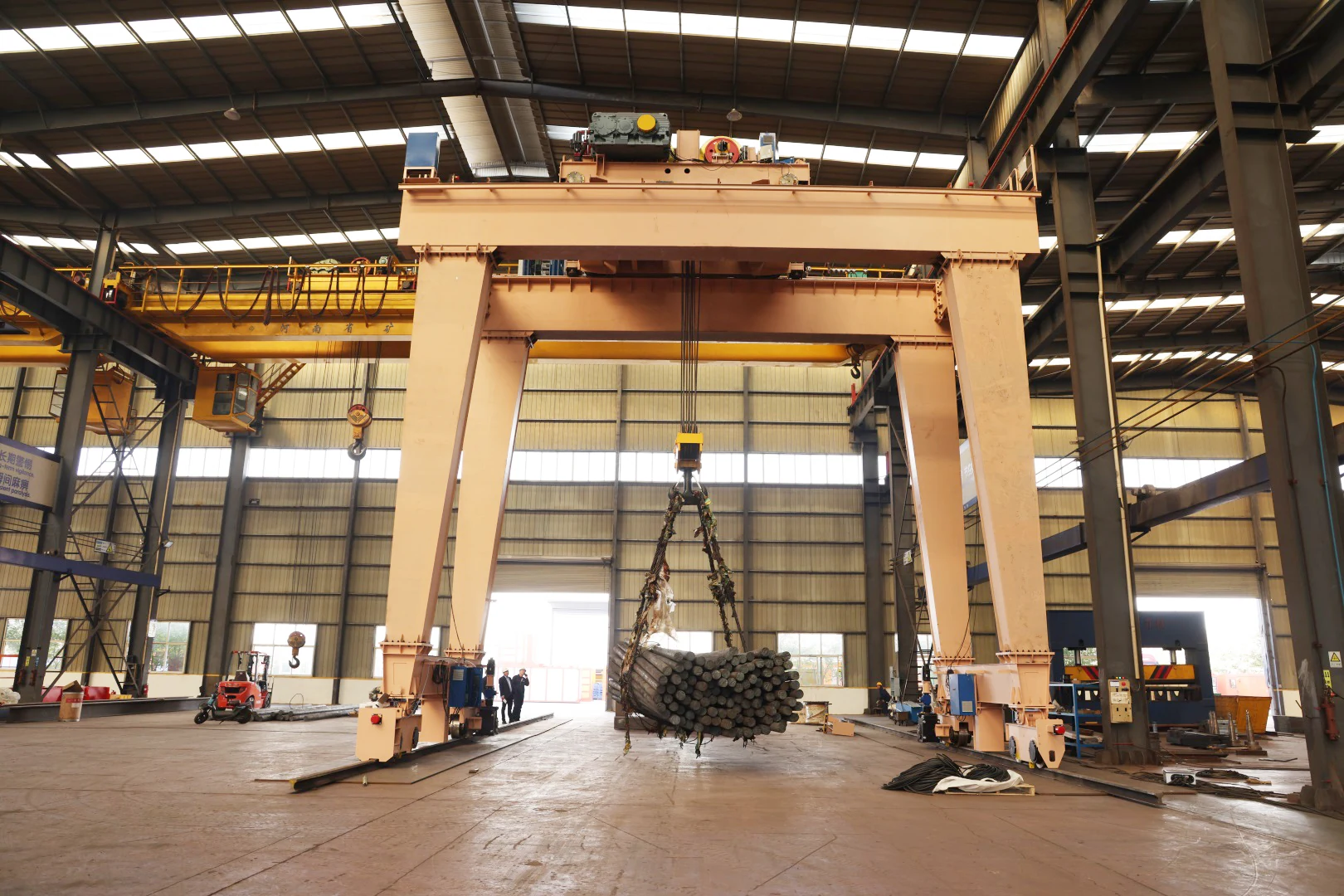
Heavy-load movement and positioning were central to the successful factory acceptance of a Henan Mine Crane Group 100t double-main-girder gantry crane built for an unnamed China Nuclear Power project. The crane belongs to a wider project supply exceeding 100 units/sets.
- Customer
- Unnamed China Nuclear Power project
- Featured crane
- 100 t double-main-girder gantry crane
- Stage
- Passed factory acceptance, including heavy-load moving/positioning tests
- Servo travel
- Bridge and trolley control; stated minimum jog distance 0.5 mm
- Positioning
- Source reports positioning within 5 mm; separate from minimum jog distance
- Braking
- Dual brakes on the hoisting mechanism
- Wider supply
- More than 100 assorted high-precision cranes built for the project by the article's stage
Acceptance of one 100t gantry within a larger supply
The featured crane passed customer factory acceptance for an unnamed China Nuclear Power project, including heavy-load moving and positioning tests against the agreed criteria. This milestone connects the equipment configuration to demonstrated handling functions before site installation.
More than 100 high-precision, anti-sway crane units/sets had been built for the wider project by that stage. The 100 t rating belongs to the featured gantry. For a similar package, assign each crane to its actual load and working area rather than using one capacity across all stations.
Minimum jog distance and positioning accuracy are different
Bridge and trolley travel use servo control, with a minimum jog distance of 0.5 mm. Positioning within 5 mm is a separate characteristic, combined with variable-frequency vector hoist control and PLC anti-sway. The fine movement command and final positioning tolerance address different parts of the placement task.
For another project, define the measurement point, load condition, travel path and environmental conditions before specifying a positioning acceptance test. Include the receiving fixture and the adjustments needed during the final approach. These inputs establish an appropriate test for the intended heavy-load movement.
Modular construction and dual hoist braking
The crane uses a modular design with standardised components. Its hoisting mechanism has dual brakes, with no slipping at rated load in the described configuration. For procurement, identify the required brake arrangement, inspection provisions and load conditions to be demonstrated for the proposed mechanism.
For procurement, ask how brake performance will be demonstrated at the specified load and how inspection and adjustment will be carried out. Modular construction should also be reviewed against the installation's maintenance and spares requirements, rather than taken as evidence that all components are interchangeable with existing equipment.
Define project approvals and site verification explicitly
Include the proposed project's required classifications, approvals and equipment documentation in the technical specification. Where nuclear safety class or seismic qualification is required, identify that scope explicitly and agree the supporting verification documents before equipment selection is completed.
A useful enquiry should connect load data and lifting points to movement tolerances, anti-sway acceptance and the required verification stages. Establish which tests occur at the factory and which must be repeated after installation. This gives the purchaser an acceptance programme connected to the actual heavy-load handling duty.
Application reference: Henan Mine Crane Group official application report. Equipment and operating advice for a new project should be specified against your load, process and site.
Start the equipment discussion
Relevant equipment families.
Compare the equipment family with your operating duty. Final attachments, controls and protection follow the application requirements.
Double girder gantry cranes
Evaluate a project-specific precision gantry against load, travel and approval requirements; catalogue membership does not confer nuclear qualification.
View equipment options ↗Electric wire rope hoists
Review lifting mechanism options only after defining load, control and brake requirements; the featured machine's exact hoist model is not identified.
View equipment options ↗Plan a similar application
Build the specification
around your operation.
Send the heavy-load positioning duty and project acceptance specification to evaluate servo travel, braking and documentation requirements.
- Maximum gross load, component drawings and approved lifting interfaces
- Gantry span, travel path and hook operating envelope
- Minimum jog requirement and final positioning tolerance stated separately
- Measurement points, test loads and anti-sway acceptance conditions
- Brake test, maintenance, spares and inspection requirements
- Required approvals/classifications and factory/site acceptance documentation
Before you specify
Questions for
your project.
How should jog distance and positioning tolerance be specified?
State them separately. This configuration has a 0.5 mm minimum jog and positioning within 5 mm; a new enquiry should also define the load, measurement point and test conditions.
When should project qualification requirements be supplied?
Include the required classification, seismic or other approvals and verification documents with the technical enquiry. They are project-specific requirements to resolve before final equipment selection.
What belongs in the factory and site acceptance plan?
Define representative heavy-load movement, positioning, anti-sway and brake checks, then allocate factory and installed-site demonstrations with their documentation and responsibilities.
Continue exploring
More industrial manufacturing applications.

Aluminium Process Cranes for Carbon Blocks, Feeding and Automated Anode Exchange
Three purpose-built configurations address carbon-block handling and aluminium electrolysis for an unnamed Baotou aluminium company. The package separates suction and feeding, anode stacking and multifunction potroom work.
Explore this application
400t Double-Girder Gantry Crane for Heavy Chemical-Equipment Manufacturing
More than 30 assorted cranes were built for a Shandong chemical-equipment manufacturer. The featured 400t double-girder gantry combines motion control, brake logic and operator monitoring for heavy fabrication handling.
Explore this application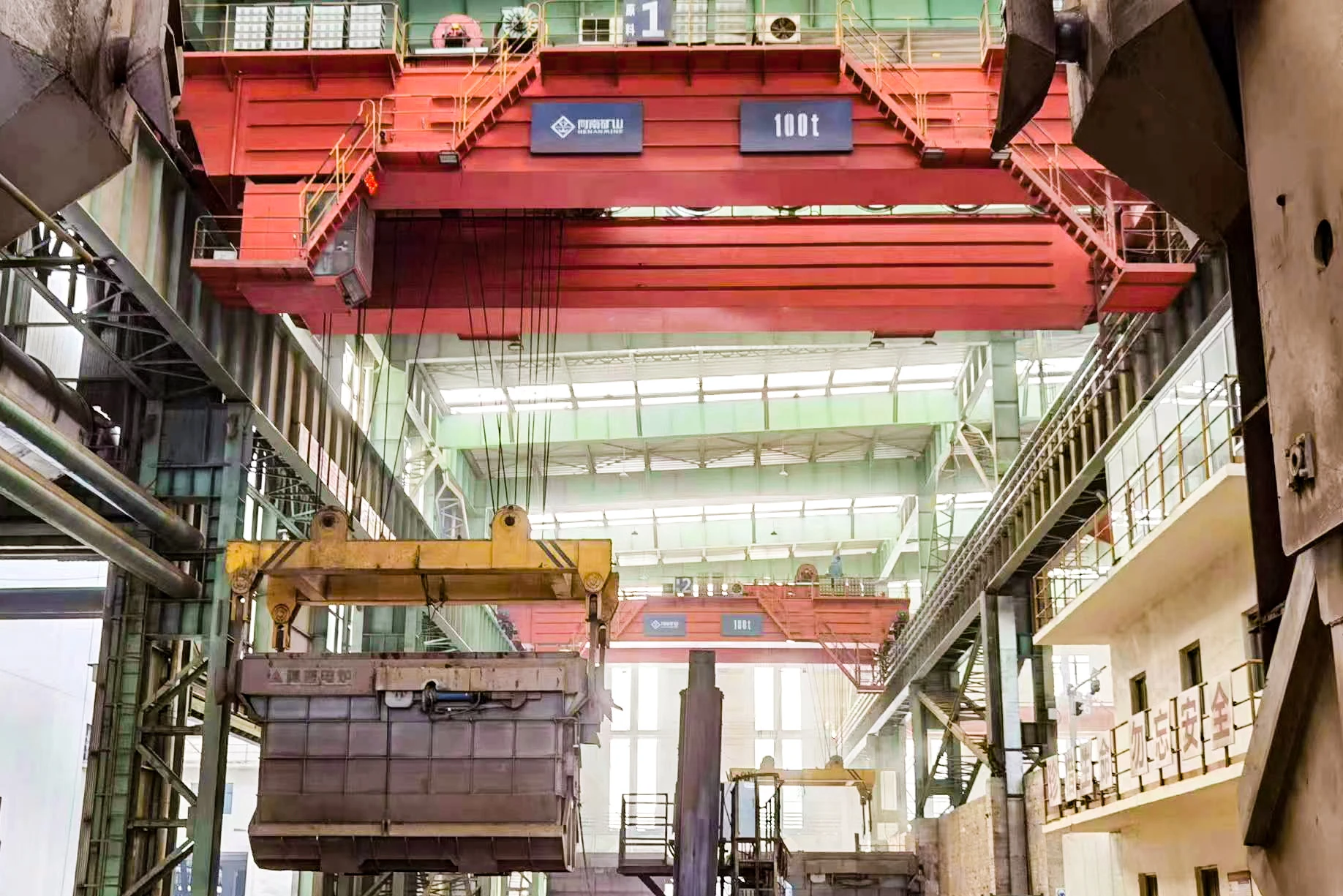
150-Plus Production-Line Cranes Including Two 100t Intelligent Units
More than 150 assorted cranes serve an unnamed plant's production lines, including two 100t intelligent units. A separate second-phase batch was still in manufacture at this supply milestone.
Explore this application


