
Hot steel slabs / Equipment in use
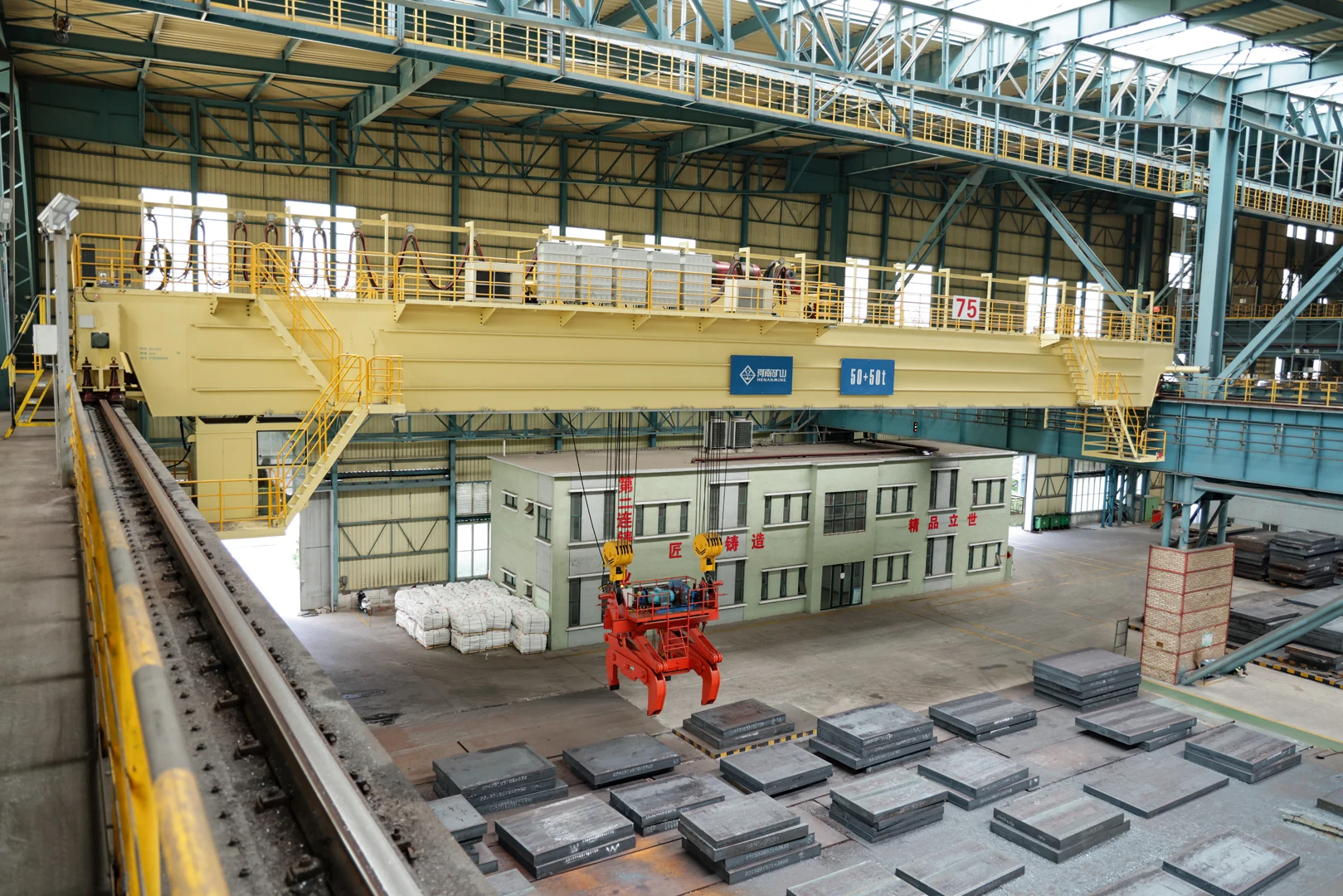
50+50t Slab-Tong Crane for Hot Slab Handling at Shandong Steel's Rizhao Base
Hot slabs exceeding 650°C create a demanding gripping and transfer duty at Shandong Iron and Steel Group's Rizhao base. Henan Mine Crane Group's 50+50t slab-tong crane was put into use there with electrically adjustable slab clamps, digital speed control and multiple monitoring and positioning functions.
- Customer
- Shandong Iron and Steel Group, Rizhao quality-steel base
- Configuration
- 50+50 t slab-tong crane; original paired rating retained
- Reported stage
- Put into use for slab handling
- Thermal duty
- Hot slabs stated to exceed 650°C, with radiant heat in the operating environment
- Load attachment
- Electrically adjustable positioning slab clamp
- Control and monitoring
- Digital speed control, guidance, PLC, weighing, fault display, sensors and positioning
- Upgrade basis
- Monitoring/control provisions supporting a later automation upgrade
Gripping a hot slab at the production interface
The crane's working tool is an electrically adjustable slab clamp. It was selected for slab handling at the Rizhao base, where hot workpieces can exceed 650°C. The application therefore combines the geometry of the gripping interface with exposure to radiant heat along the handling route.
For a similar duty, provide the slab's minimum and maximum dimensions, mass, temperature and permitted contact faces. The enquiry should also show the pickup and receiving supports. Those details define what the clamp must accommodate and where a slab can be safely gripped, carried and released.
Thermal conditions, materials and controlled travel
High-strength materials are part of the design response to the high-temperature, high-radiation environment. Digital speed control and guidance are used for smooth movement and positioning. The 50+50 t configuration identifies the supplied crane; the combined-load arrangement and individual operating limits must be read from the approved design.
A new project should define where heat exposure occurs, how long the crane remains above a hot load and which parts of the travel route are affected. Pair that thermal profile with the required lifting cycle and clearances. Slab temperature alone is not a complete description of the crane's operating environment.
Weighing and status information support the operating task
PLC control, a weighing system, fault display, positioning devices and other monitoring/sensing functions are integrated into the crane. These features give the handling task information beyond movement commands: load measurement, equipment status and position all matter when delivering a hot slab to its next process location.
The configuration also provides a basis for a later automation-control upgrade. For procurement, specify the functions needed on day one separately from future interfaces. Agree which status signals and positioning requirements will be demonstrated, rather than treating upgrade readiness as an already delivered autonomous operating sequence.
Plan service access alongside the hot-load route
The design includes measures intended to reduce maintenance workload. Their value to a new installation depends on practical access, inspection tasks and the operating window available around hot production. Service arrangements should be reviewed with the same care as the pickup and transfer positions.
Send the thermal exposure map, process schedule and maintenance restrictions with the enquiry. The proposal can then address clamp adjustment, measurement checks, fault information and access to the selected mechanisms. Acceptance should use an agreed load and route, with the supplied operating scope and any future automation options clearly identified.
Application photographs
See the equipment and working context.
Photographs and accompanying illustrations from this application report. Open an image for a larger view.
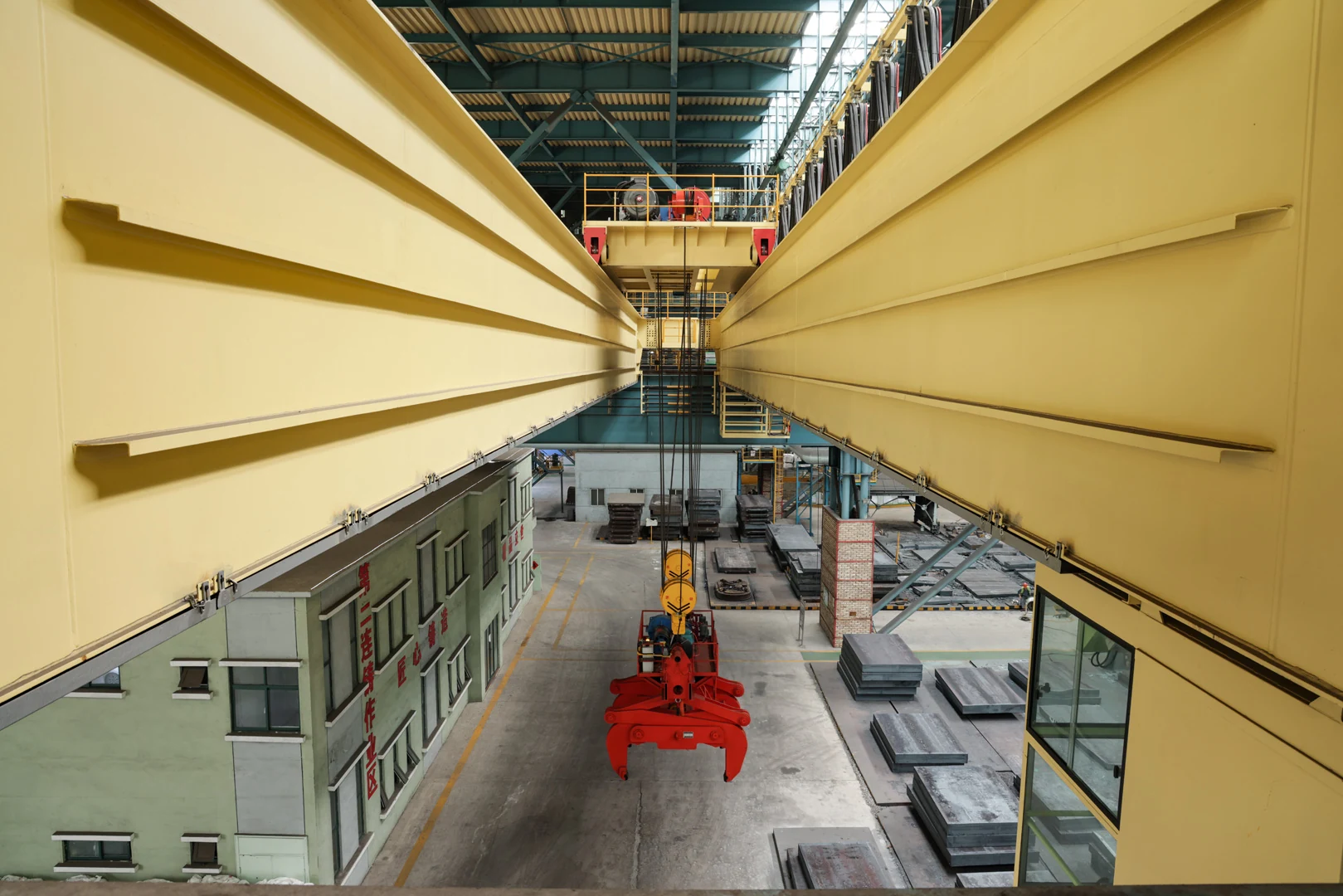
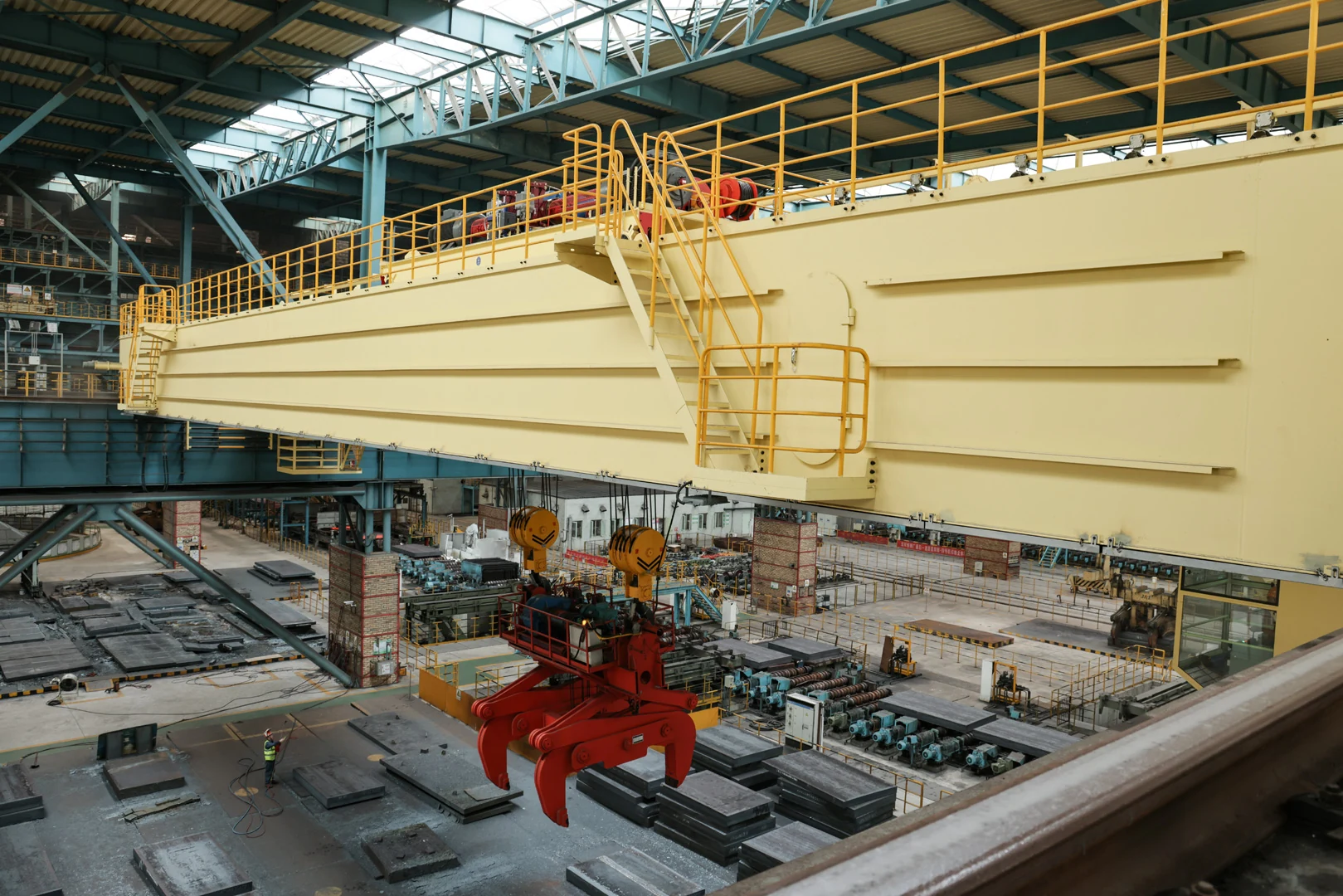
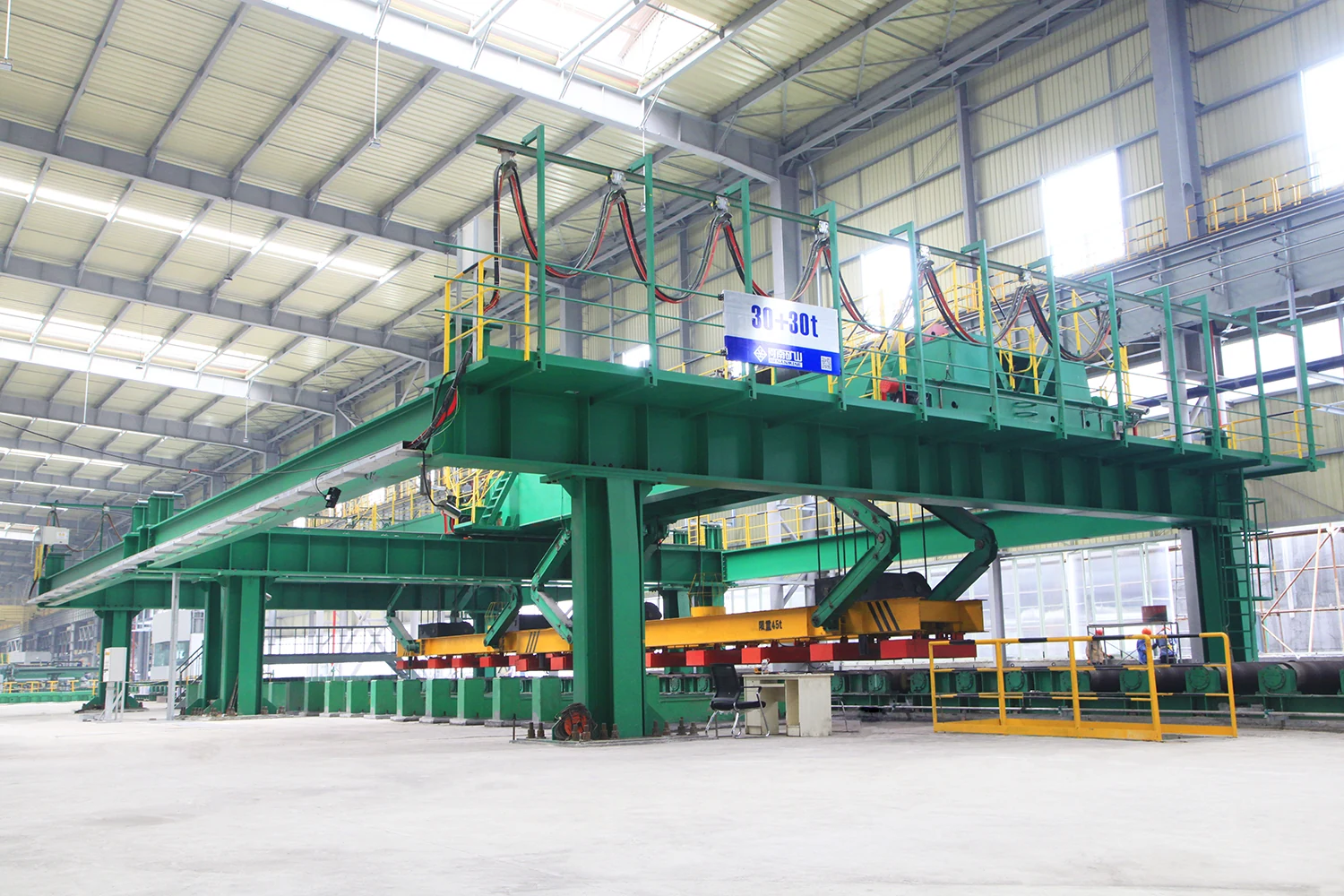
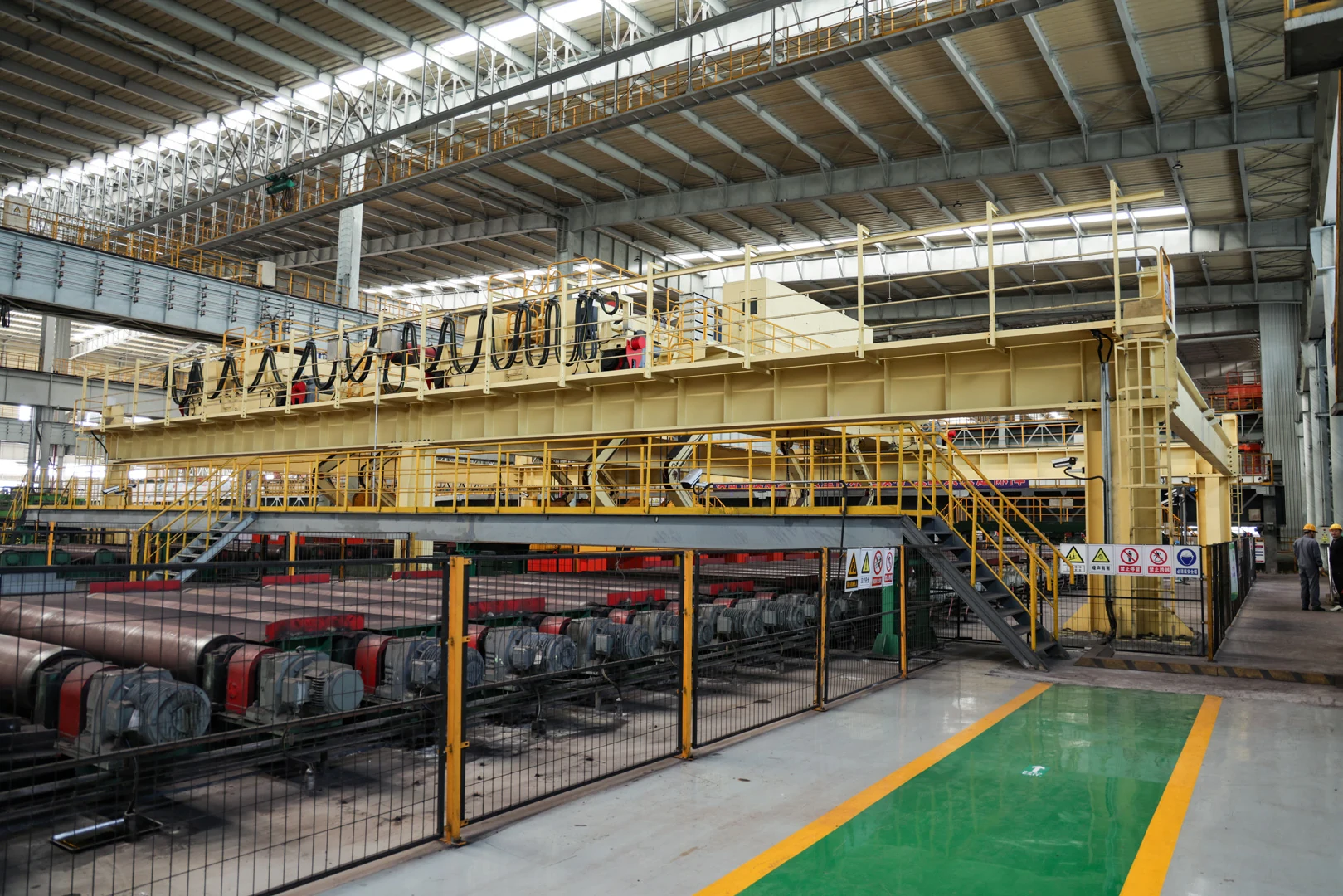
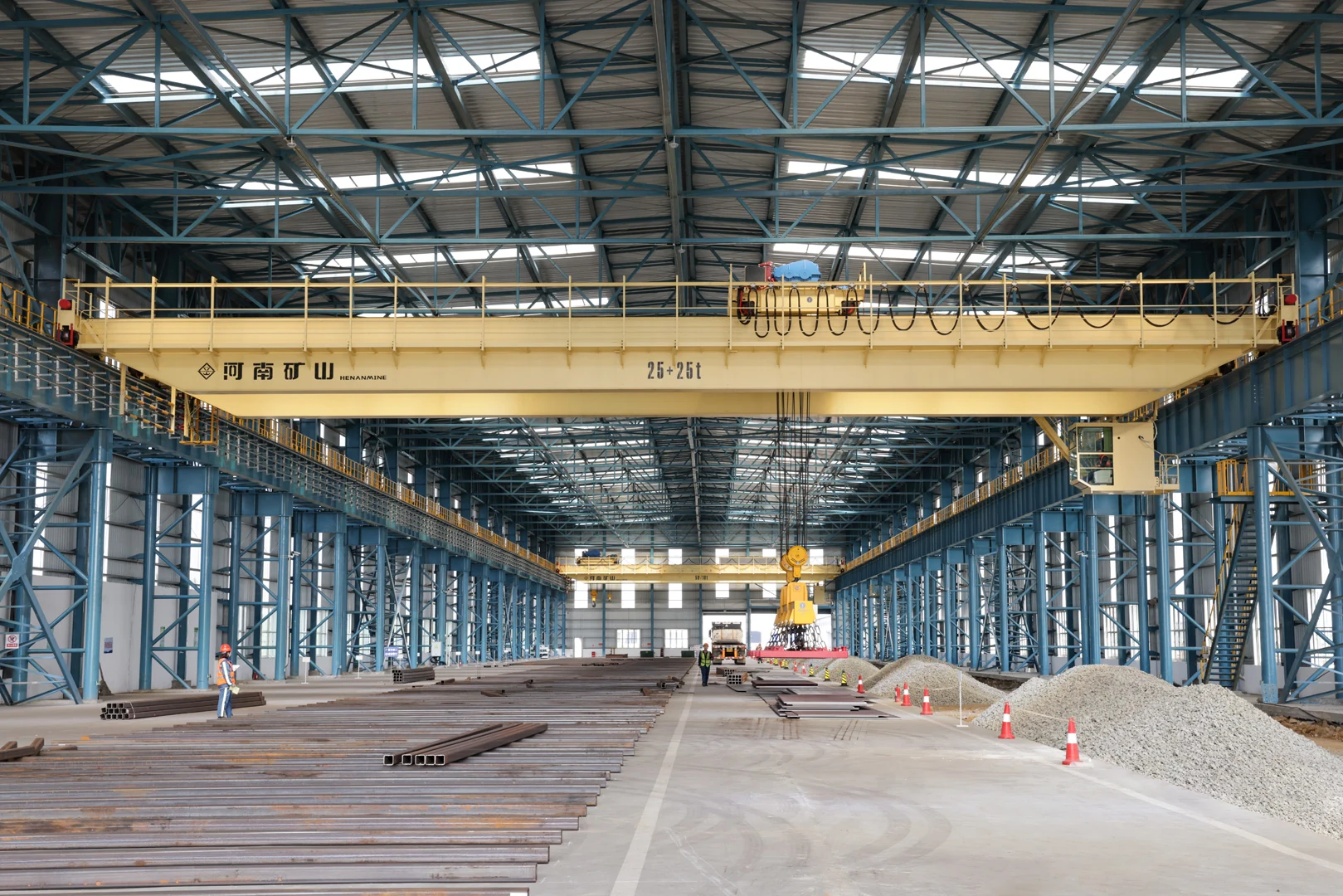
Application reference: Henan Mine Crane Group official application report. Equipment and operating advice for a new project should be specified against your load, process and site.
Start the equipment discussion
Relevant equipment families.
Compare the equipment family with your operating duty. Final attachments, controls and protection follow the application requirements.
Double girder overhead cranes
Evaluate a purpose-built hot-slab arrangement from the paired load rating, thermal duty and process coverage.
View equipment options ↗Lifting attachments
Discuss electrically adjustable slab tooling using the workpiece range and allowed gripping faces; a general attachment is not automatically suitable above 650°C.
View equipment options ↗Plan a similar application
Build the specification
around your operation.
Provide the slab range and thermal handling route to evaluate clamp geometry, motion control and service arrangements.
- Slab length, width, thickness, mass and temperature ranges
- Permitted gripping faces, support positions and clamp opening range
- Radiant-heat exposure map and time spent near hot material
- Lift sequence, travel route, process cycle and required clearances
- Weighing, positioning, fault-display and future-interface requirements
- Maintenance windows, inspection access and acceptance load conditions
Before you specify
Questions for
your project.
What determines the slab-clamp configuration?
Slab dimensions, mass, temperature, contact faces and support geometry define the gripping task. Supply the full range, including the smallest slabs and pickup/release conditions.
How should a future automation option be specified?
Separate the initial operating functions from reserved interfaces and later automatic sequences. Define the signals, process permissions and acceptance demonstrations needed for each stage.
What maintenance information belongs in the enquiry?
Include access restrictions, thermal exposure, inspection windows and the plant's service procedures. These allow maintenance provisions to be evaluated against the real hot-production route.
Continue exploring
More industrial manufacturing applications.

Aluminium Process Cranes for Carbon Blocks, Feeding and Automated Anode Exchange
Three purpose-built configurations address carbon-block handling and aluminium electrolysis for an unnamed Baotou aluminium company. The package separates suction and feeding, anode stacking and multifunction potroom work.
Explore this application
400t Double-Girder Gantry Crane for Heavy Chemical-Equipment Manufacturing
More than 30 assorted cranes were built for a Shandong chemical-equipment manufacturer. The featured 400t double-girder gantry combines motion control, brake logic and operator monitoring for heavy fabrication handling.
Explore this application
150-Plus Production-Line Cranes Including Two 100t Intelligent Units
More than 150 assorted cranes serve an unnamed plant's production lines, including two 100t intelligent units. A separate second-phase batch was still in manufacture at this supply milestone.
Explore this application


