
Machinery manufacturing / Delivered cooperation supply
300-Plus Cranes for XCMG Machinery Assembly and Structural-Component Production
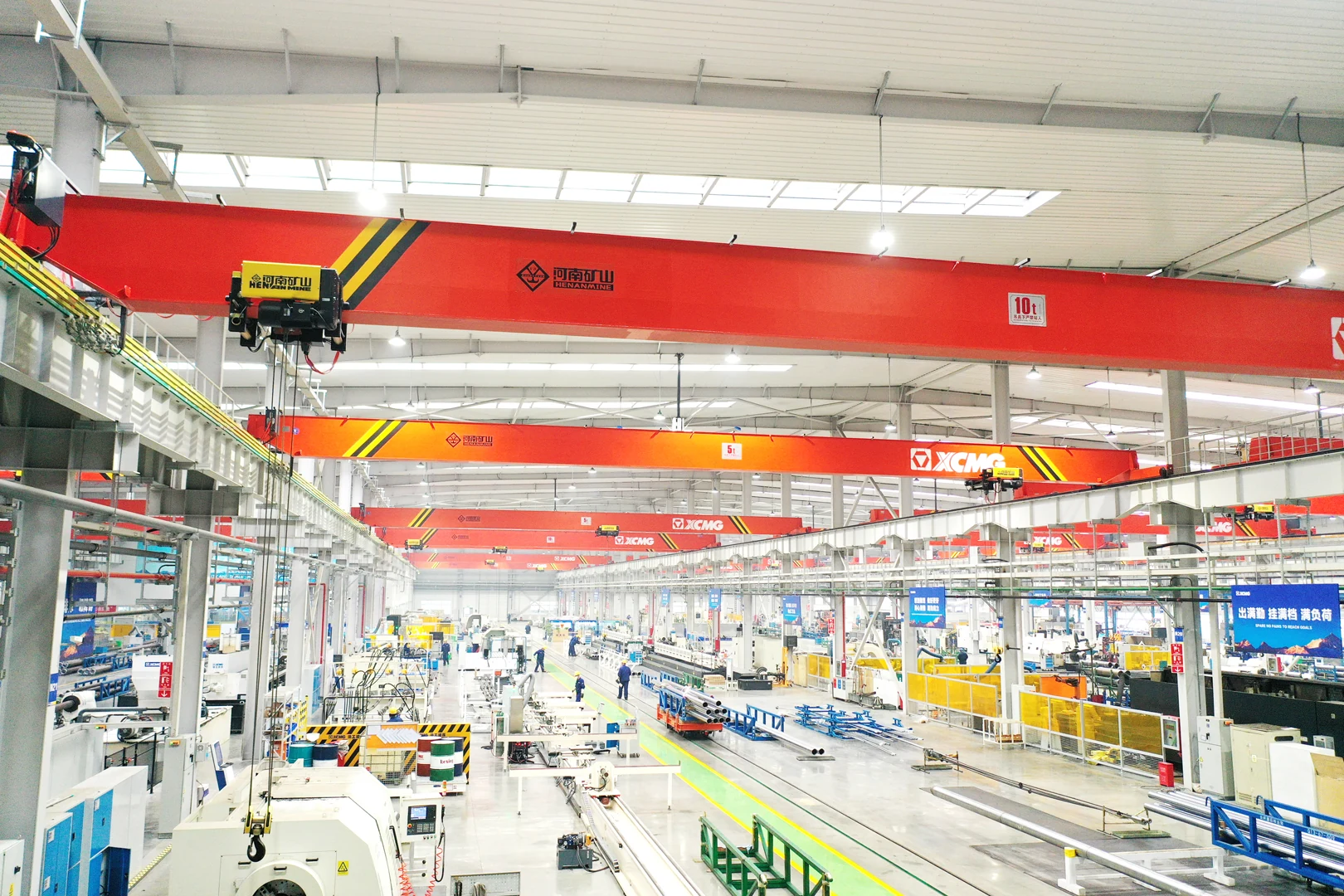
Assembly work and structural-component production create different lifting tasks within machinery manufacturing. Henan Mine Crane Group supplied more than 300 assorted crane units/sets over its cooperation with XCMG Group, with the equipment delivered for use in those handling and production activities.
- Customer
- XCMG Group
- Cooperation supply
- More than 300 assorted crane units/sets
- Reported stage
- Delivered and put into use
- Application
- Machinery assembly and structural-component production transfers
- Featured capability
- Intelligent crane operation and positioning within the supplied mix
- Procurement context
- Customer describes public tendering and comprehensive bid evaluation
Different production tasks within the XCMG cooperation
The supplied cranes serve assembly and structural-production handling at XCMG. The total exceeds 300 assorted units/sets over the cooperation. It represents a mix of equipment for production tasks, rather than a single crane model repeated at one named factory.
For a machinery manufacturer, a useful crane plan starts with the difference between component transfers, fabrication handling and assembly lifts. The mass and geometry at each stage may change as parts become an assembly. Scheduling those changes gives a better basis for selection than starting with a single headline capacity.
Positioning where assemblies meet their next station
Intelligent cranes are highlighted within the supplied equipment, with controlled positioning supporting the customer's manufacturing work. The operational value is tied to bringing parts to the required station and assembly position. The application does not identify a common control package or numerical tolerance across the entire crane supply.
Buyers should show the receiving fixtures, approach clearances and required load orientation at each station. Where positioning matters, state the tolerance and measurement point for the actual workpiece. This allows a proposal to address the assembly interface rather than rely on an undefined intelligent-crane label.
A large package needs station-by-station definition
XCMG's procurement context includes public tendering and comprehensive bid evaluation. For another multi-crane purchase, that makes the consistency of the technical schedule important: each workstation needs a defined load, coverage, duty and interface so proposals can be compared on the same basis.
Common requirements can cover documentation, operator information and maintenance support. Individual requirements should retain differences between assembly and structural-production areas. A shared purchasing programme does not mean every crane needs the same structure, lifting speed or automation functions.
Build acceptance around real production movements
Prepare representative load cases for the workstations, including the pickup, transfer and handover sequence. Identify which movements need fine positioning and which need coverage over a broader fabrication area. These cases can become the basis of the technical review and acceptance plan.
Include access for maintenance and the constraints around active production. Specify any later expansion or data-interface needs separately from the initial operating scope. This keeps a large factory purchase manageable while preserving the different lifting tasks that the assorted crane mix must perform.
Application photographs
See the equipment and working context.
Photographs and accompanying illustrations from this application report. Open an image for a larger view.
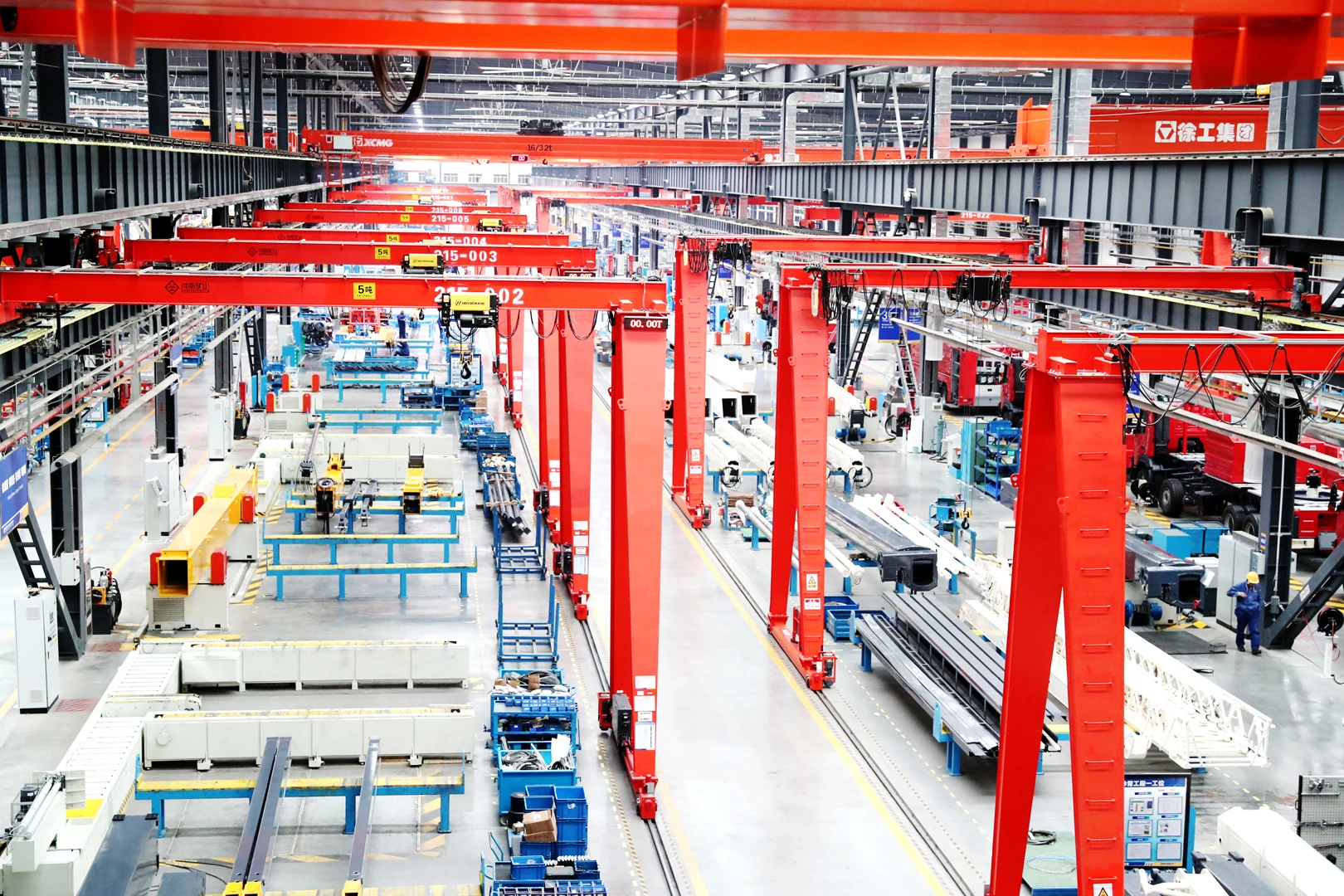
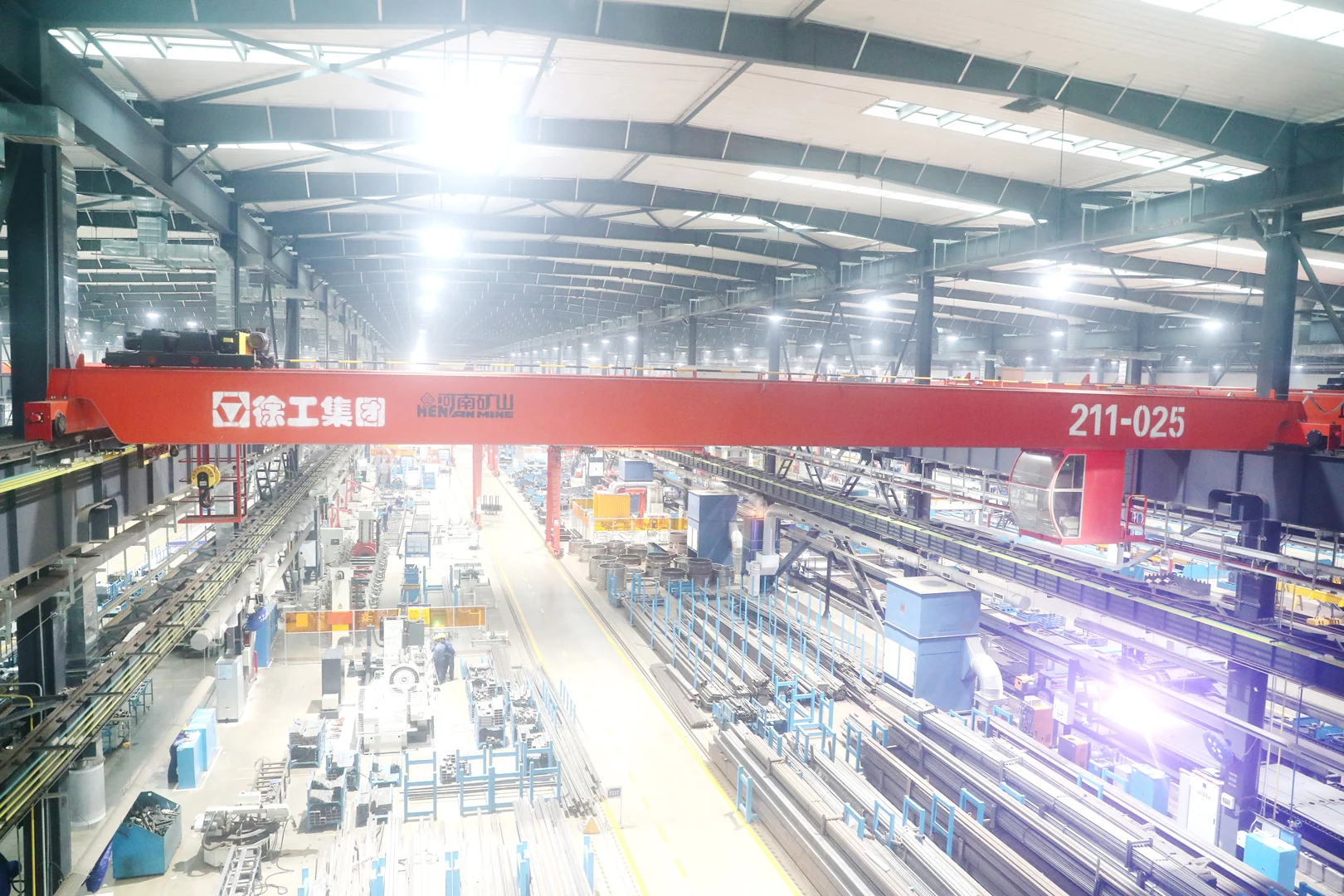

Application reference: Henan Mine Crane Group official application report. Equipment and operating advice for a new project should be specified against your load, process and site.
Start the equipment discussion
Relevant equipment families.
Compare the equipment family with your operating duty. Final attachments, controls and protection follow the application requirements.
Double girder overhead cranes
Evaluate for relevant machinery assembly and fabrication stations after confirming their individual load and building requirements.
View equipment options ↗Single girder overhead cranes
Consider for stations whose load, duty and coverage permit this arrangement; the customer supply does not identify each individual model.
View equipment options ↗Plan a similar application
Build the specification
around your operation.
Send the assembly and structural-production lift schedule to develop a comparable technical scope for a multi-crane factory purchase.
- Workstation load list covering components, fabrications and assemblies
- Dimensions, centres of gravity and approved lifting points at each stage
- Factory layout, coverage boundaries and handover fixtures
- Cycle frequency and positioning tolerance where required
- Common documentation, control-interface and operator-information needs
- Representative acceptance movements, maintenance access and expansion plans
Before you specify
Questions for
your project.
How should a factory specify several different crane duties?
Use a station-by-station schedule with load, geometry, coverage and cycle requirements. Keep common purchasing requirements consistent while retaining the differences between fabrication and assembly.
What is needed for an assembly positioning requirement?
Show the receiving fixture, approach path, load orientation and measurement point, then state the required tolerance under the intended load conditions.
Can one crane model cover every production station?
Selection depends on each station's load and layout. The XCMG cooperation comprises assorted cranes, so it is a useful example of matching a package to several production tasks.
Continue exploring
More industrial manufacturing applications.

Aluminium Process Cranes for Carbon Blocks, Feeding and Automated Anode Exchange
Three purpose-built configurations address carbon-block handling and aluminium electrolysis for an unnamed Baotou aluminium company. The package separates suction and feeding, anode stacking and multifunction potroom work.
Explore this application
400t Double-Girder Gantry Crane for Heavy Chemical-Equipment Manufacturing
More than 30 assorted cranes were built for a Shandong chemical-equipment manufacturer. The featured 400t double-girder gantry combines motion control, brake logic and operator monitoring for heavy fabrication handling.
Explore this application
150-Plus Production-Line Cranes Including Two 100t Intelligent Units
More than 150 assorted cranes serve an unnamed plant's production lines, including two 100t intelligent units. A separate second-phase batch was still in manufacture at this supply milestone.
Explore this application


