
Semiconductor-grade polysilicon / Automatic process handling
Clean Explosion-Proof Automatic Crane for Polysilicon Processing
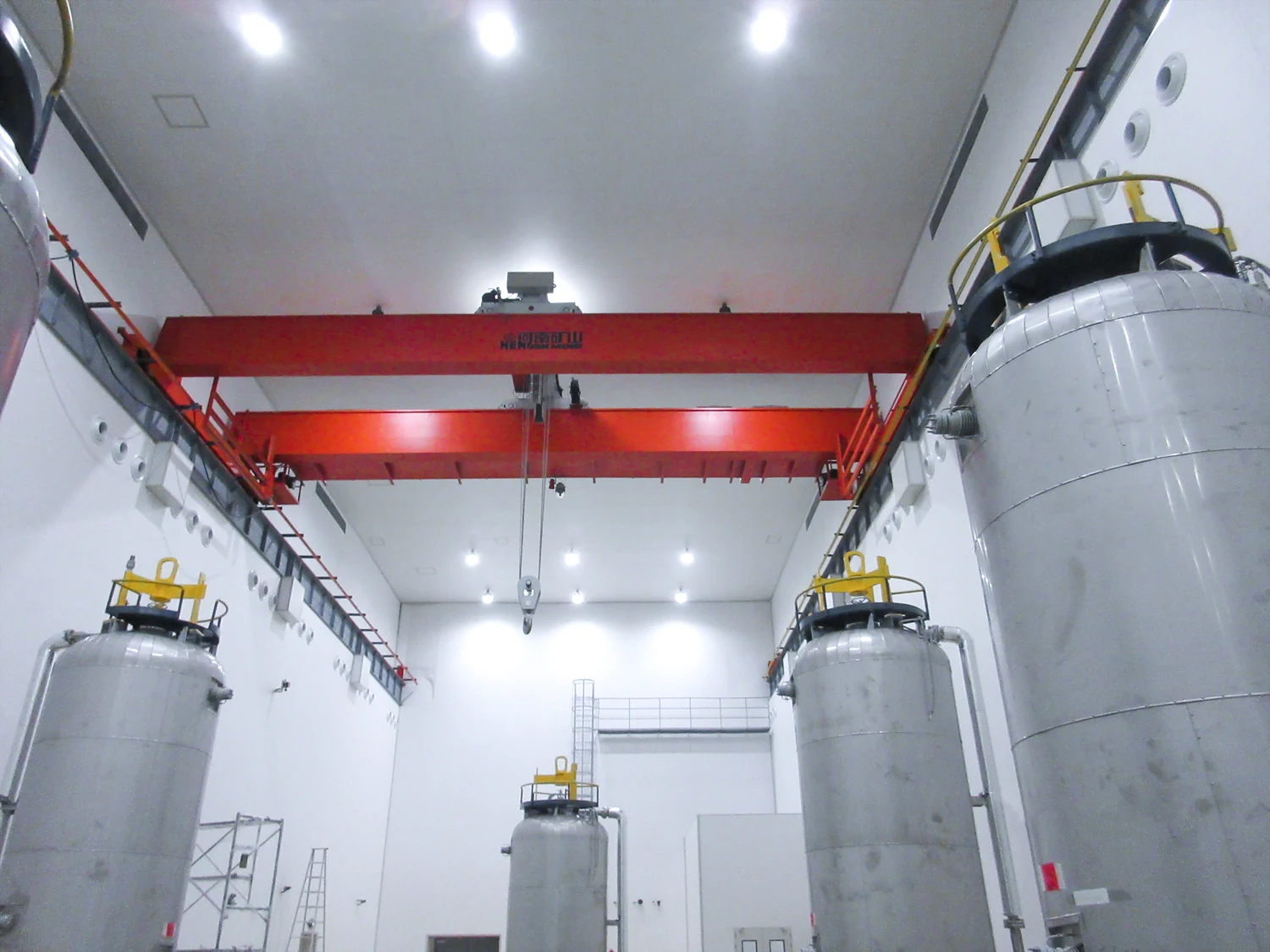
Henan Mine Crane Group delivered a clean, explosion-proof fully automatic crane into use at an unnamed Jiangsu manufacturer of semiconductor-grade polysilicon. The crane follows programmed routes between reduction, cleaning, transfer and rod-removal stations while addressing contamination and flammable-gas conditions.
- Customer
- Unnamed Jiangsu semiconductor-grade polysilicon manufacturer
- Stage
- Delivered into use
- Handling task
- Reduction-furnace and silicon-rod tooling transfers
- Reported protection marking
- dIICT4 for this project
- Control
- Automatic routes, anti-sway, hook/unhook and laser/barcode positioning
- Contamination measures
- Sealed structures, dust collection and mechanical oil trays
- Development reference
- Company reported 16 invention patents associated with this crane type
A defined route through the silicon process
The crane transfers reduction-furnace and silicon-rod tooling among the reduction-furnace platform, cleaning platform, transfer platform and rod-removal-tool positions. Programmed travel and positioning connect these stations into a repeated handling sequence. The load interface must therefore be considered together with the process state at each handover.
For a comparable line, show the tooling geometry and permitted lifting points at every station. Specify how a station confirms readiness and what condition permits movement to the next position. Include the procedure for a failed pickup or interrupted cycle so the handling proposal covers the complete task.
Separate contamination limits from hazardous-area protection
The Jiangsu workshop required a clean design and contained flammable and explosive gases. The project’s stated explosion-protection marking is dIICT4. That marking belongs to this installation and must be reviewed against the documented requirements of any new area.
The original cleanliness description uses “class 4(national class 7)” and a particle criterion involving 0.1μm particles and 10,000. Its area/volume wording is ambiguous, so it should not be converted into a verified ISO cleanliness class. For procurement, provide the applicable standard, particle-size limits, sampling conditions and acceptance method directly.
Materials and sealing around a contamination-sensitive load
Wear-resistant and corrosion-resistant materials reduce contamination sources around moving equipment. The main structure uses high-strength alloy steel, and rotating, protective and connecting components use stainless steel. The drive mechanism is highly sealed; self-lubricating bearings and an integrated motor, reducer, brake and electrical-monitoring arrangement support a compact design.
High-pressure anti-static coating and sealed welding are part of the structure’s contamination-control approach. Agree permitted materials, coating requirements and cleaning access with the process team. Service requirements still need to cover bearings, seals and collection devices, despite the original low-maintenance wording.
Collect dust and oil produced during movement
The crane combines permanent-magnet mechanical collection, explosion-proof electric dust extraction and mechanical oil-collection trays. These address particles and lubricating oil that may arise during operation. The configuration also aims for low-noise operation without providing a numerical sound level.
Specify how captured material is removed, which areas must remain accessible and how contamination performance will be demonstrated. A clean-process crane should be assessed during the operating sequence, not only when stationary after cleaning. Include representative travel, attachment and hoisting movements in the acceptance plan.
Automatic functions and diagnostics for the operating sequence
Automatic operation includes anti-sway, positioning and automatic hooking and unhooking. Electronic laser reading of barcode position references supports station positioning; the project description reports sub-millimetre precision. Define the required movement, measurement conditions and load state before using a precision figure as an acceptance criterion.
Fault alarms, fault-cause detection and component-life setting alarms support operating and maintenance decisions. Henan Mine Crane Group also reported 16 invention patents associated with development of this crane type. For a new purchase, request the applicable technical documents and agree the actual functions, area-protection evidence and complete-cycle demonstrations to be delivered.
Application photographs
See the equipment and working context.
Photographs and accompanying illustrations from this application report. Open an image for a larger view.
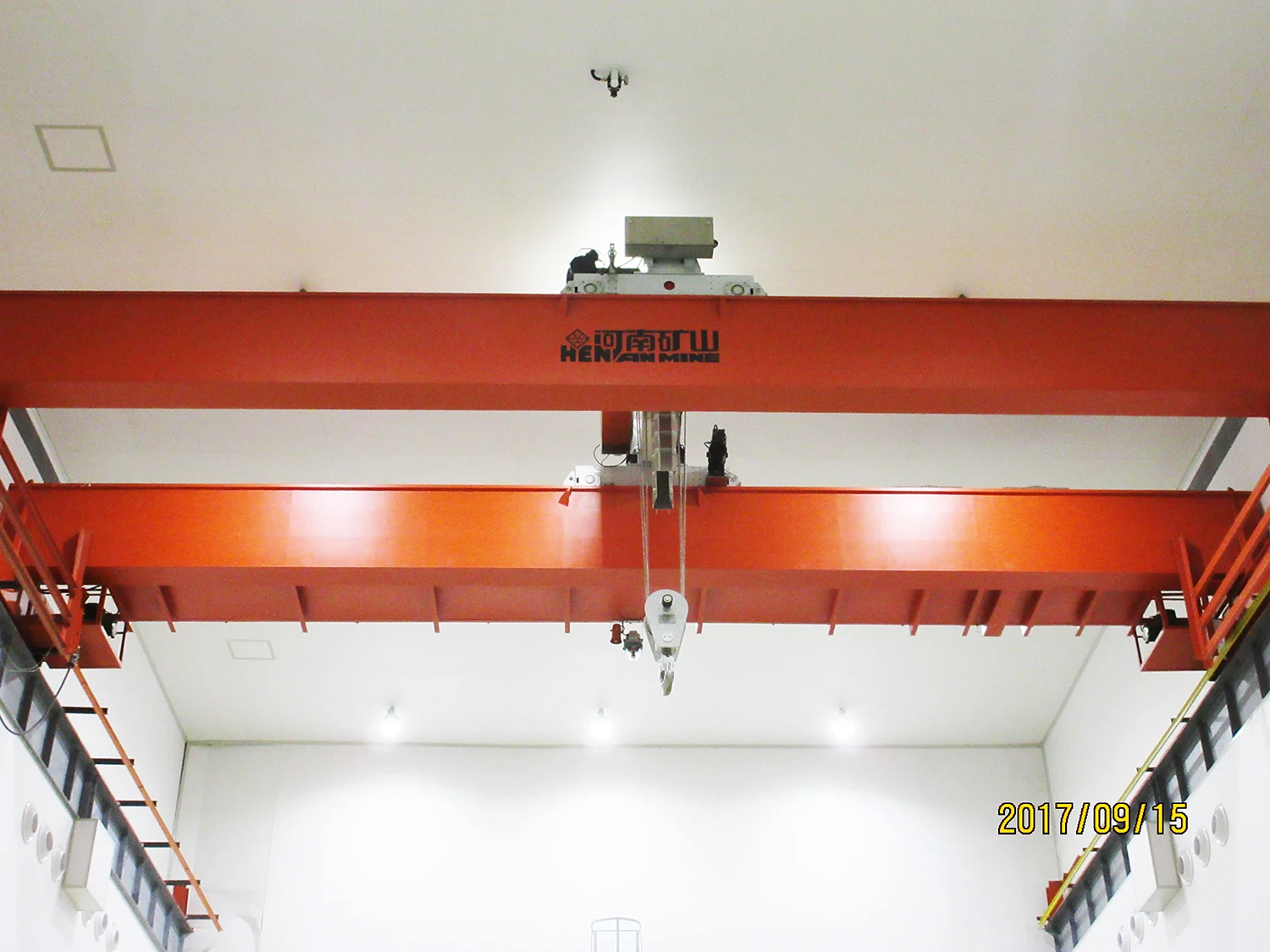
Application reference: Henan Mine Crane Group official application report. Equipment and operating advice for a new project should be specified against your load, process and site.
Start the equipment discussion
Relevant equipment families.
Compare the equipment family with your operating duty. Final attachments, controls and protection follow the application requirements.
Explosion-proof double-girder cranes
Evaluate a protected double-girder arrangement with project-specific cleanliness and automatic-process requirements.
View equipment options ↗Explosion-proof single-girder cranes
Compare only for suitable single-girder duties that meet the actual area and clean-process specification.
View equipment options ↗Double-girder overhead cranes
Discuss structural and attachment options while retaining the required protection and contamination controls.
View equipment options ↗Plan a similar application
Build the specification
around your operation.
Send the process-route, cleanliness specification and hazardous-area documentation together for a coordinated assessment.
- Reduction-furnace and silicon-tooling drawings, gross masses and pickup interfaces
- All process stations, route envelopes, readiness signals and recovery sequence
- Applicable cleanliness standard, particle limits, sampling and acceptance method
- Hazardous-area classification, gas properties and required protection documentation
- Restricted materials, coatings, dust/oil collection and maintenance access
- Automatic-cycle tests, positioning measurement, diagnostic records and handover scope
Before you specify
Questions for
your project.
How should cleanliness and explosion protection be specified together?
Provide separate requirements for contamination control and the classified area, then review the proposed mechanical, electrical and collection arrangements against both. Include the required documents and acceptance methods.
What is needed to automate transfers between process stations?
Define the tooling interface, station locations, readiness signals and allowed sequence. Include abnormal pickup and recovery conditions as well as normal route operation.
How should a positioning requirement be accepted?
Specify the controlled point, load state, measurement method and permitted error. Demonstrate the proposed system under agreed conditions rather than applying another project’s precision figure universally.
Continue exploring
More new energy & new materials applications.
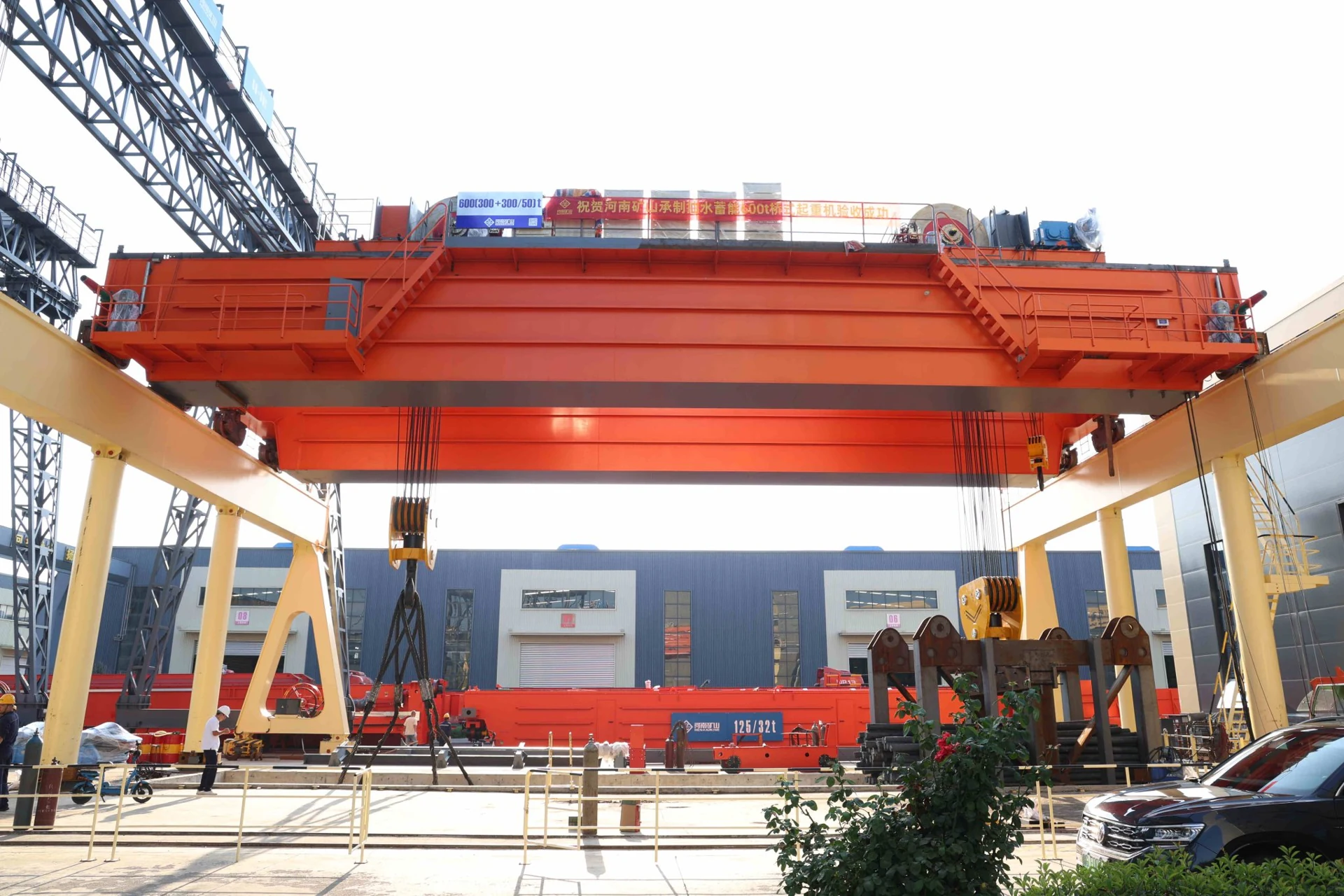
600t Pumped-Storage Crane with Coordinated Hooks and Monitoring
A 600t bridge crane supports an unnamed pumped-storage energy project. This application reference focuses on structural materials, major components and coordinated lifting.
Explore this application
54-Crane Package for Hongyuan High-Purity Silicon Production
Henan Mine Crane Group manufactured 54 assorted crane units for Hongyuan Energy’s high-purity crystalline-silicon project. Clean and explosion-protected duties are addressed with different crane configurations.
Explore this application
Crane Inspection for Lanzhou Baohang Anode-Material Production
Project cranes for Lanzhou Baohang passed an A-level inspection by Baosteel Consulting and Shanghai Jinyi experts. The review combined manufacturing records with dimensional and mechanism checks.
Explore this application


