
Carbon materials / In-use process crane
Carbon-Block Stacking Crane for a Shandong Baking-Furnace Project
Henan Mine Crane Group developed a carbon-block stacking crane for a new-carbon-material baking-furnace project in Shandong. Now in use, the double-box-girder crane combines one trolley and two rigidly guided handling attachments, with provisions for a hot, dusty production environment.
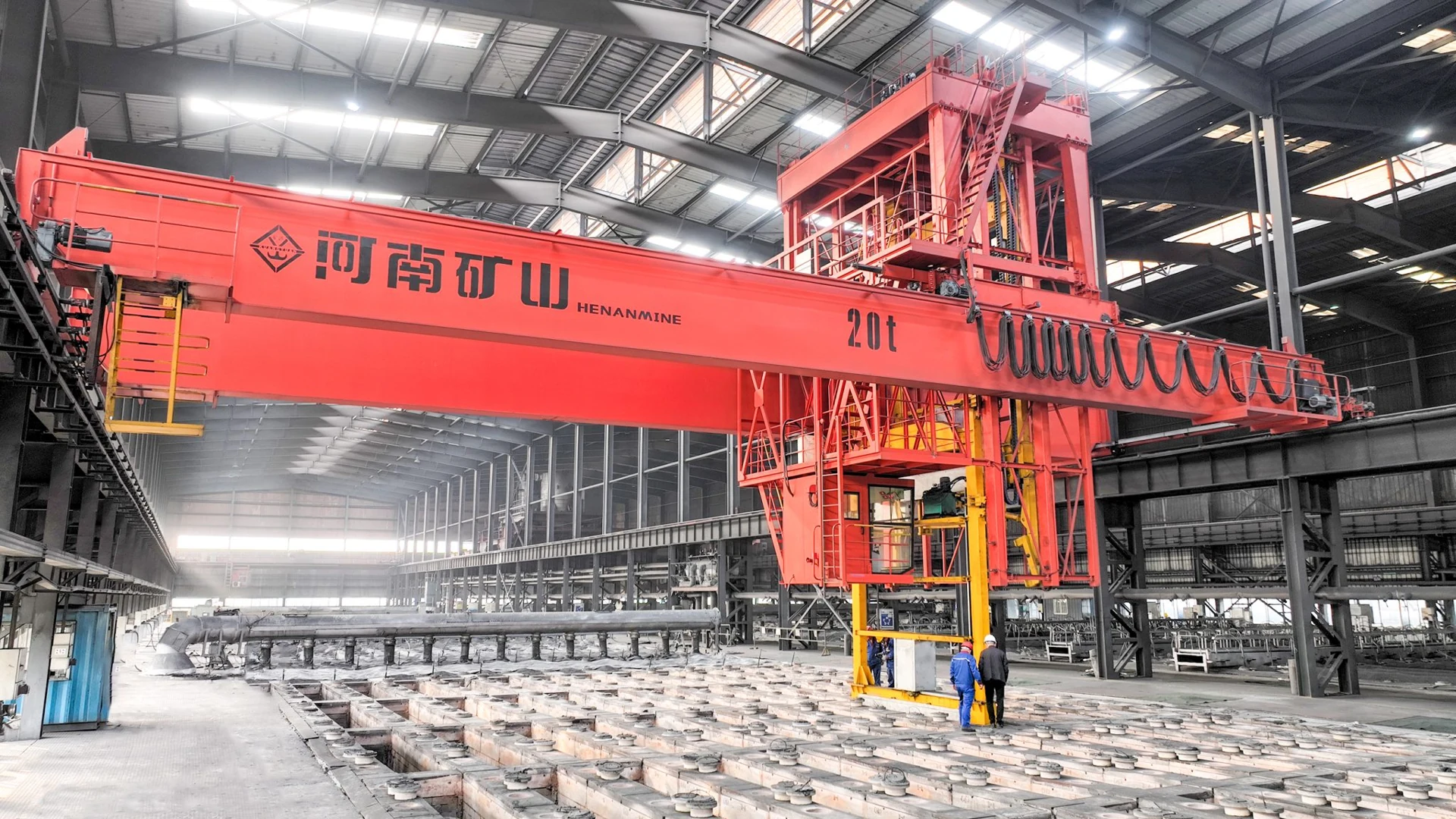
- Customer application
- Unnamed new-carbon-material baking-furnace project in Shandong
- Crane structure
- Double box girders, one trolley and two handling attachments
- Attachment guidance
- Rigid guide columns with multiple upper/lower guide-wheel groups
- Operating modes
- Attachments used independently or together
- Drive arrangement
- Integrated three-in-one VFD drives; VFD travel and hoisting
- Electrical environment
- Central electrical room with dedicated industrial recirculating air conditioning
- Project stage
- Equipment in use
Match the handling arrangement to carbon blocks
The crane was developed for the carbon-block process around a baking-furnace project. Its double-box-girder, single-trolley arrangement carries two handling attachments, giving the equipment a defined process role rather than a general workshop-lifting specification.
For a new installation, provide the block dimensions, mass, contact surfaces and the sequence between furnace and stacking positions. The required gripping condition and placement pattern help determine whether independent or linked attachment movements suit the process.
Guide two attachments through the working sequence
Rigid guide columns use multiple upper and lower groups of rail-type guide wheels and high-strength, wear-resistant rails. The two attachments can be used separately or in coordinated operation. The gripping arrangement is described as maintaining pressure to support stable load retention.
Show the minimum and maximum block geometry and the proposed positions of both attachments. Define which actions must be independent and when the attachments need to move together. The proposal should explain the gripping and release conditions for each case, along with access to the guided mechanism.
Use controlled starts and variable-frequency motion
An integrated three-in-one variable-frequency drive arrangement supports low-noise operation, smooth starting and reduced movement impact. Travel and hoisting also use variable-frequency speed control with alarm functions.
For procurement, connect the drive requirement to the approach and placement task. Supply the required lifting range, travel route and cycle so the proposed movement can be assessed with the load. Include the acceptable behavior as a block approaches the furnace or stack, where the available clearance may be limited.
Protect the electrical environment in heat and dust
The electrical control system is concentrated in an electrical room fitted with dedicated industrial recirculating air conditioning. This arrangement responds to the high dust and high temperature of the production area.
Identify the expected conditions at the crane and the proposed electrical-room location. Maintenance access, heat exposure and the plant's inspection arrangements should be considered together. Providing the environmental basis at the enquiry stage helps the supplier assess the cooling and protection scope for the new equipment.
Define protection and acceptance around the process
The hoisting mechanism includes safety limits, an electrical emergency-operation switch and safety monitoring. These functions should be reviewed with the attachment sequence and the plant's operating responsibilities.
Agree demonstrations for independent and linked attachment use, gripping and release, travel limits and the intended response to an alarm or interruption. This baking-furnace reference supports a carbon-material process enquiry. Any separate hazardous-area requirements for a new location should be stated with the customer's classification and applicable standards.
Application photographs
See the equipment and working context.
Photographs and accompanying illustrations from this application report. Open an image for a larger view.
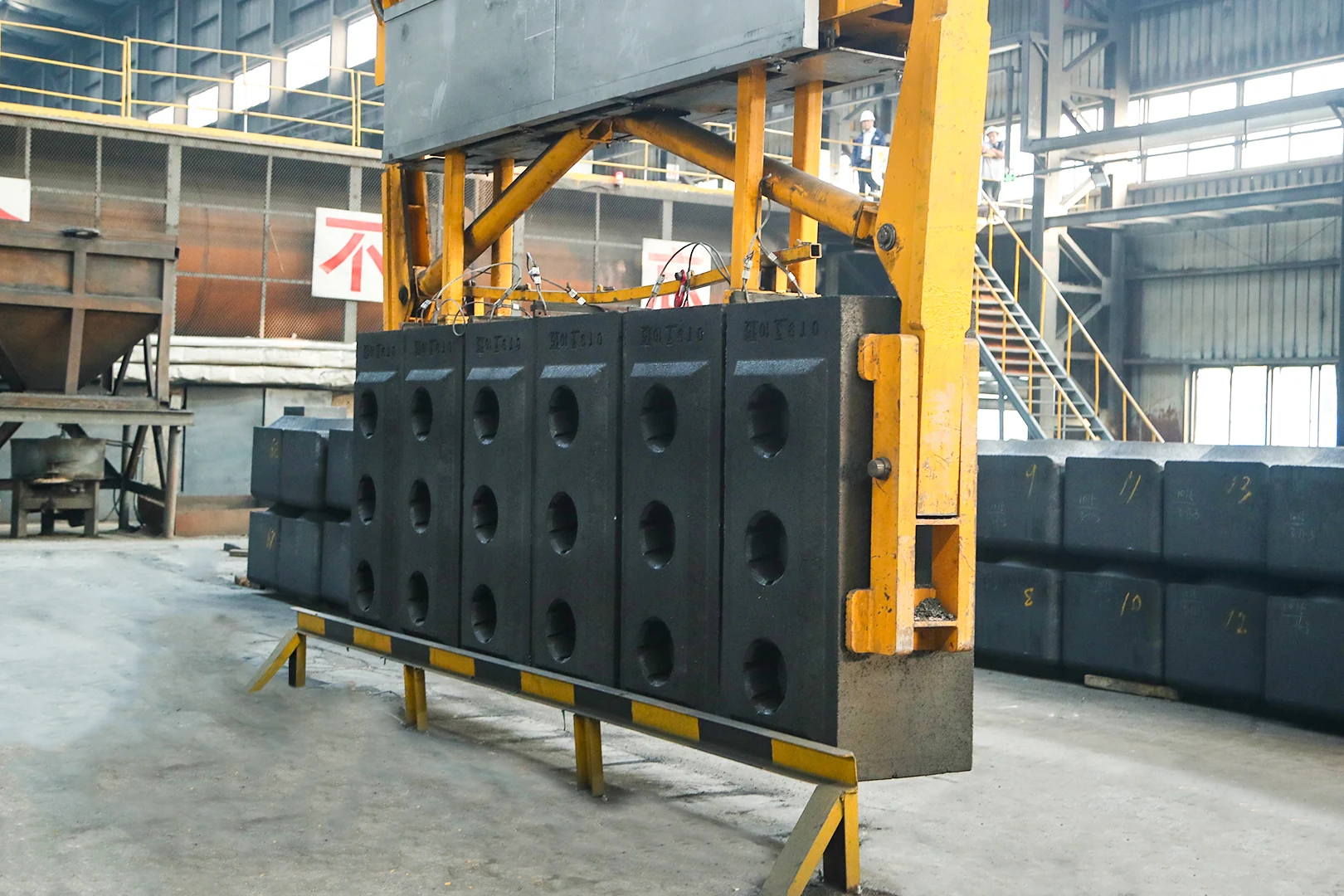
Application reference: Henan Mine Crane Group official application report. Equipment and operating advice for a new project should be specified against your load, process and site.
Start the equipment discussion
Relevant equipment families.
Compare the equipment family with your operating duty. Final attachments, controls and protection follow the application requirements.
Double-girder overhead cranes
Assess a custom process arrangement against the carbon-block duty and building interfaces.
View equipment options ↗Process lifting attachments
Engineer the guided gripping interface for the actual block range and independent/linked sequence.
View equipment options ↗Plan a similar application
Build the specification
around your operation.
For a carbon-block stacking crane, send the block and process information needed to define the attachments:
- Block dimension and mass ranges, surface condition and permitted gripping faces.
- Furnace, transfer and stack layouts with required placement geometry.
- Attachment positions and which movements must be independent or coordinated.
- Travel distances, lifting range, load spectrum and required cycles.
- Temperature/dust conditions and electrical-room cooling/access requirements.
- Gripping/release checks, safety functions and representative acceptance demonstrations.
Before you specify
Questions for
your project.
How do we decide between independent and linked attachment use?
Map the handling sequence and block positions. Identify which actions need separate movement and which require coordinated handling, then review the gripping interfaces with the supplier.
What information is needed for the guided attachments?
Provide block drawings, mass and surface data, required contact faces and the placement envelope. Include access and wear-inspection requirements for the guide arrangement.
How should we specify the hot and dusty environment?
Give the expected temperatures, dust conditions and exposure locations, with the proposed electrical-room position and maintenance access. Define any separate classified-area requirements explicitly.


