
Runway and structural support
Provide runway rail-centre span, rail section, rail-top level, building clearances and available support drawings. Ask for the selected wheel loads and interface dimensions for review by your structural engineer.
Build a traceable component and spare-parts brief for the selected 20T main / 5T auxiliary ladle crane: identify the equipment, match the interface and retain the drawing revision.

Red foundry crane marked 200/75/10t inside a steel plant. Series reference photograph; it does not establish the requested 20T main / 5T auxiliary arrangement or a matching spare part.
Hook requirements
Start with your known requirements. Our team can clarify the remaining interfaces.
Separate the listed product information from the dimensions and responsibilities that need your project input.
| Hook requirements | 20T main / 5T auxiliary; confirm the selected mechanisms and permitted operating conditions. |
|---|---|
| Component schedule | Manufacturer, model and nameplate or drawing reference for each requested service item. |
| Spare matching | Part number, parent component, mating interface and applicable drawing revision. |
| Duty and exposure | Load cycle, shifts, measured heat and dust conditions, service access and fault observations. |
| Technical records | Crane outline, component drawings, manuals, parts list and agreed inspection records. |
| Stock recommendation | Identified items, quantities and basis matched to site maintenance resources and operating pattern. |
| Supply and support | Confirming, ordering and acceptance roles; delivery terms, agreed substitutions and support scope. |
Listed information supports initial selection. Final dimensions, loads, speeds and components are defined in the project technical offer.
Provide runway rail-centre span, rail section, rail-top level, building clearances and available support drawings. Ask for the selected wheel loads and interface dimensions for review by your structural engineer.
Show pickup and set-down points, required upper and lower hook positions, load dimensions and rigging height. Overall building height alone does not define useful hook travel.
State lifts per hour, travel distances, working shifts, voltage and frequency. Identify dust, corrosion, temperature or any classified hazardous area.
| Work package | Agree in the quotation |
|---|---|
| Crane equipment | Selected bridge, hoist or trolley, travel drives, controls and specified safety functions. |
| Runway and power feed | Rails, supporting steelwork, power-feed system and the allocation of building interfaces. |
| Delivery and installation | Named delivery term, unloading, installation work, local labour and access equipment. |
| Acceptance and handover | Inspection and test plan, records, documentation, training, spare parts and warranty terms. |
This is a scope-planning checklist. Inclusion and responsibility depend on the agreed contract.
Match the requested service item to the actual crane and operating conditions. Record the component identity and service-access constraints before comparing replacement proposals.
Use the Site interfaces tab above to check the layout and operating conditions. Record your requirements in the project brief alongside this page.
Review the product configuration and purchasing requirements for this equipment.
Plan component records and spare parts around the selected 20T main / 5T auxiliary foundry ladle crane. Identify each mechanism, its manufacturer and model, then link every proposed spare to the parent component, mating interface and drawing revision. The headline hook ratings do not establish a 25T combined lifting capacity or interchangeable parts.
PREPARE THE SERVICE BRIEF
A similar-looking crane or the same headline tonnage does not identify a replacement. Start with the actual equipment records and the component concerned.
Provide legible nameplate photographs, existing part references, drawing numbers and revisions. Supply the requested mating dimensions, connections and installation arrangement in mm; obtain supplier confirmation of the proposed match.
Describe operating shifts, load cycle, heat and dust exposure, service access and the observed fault or replacement reason. Use the applicable equipment instructions and service records when reviewing the requested item.
State site maintenance resources and intended stocking arrangements. Ask for an identified spare recommendation with its basis, quantity, delivery terms and support responsibilities; record who confirms, orders and accepts each item.
CRANE-SERIES PHOTOGRAPHS
The first photograph is marked 200/75/10t and the third 200/50t. These series views help identify visible arrangements; they do not establish the 20T / 5T equipment or a replacement-part match.
01 / SERIES REFERENCERed foundry crane marked 200/75/10t inside a steel plant. Series reference photograph; it does not establish the requested 20T main / 5T auxiliary arrangement or a matching spare part.
 02 / SERIES REFERENCE
Orange foundry overhead crane viewed from a plant walkway. Series reference photograph; component model, part reference and interface must be identified from the selected equipment records.
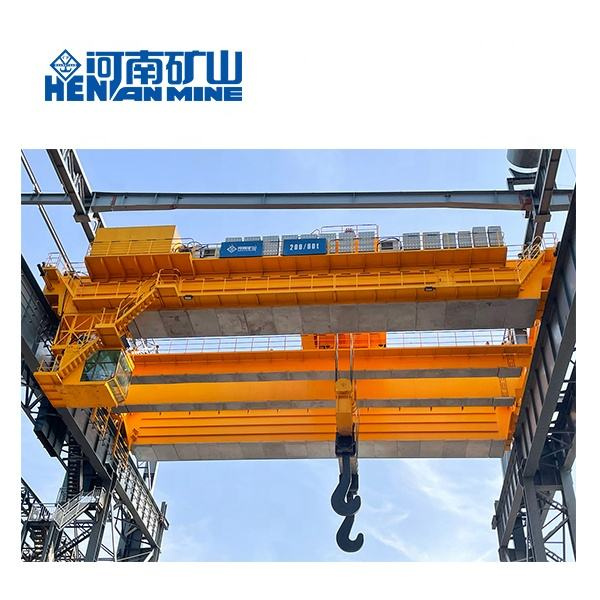 03 / SERIES REFERENCE
Yellow heavy overhead crane marked 200/50t outdoors. Series reference photograph; its visible arrangement does not prove the requested 20T / 5T configuration or component compatibility.
ITEMIZE THE QUOTATION
Distinguish the whole-crane package from each identified spare, inspection or support task. List part reference and revision, quantity, compatibility confirmation, documents, delivery terms and exclusions. Use the Supply scope tab for shared site and handover responsibilities.
CHECK ACCESS AND REPLACEMENT INTERFACES
Provide crane outline and component drawings, span and useful hook travel in m, and service access and replacement clearances in mm. For new equipment, also mark ladle pickup, transfer, pouring and standby positions with hook levels and vessel envelopes.
Discuss your service briefAGREE THE RECORDS
Request the agreed manuals, component drawings, parts schedule and inspection records for the delivered equipment. Allocate maintenance, inspection and replacement responsibilities and confirm the applicable isolation provisions with the responsible supplier and site teams.
Historical supplier-listing information for context. Request a current quotation for your selected configuration and project scope.
Whole-crane listing context only; this is not a spare-part or service quotation. The range combines the saved price tiers. Captured 2026-10-13. This is not a current project quotation; capacity, dimensions, options, quantity, delivery and included services affect final price.
Archived supplier-listing reference. The saved price is not a current quotation; confirm configuration, quantity, shipping and included scope. View saved source listing ↗
Bring engineering, purchasing and the installation team into the same scope before the purchase order.
Attach the crane and component references, readable nameplates, part numbers, drawings and revisions. Mark mating dimensions, connections, service access and replacement clearances.
Send a drawing for reviewLoad or working task, layout, operating cycle, destination and timing.
Selected configuration, interface drawing, component schedule and scope exceptions.
Inspection, testing and documentation, delivery responsibilities and warranty terms.
Start with the actual crane model and equipment reference, then identify the parent component manufacturer, model and nameplate or drawing reference. Provide the existing part number, applicable revision, requested mating dimensions and the replacement reason. Confirm the proposed match before ordering.
The same headline tonnage does not prove compatibility. Component variants, mounting dimensions, connections and drawing revisions can differ. Obtain confirmation of the specific part and its mating interface for the selected equipment.
The saved US$36,800–37,000 per-set range, captured 2026-10-13, is whole-crane supplier-listing context. It is not a spare-part, service, current or delivered quotation. Request an itemized offer for the identified components, quantities and agreed work scope.
Keep the delivered crane reference, component schedule, parts list, drawings and revisions, manuals and relevant service records together. Record approved substitutions and changed components so the next order uses the current reference.
It describes the main and auxiliary hook requirements. The selected equipment documents must define the actual mechanisms, attachment-load basis and permitted operating conditions. The two headline figures do not establish a 25T combined lifting capacity.
 01
 02
 03
 04
 05
 06
 07
 08
EXPLORE OUR NEWSROOM
Projects, technology and updates
from Henan Mine Crane Group.
 01
Crane projects, dispatches and on-site applications.
 02
Equipment developments, engineering and manufacturing.
 03
Factory updates, partnerships and the people behind our cranes.
 04
Trade shows, industry meetings and company events.


