
Aluminium production / Custom equipment application
Aluminium Process Cranes for Carbon Blocks, Feeding and Automated Anode Exchange
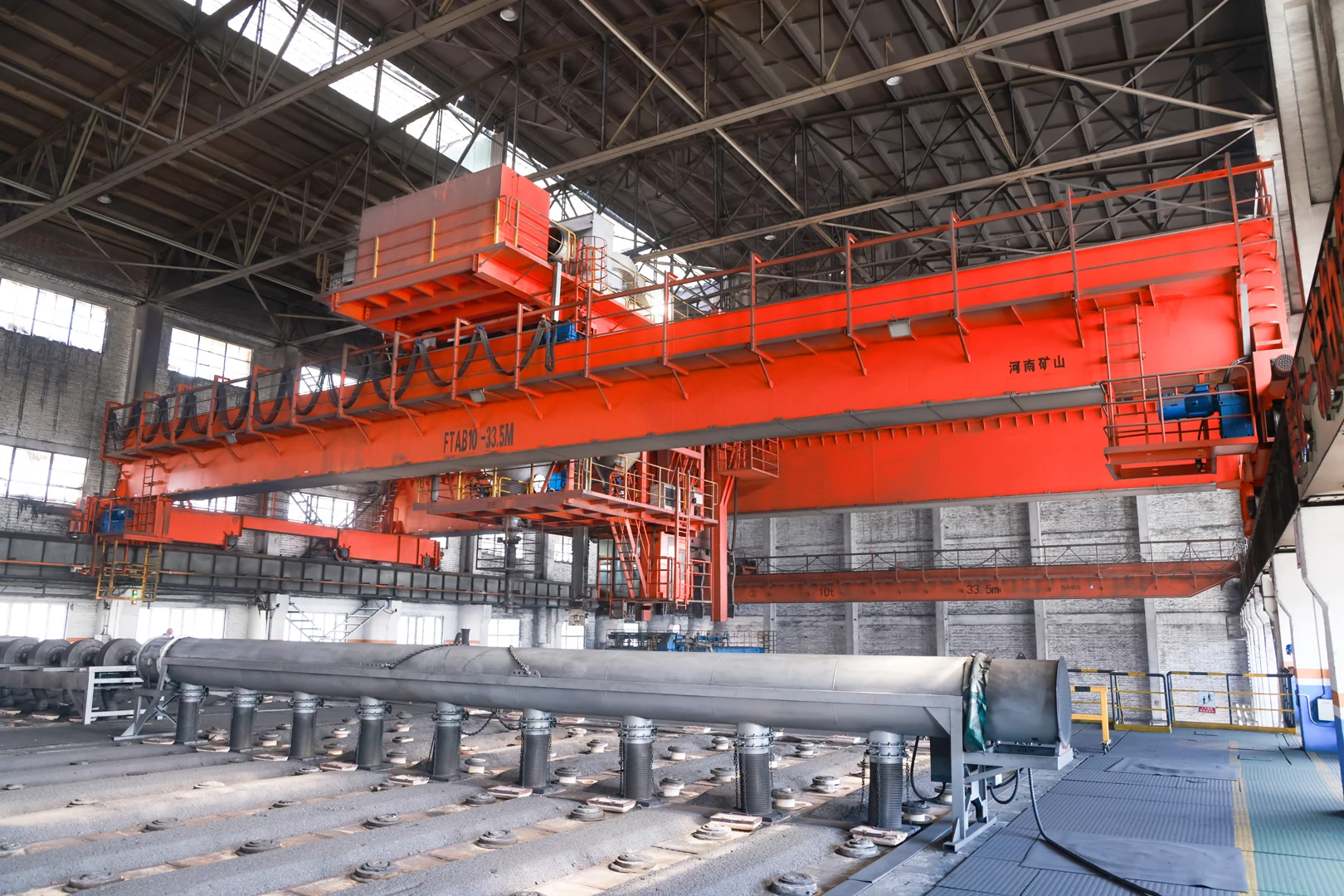
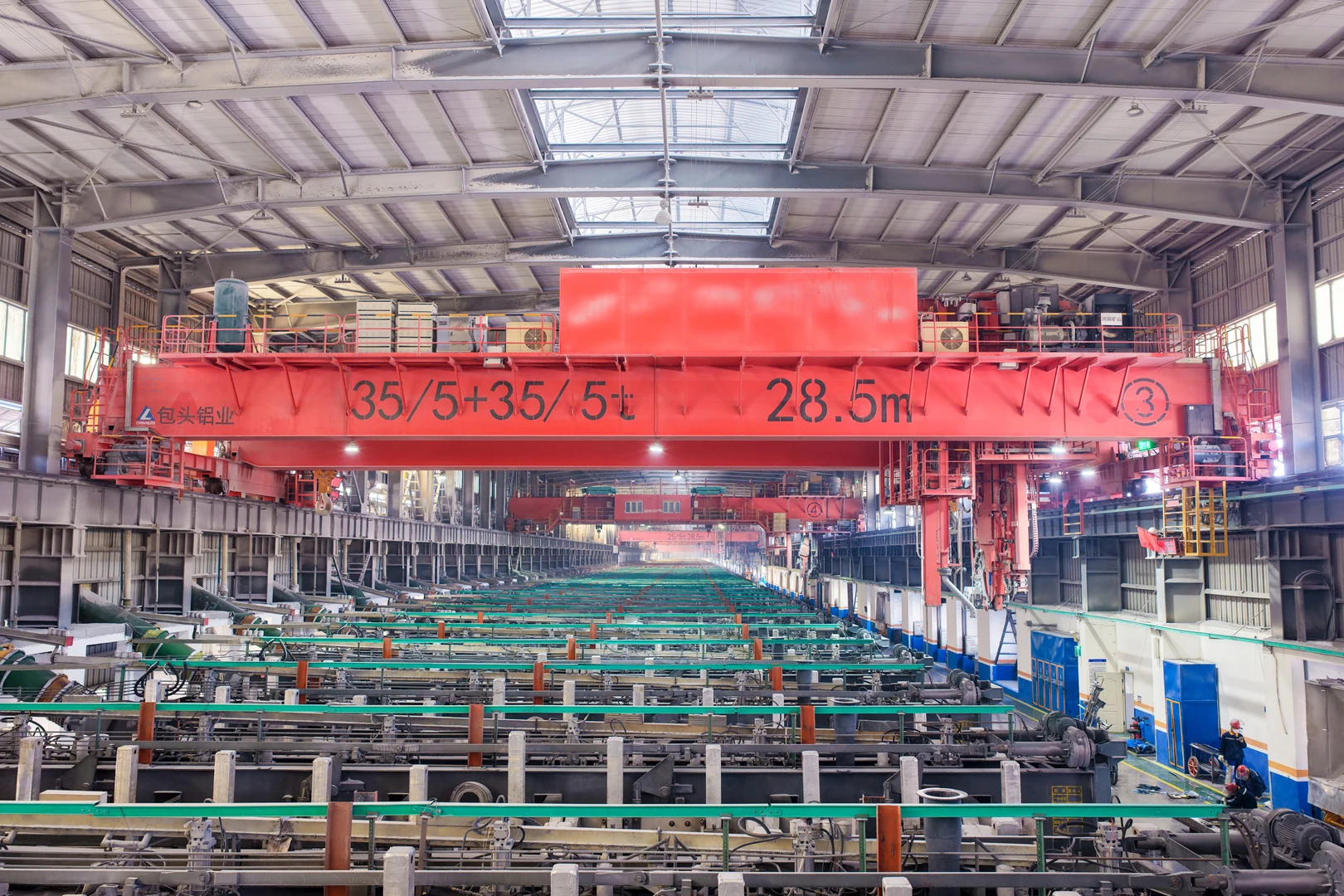
Carbon storage and the potroom demand different handling tools. Henan Mine Crane Group's custom package for an unnamed aluminium company in Baotou combines a multifunction suction-and-feeding crane, an anode-carbon-block stacking crane and an aluminium-electrolysis multifunction unit tailored to these separate tasks.

- Customer
- Unnamed aluminium company in Baotou
- Equipment scope
- Three configuration types: suction/feeding crane, anode-block stacker and electrolysis multifunction unit
- Suction/feeding functions
- Twin carbon-block clamps, material suction and material distribution
- Stacker configuration
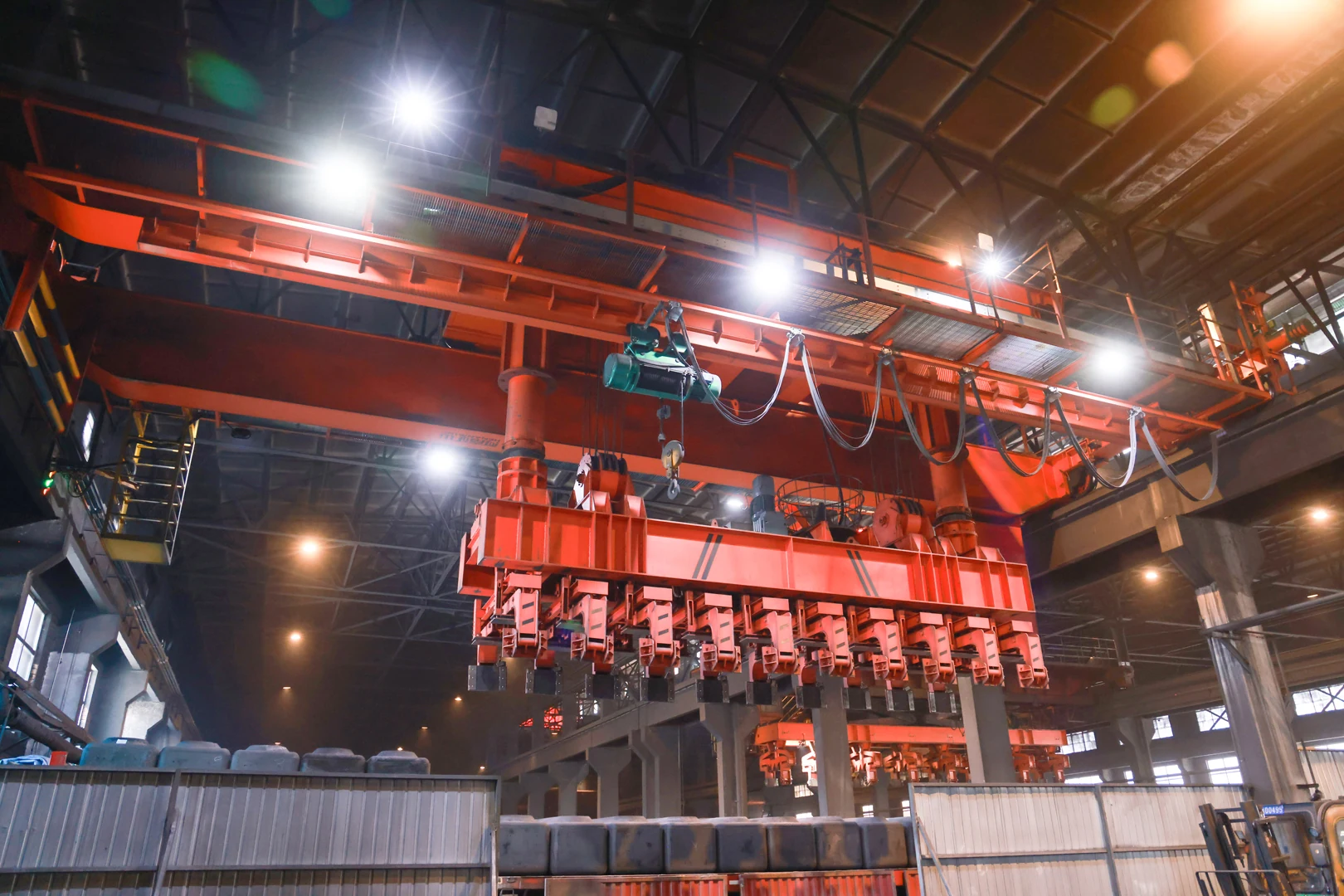
- Adjustable combined clamps; the described arrangement can grip ten anode blocks in one cycle
- Potroom functions
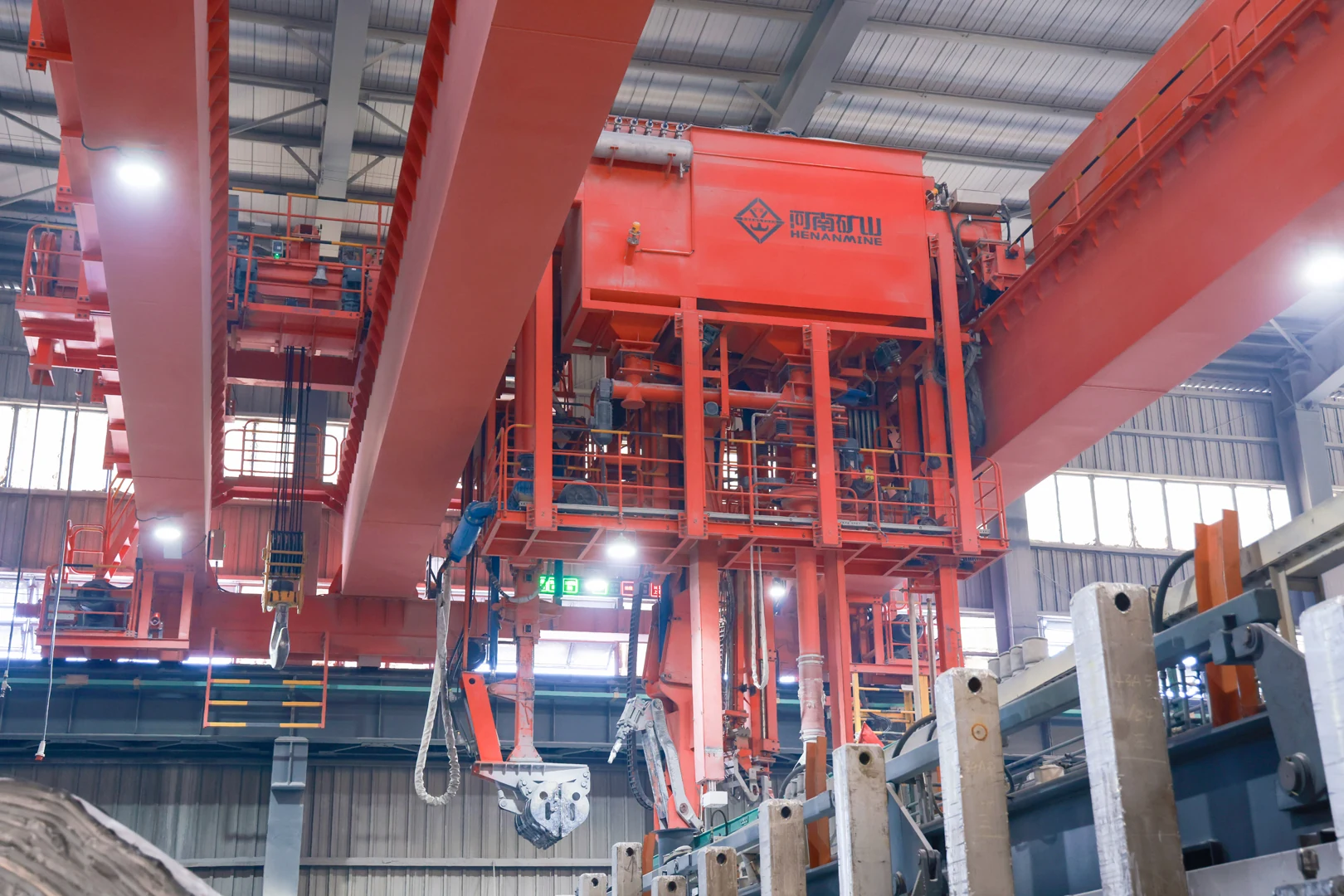
- Crust breaking, anode replacement, residue clearing and automatic cover-material loading
- Automation
- Sensor-based height measurement/tightening and AI-vision-based PTM automatic anode exchange
Three configurations across the aluminium material flow
The customer's application connects raw-material handling with the electrolysis process, but the equipment profile distinguishes three machine types. A suction-and-feeding crane serves material and carbon-block duties; a dedicated stacker moves anode blocks in the warehouse; a multifunction unit carries out potroom tasks. Treating them as one standard attachment would hide the different process interfaces.
The Baotou application is a customer-specific equipment profile. For procurement, the useful starting point is the set of tasks and attachments at each station. Keep the block-store handling duty separate from the potroom sequence so each configuration can be evaluated against its own working interfaces.
Wide-stroke gripping combined with suction and distribution
The multifunction suction crane combines twin carbon-block clamps with material suction and distribution. Its clamps use a long-stroke opening-and-closing mechanism to accommodate different block sizes. The described purpose is to reduce repeated tooth-plate changes and readjustment when handling the customer's block range.
For a similar duty, specify the smallest and largest blocks, permitted gripping faces and the material to be recovered or distributed. Suction and distribution requirements should be defined separately from block mass: material characteristics and process destinations determine a different part of the equipment scope.
Adjustable anode-block stacking at the warehouse
The anode-carbon-block stacker is described as a transfer hub in the carbon-block store. Adjustable combined clamps can grip ten anode blocks in the reported configuration, with the quantity changed to suit production requirements. This is a specific arrangement, rather than a ten-block rating for every stacker.
A buyer should provide block spacing, stack geometry and the required number of blocks per movement. Include how incomplete groups will be handled and how the receiving station supports the load. These are specification inputs for evaluating an adjustable clamp against the actual warehouse layout.
Sensor and vision functions for the electrolysis unit
The electrolysis multifunction unit includes sensor-based height measurement and tightening. Its stated operations include breaking electrolyte crust, replacing anodes, removing spent anodes, cleaning residue, recovering cover material and automatic cover-material loading. These operations should be mapped to the customer's pot design and operating sequence.
PTM automatic anode exchange uses AI visual recognition across eight operating steps. For a proposed installation, define the complete exchange sequence and the conditions in which vision and sensing must operate. Access control, manual intervention and recovery procedures belong in the same project-specific automation review.
Build the enquiry around the process boundary
Start with a task list for the block store, suction/feeding stations and potroom. Identify which tasks need separate equipment and which may be combined, then supply drawings of the loads and process interfaces. This allows the crane and tooling scope to be discussed without assuming that every function belongs on one machine.
For acceptance, agree demonstrations of clamp adjustment, the selected block grouping and the required anode-exchange sequence. Establish the conditions for sensor and vision performance and specify how exceptions will be handled. Define any cycle-time or performance target with the loads, operating conditions and measurement method used for acceptance.
Application photographs
See the equipment and working context.
Photographs and accompanying illustrations from this application report. Open an image for a larger view.



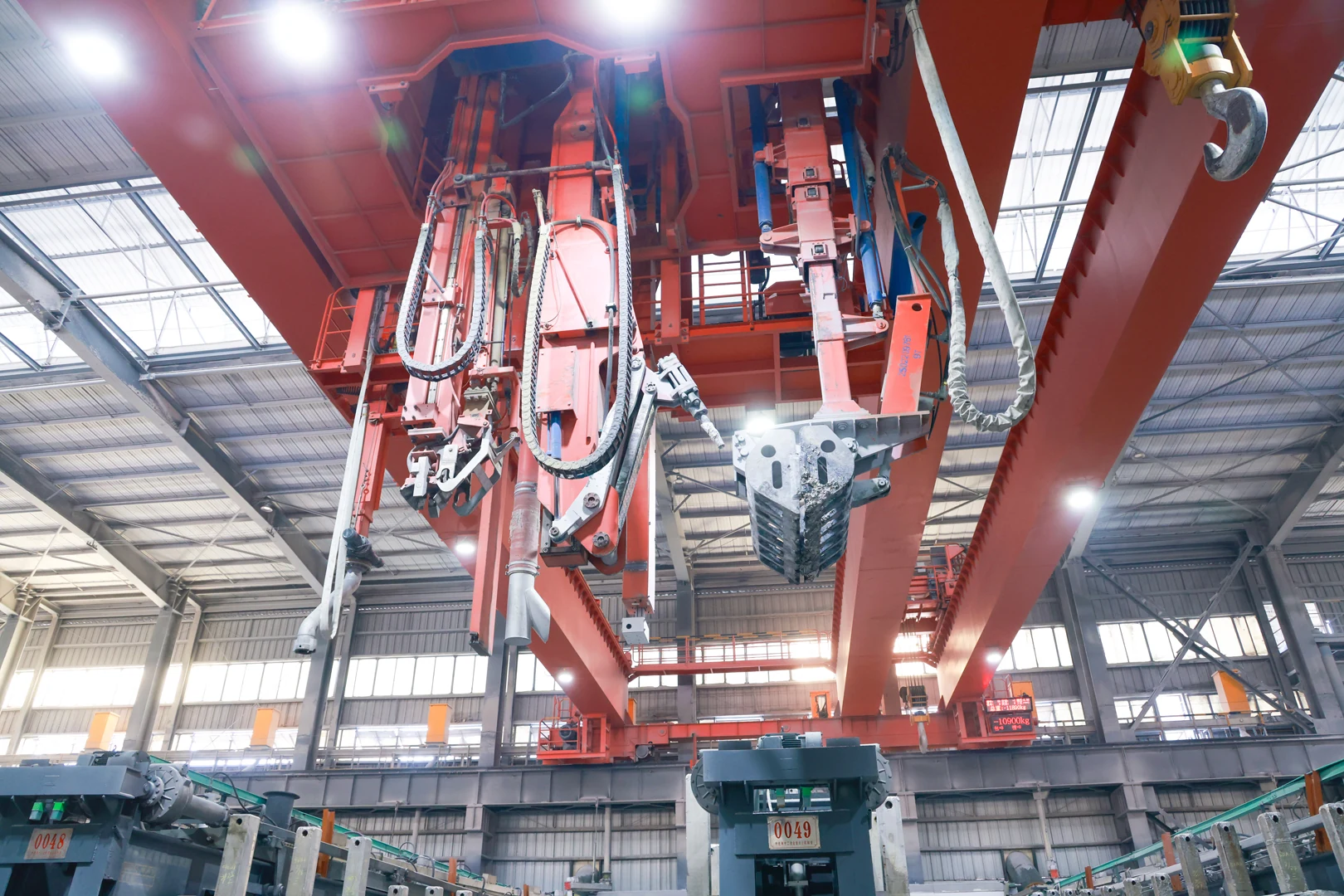
Application reference: Henan Mine Crane Group official application report. Equipment and operating advice for a new project should be specified against your load, process and site.
Start the equipment discussion
Relevant equipment families.
Compare the equipment family with your operating duty. Final attachments, controls and protection follow the application requirements.
Double girder overhead cranes
Evaluate a purpose-built bridge arrangement against station coverage and process loads; a general catalogue crane does not include the stated potroom functions automatically.
View equipment options ↗Lifting attachments
Discuss block clamps and dedicated process tooling using block drawings, required grouping and the potroom operation list.
View equipment options ↗Plan a similar application
Build the specification
around your operation.
Share your aluminium-process task list so the carbon store, material-handling and potroom configurations can be evaluated separately.
- Carbon-block dimensions, mass, gripping faces and size variations
- Required block grouping per lift, stack spacing and warehouse layout
- Suction/distribution material properties and destination interfaces
- Pot dimensions, anode interfaces and replacement sequence
- Required height measurement, tightening, vision and automation acceptance conditions
- Operating temperatures, dust exposure, intervention rules and maintenance access
Before you specify
Questions for
your project.
How should block-store and potroom functions be divided?
Specify suction/feeding, block stacking and electrolysis multifunction work against their own stations. The required process tasks and interfaces establish which equipment functions can be combined.
Can the stacker always lift ten blocks?
Ten blocks belongs to the described adjustable clamp arrangement. The permitted group for another project depends on block geometry, mass and the engineered gripping configuration.
What is needed to specify automatic anode exchange?
Provide pot and anode interfaces, the operating sequence and the required conditions for sensing and vision. Include access control, intervention, recovery and the demonstrations required for acceptance.
Continue exploring
More industrial manufacturing applications.

400t Double-Girder Gantry Crane for Heavy Chemical-Equipment Manufacturing
More than 30 assorted cranes were built for a Shandong chemical-equipment manufacturer. The featured 400t double-girder gantry combines motion control, brake logic and operator monitoring for heavy fabrication handling.
Explore this application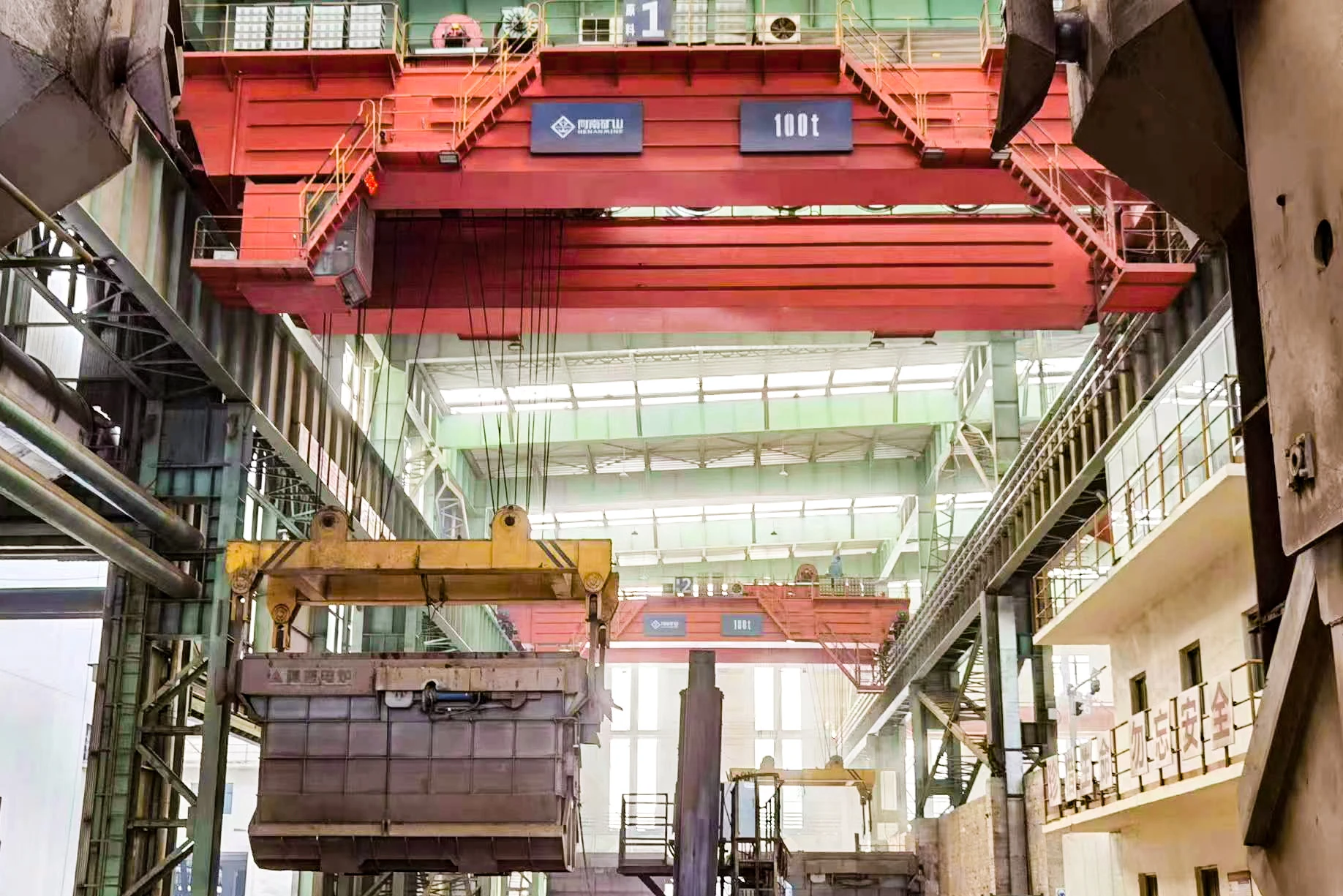
150-Plus Production-Line Cranes Including Two 100t Intelligent Units
More than 150 assorted cranes serve an unnamed plant's production lines, including two 100t intelligent units. A separate second-phase batch was still in manufacture at this supply milestone.
Explore this application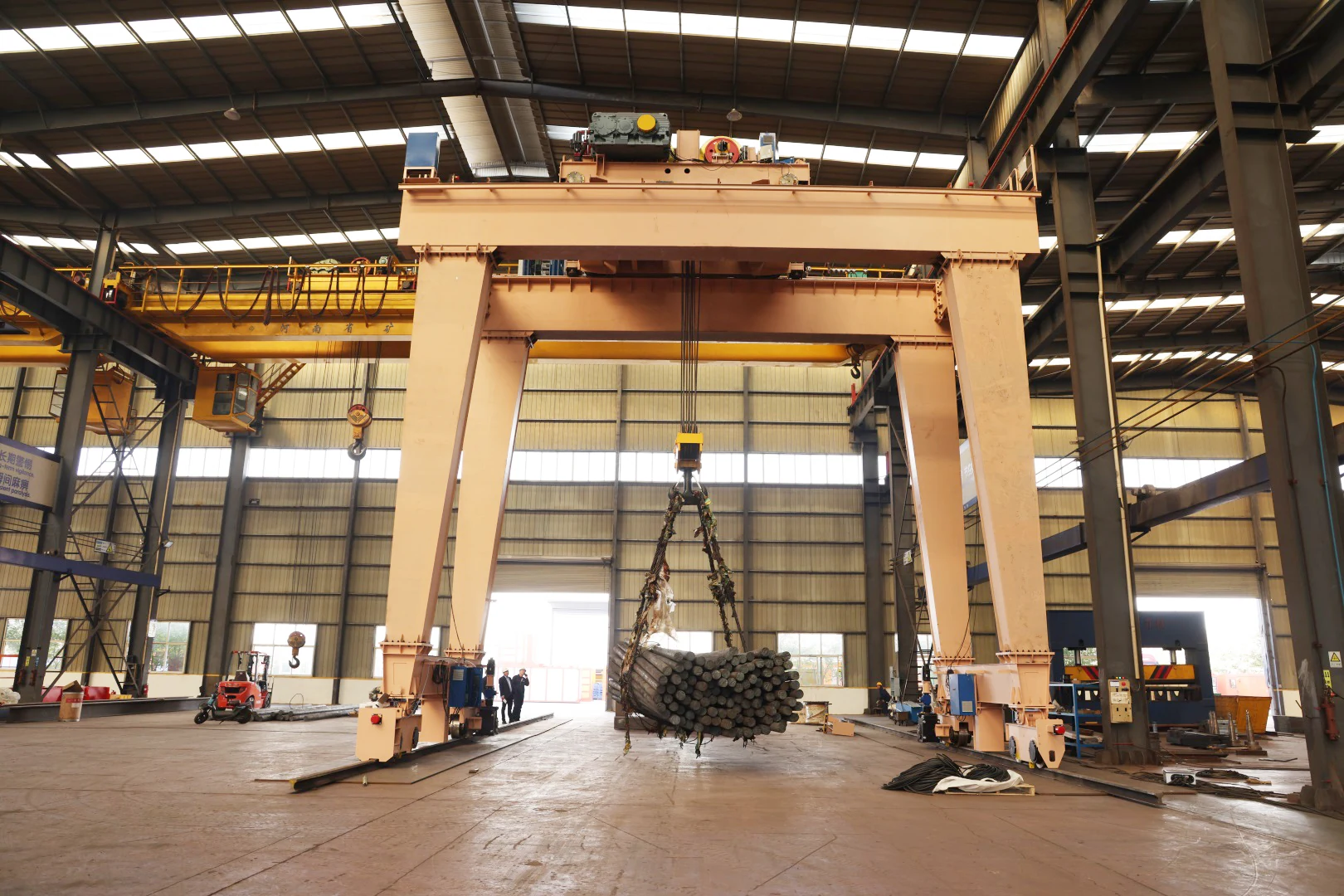
100t Precision Gantry Crane Passes Factory Acceptance for a China Nuclear Power Project
The 100t gantry passed factory acceptance including heavy-load moving and positioning tests. Servo travel, a 0.5 mm minimum jog and positioning within 5 mm are distinct features in this specific account.
Explore this application


