
Runway and structural support
Provide runway rail-centre span, rail section, rail-top level, building clearances and available support drawings. Ask for the selected wheel loads and interface dimensions for review by your structural engineer.
Use the complete suspended load, operating cycle and building layout to review the bridge, hoisting arrangement and runway interface.
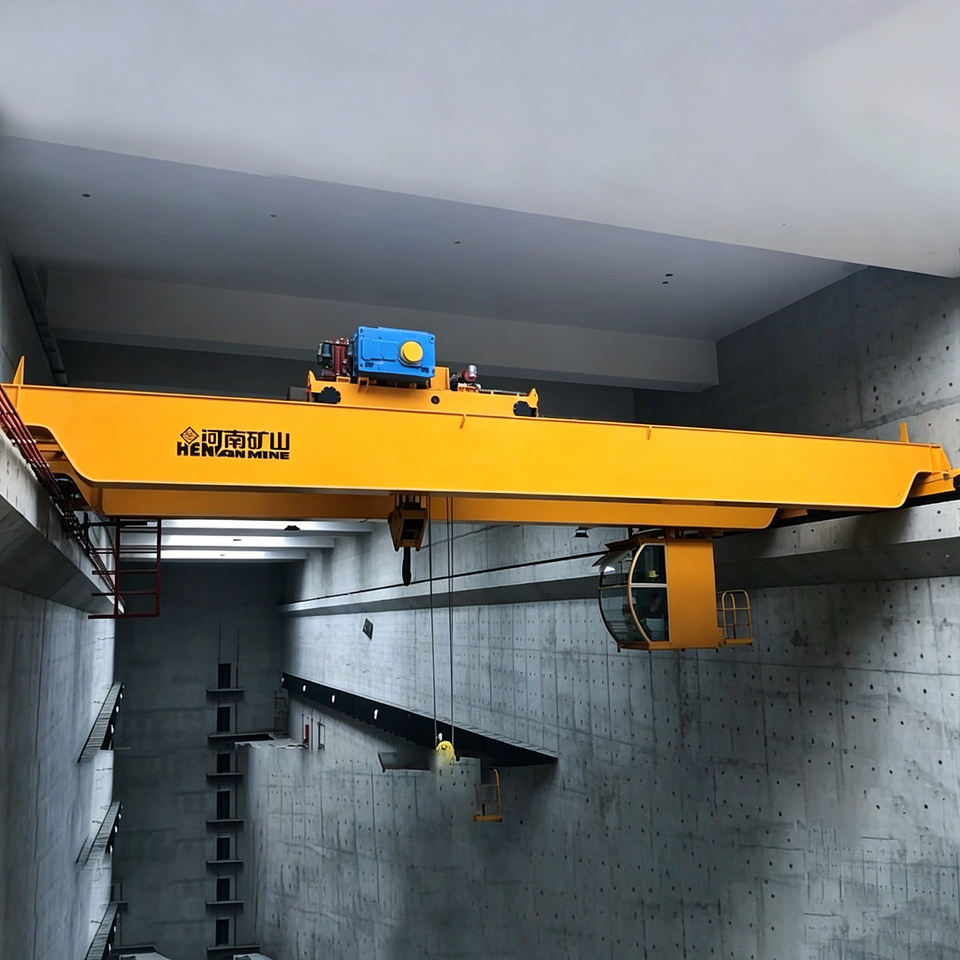
Yellow double-girder bridge with blue upper machinery and hanging hooks in a concrete-walled bay
Listed rated capacity
Start with your known requirements. Our team can clarify the remaining interfaces.
Separate the listed product information from the dimensions and responsibilities that need your project input.
| Application information for selection | Provide the goods, attachment and complete suspended mass in T, together with the expected handling pattern. State runway rail-centre span and useful hook travel in m, with the detailed site and load dimensions in mm. Identify the purchaser contact responsible for confirming this information for the supplier’s equipment proposal. |
|---|---|
| Purchaser document and information schedule | List the site survey, runway, building, electrical and attachment information to be provided by the purchaser or its appointed parties. Give each item a reference, provider and requested issue stage. Ask the supplier to identify the inputs it needs and the effect of missing or revised information on its proposed work. |
| Proposed order milestones | Request the supplier’s proposed milestones for equipment selection, drawing submission and review, manufacturing readiness and dispatch arrangements. Identify the information or confirmation needed at each stage. Agree the relevant dates and dependencies in the selected order schedule with the parties responsible for delivering them. |
| Drawing submission and purchaser review | Identify the drawings and technical documents requiring purchaser or other-party review. Request proposed submission stages and agree the review contacts and comment-return arrangements. Keep the equipment identity, drawing revision and review status visible so the parties can confirm which information supports the next proposed stage. |
| Coordination with site parties | Name the runway, building, electrical and receiving parties involved in the project. Ask what supplier information each needs and when it is required for their own planning. Bring their proposed information exchanges and site-readiness inputs into the same coordination schedule as the crane order. |
| Revisions and schedule-impact response | Agree how revised loads, dimensions or interface documents will be identified and sent to the affected parties. Request the supplier’s response on the selected equipment, documents and proposed schedule. Record the revised responsibilities and dates after the parties have reviewed the change and confirmed the updated plan. |
| Dispatch information and open actions | Define the equipment and document information required for the purchaser’s dispatch and receiving discussion. Request the proposed packing references, delivery arrangements and outstanding-item status at the agreed stage. Assign owners to open actions and confirm the applicable schedule and commercial arrangements in the order records. |
| Rated load | Complete suspended load including rigging and attachments; confirm each hook and combined load case. |
| Span and travel | Runway rail-centre span, bridge travel, trolley travel and end approaches. |
| Useful lifting height | Required upper and lower hook positions with the load and rigging. |
| Duty and motion speeds | Load spectrum, lifts per hour, shifts, starting frequency and selected lift/travel speeds. |
| Runway and power | Support capacity, wheel reactions, rail geometry, voltage, frequency, phase and power-feed arrangement. |
Listed information supports initial selection. Final dimensions, loads, speeds and components are defined in the project technical offer.
Provide runway rail-centre span, rail section, rail-top level, building clearances and available support drawings. Ask for the selected wheel loads and interface dimensions for review by your structural engineer.
Show pickup and set-down points, required upper and lower hook positions, load dimensions and rigging height. Overall building height alone does not define useful hook travel.
State lifts per hour, travel distances, working shifts, voltage and frequency. Identify dust, corrosion, temperature or any classified hazardous area.
| Work package | Agree in the quotation |
|---|---|
| Crane equipment | Selected bridge, hoist or trolley, travel drives, controls and specified safety functions. |
| Runway and power feed | Rails, supporting steelwork, power-feed system and the allocation of building interfaces. |
| Delivery and installation | Named delivery term, unloading, installation work, local labour and access equipment. |
| Acceptance and handover | Inspection and test plan, records, documentation, training, spare parts and warranty terms. |
This is a scope-planning checklist. Inclusion and responsibility depend on the agreed contract.
Use the complete suspended load, operating cycle and building layout to review the bridge, hoisting arrangement and runway interface.
Use the Site interfaces tab above to check the layout and operating conditions. Record your requirements in the project brief alongside this page.
Review the product configuration and purchasing requirements for this equipment.
Double Girder Overhead Crane. Available rated-load options: 3T complete suspended-load request or 5T complete suspended-load request or 10T complete suspended-load request or 16T complete suspended-load request or 20T complete suspended-load request. An overhead crane carries a suspended load across a building bay on a bridge and moves the hoist along the bridge girder. Also specified as a double girder bridge crane, this equipment can be configured for the work area and lifting task. A selected bridge, hoist and runway arrangement can serve pickup and set-down points across the workshop while keeping the floor route available for production. Common applications include machine shops and fabrication bays and equipment assembly and maintenance. Select the configuration, working range, controls and supply scope for your operating conditions, then request a current, itemized quotation.
Confirm model, dimensions, duty, power supply, selected options, delivery and installation scope in the current technical offer.
START WITH THE LOAD
An overhead crane carries a suspended load across a building bay on a bridge and moves the hoist along the bridge girder. A selected bridge, hoist and runway arrangement can serve pickup and set-down points across the workshop while keeping the floor route available for production. Typical applications include machine shops and fabrication bays, equipment assembly and maintenance, steel and material handling. Compare the proposed configuration with the actual load, reach, duty and site dimensions.
Include the load, slings, lifting beams and attachments. State the load spectrum, lifts per hour, shifts and required lifting and travel speeds.
Provide runway rail centres, upper and lower hook positions, side and end approaches, workpoints and roof or service obstructions.
Share support drawings and site voltage, frequency and phase. Itemize the crane, rails, moving power feed, installation, testing and commissioning.
Saved supplier listing captured 2026-10-13; quantity tiers: 1-2 sets: US$6,300 per set · ≥3 sets: US$5,760 per set. The listing does not establish a current, project-specific or delivered price. Capacity, span and lifting height affect crane size. Hoist type, operating duty and selected speeds affect the mechanism package. Runway rails, supports, power supply and installation may be quoted separately. Shipping, quantity, site conditions and documentation affect the delivered project price.
SEE THE EQUIPMENT
Review these double girder overhead crane photographs alongside the requested operating conditions and layout. Visible equipment is a product-range reference; confirm the ordered configuration in the offer.
01 / DOUBLE GIRDER OVERHEAD CRANE · 01Yellow double-girder bridge with blue upper machinery and hanging hooks in a concrete-walled bay.
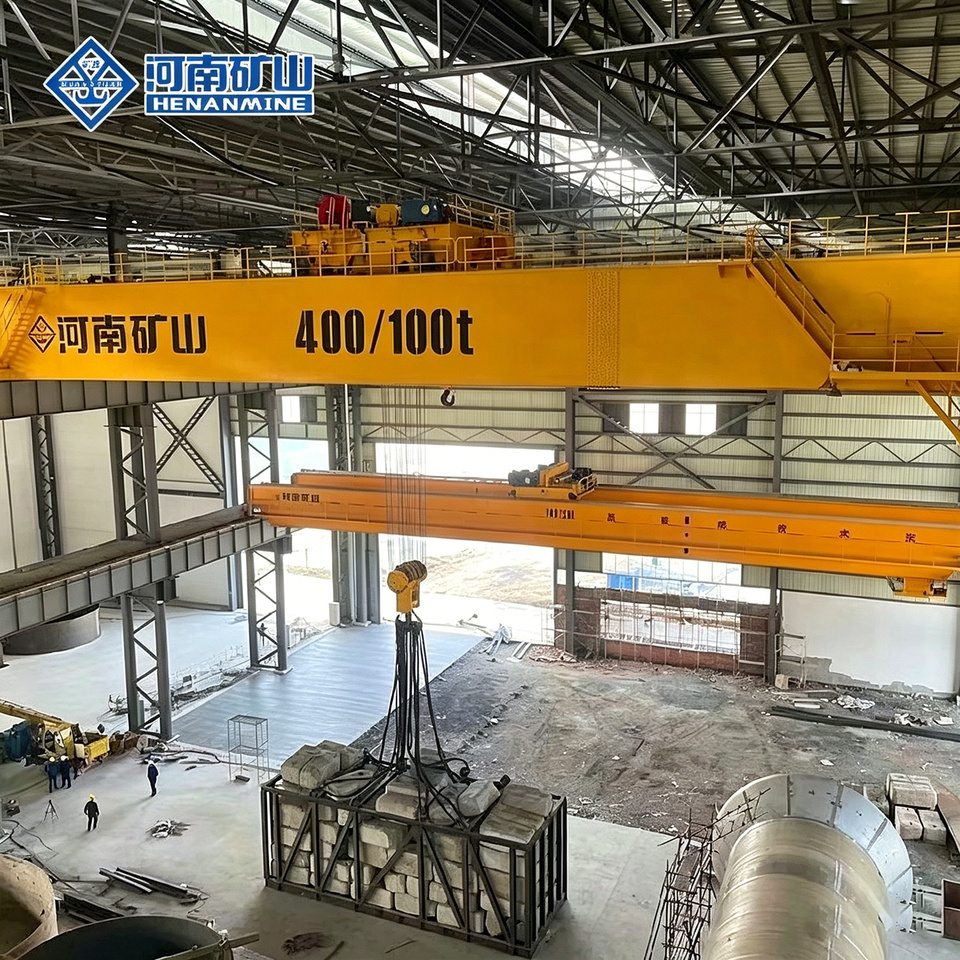 02 / DOUBLE GIRDER OVERHEAD CRANE · 02
Yellow double-girder overhead crane with upper walkway and suspended hook gear above workshop equipment.
 03 / DOUBLE GIRDER OVERHEAD CRANE · 03
Close upward view of a yellow bridge girder with upper trolley machinery beneath a steel roof.
Specify pendant, radio remote or cabin control only where listed for this model. Confirm operator sight lines, motion speeds, emergency stops and any backup controller in the quoted scope.
COMPARE THE COMPLETE PROPOSAL
Specify the equipment and services you need. Your quotation should identify what is included and what is priced separately.
Choose the equipment and services to include in the quotation. The final offer should state supplier and purchaser responsibilities for each site interface.
SITE DIMENSIONS · DUTY · EQUIPMENT SCOPE
Provide the layout and operating conditions to compare a double girder overhead crane quotation against your actual project.
Discuss your siteHenan Mine Crane Group
Compare itemized quotations with the same equipment, delivery and site-service boundaries.
Confirm 3, 5, 10, 16 and 20 ton, selected mechanisms, control options and required accessories.
List rail or support work, power supply, clearances and purchaser-provided services.
State transport, unloading, erection, testing, commissioning and service parts included in the offer.
Historical supplier-listing information for context. Request a current quotation for your selected configuration and project scope.
Range combines the price tiers shown in the saved listing. Captured 2026-10-13. This is not a current project quotation; capacity, dimensions, options, quantity, delivery and included services affect final price.
Archived supplier-listing reference. The saved price is not a current quotation; confirm configuration, quantity, shipping and included scope. View saved source listing ↗
Bring engineering, purchasing and the installation team into the same scope before the purchase order.
Mark the runway, span, hook positions, columns, machines and load route. Include structural support drawings and the available site power.
Send a drawing for reviewLoad or working task, layout, operating cycle, destination and timing.
Selected configuration, interface drawing, component schedule and scope exceptions.
Inspection, testing and documentation, delivery responsibilities and warranty terms.
An overhead crane carries a suspended load across a building bay on a bridge and moves the hoist along the bridge girder.
Include the rated load, dimensions, operating cycle, site interfaces and required supply scope.
US$5,760–6,300 per set is the saved supplier-listing reference, captured 2026-10-13. Capacity, span and lifting height affect crane size. Hoist type, operating duty and selected speeds affect the mechanism package. Runway rails, supports, power supply and installation may be quoted separately. Shipping, quantity, site conditions and documentation affect the delivered project price. Request a current quotation for the selected configuration, quantity, delivery and services.
Size the crane from the heaviest complete suspended load, including lifting attachments, and provide the work cycle. The selected structure, hoist and duty must match the project requirements.
Capacity, span, lifting height, hoist, duty and controls affect equipment selection. Runway, electrical supply, transport, installation and commissioning depend on the agreed project scope.
 01
 02
 03
 04
 05
 06
 07
 08
EXPLORE OUR NEWSROOM
Projects, technology and updates
from Henan Mine Crane Group.
 01
Crane projects, dispatches and on-site applications.
 02
Equipment developments, engineering and manufacturing.
 03
Factory updates, partnerships and the people behind our cranes.
 04
Trade shows, industry meetings and company events.

