
Runway and structural support
Provide runway rail-centre span, rail section, rail-top level, building clearances and available support drawings. Ask for the selected wheel loads and interface dimensions for review by your structural engineer.
Review a YZ double-girder ladle crane using separate main and auxiliary duties. Coordinate the ladle lifting interface, charging or pouring workpoints and thermal protection before comparing the complete equipment and site scope.
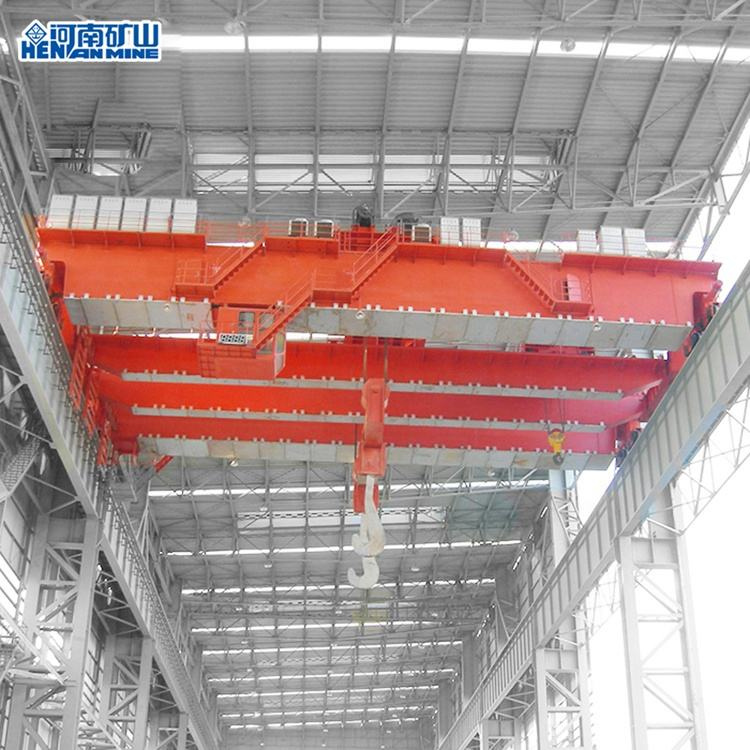
Red overhead bridge cranes with hanging hooks beneath a factory roof.
Listed rated capacity
Start with your known requirements. Our team can clarify the remaining interfaces.
Separate the listed product information from the dimensions and responsibilities that need your project input.
| Reference family | YZ double-girder casting/ladle overhead crane. |
|---|---|
| Main/auxiliary arrangement | Separate main and auxiliary lifting tasks; the selected technical schedule defines each rating and any permitted coordinated case. |
| Family capacity references | 100/32, 125/32, 140/40, 160/50 and 200/50 t appear in the supplier table; these are distinct reference configurations. |
| Ladle interface | Selected fixed lifting beam/device, connection centres, hooks and complete suspended mass. |
| Duty reference | A7 is described for the YZ family; selected crane and mechanism classifications follow the actual production cycle. |
| Hot-process interface | Furnace/ladle-car workpoints, useful hook travel, tipping envelope and thermal exposure. |
| Protection and control | Selected braking, hoist limits, monitoring, operator visibility and emergency response included in one agreed schedule. |
| Quotation basis | Itemized current proposal for the chosen lifting arrangement, span, duty, thermal package, delivery and site services. |
Listed information supports initial selection. Final dimensions, loads, speeds and components are defined in the project technical offer.
Provide runway rail-centre span, rail section, rail-top level, building clearances and available support drawings. Ask for the selected wheel loads and interface dimensions for review by your structural engineer.
Show pickup and set-down points, required upper and lower hook positions, load dimensions and rigging height. Overall building height alone does not define useful hook travel.
State lifts per hour, travel distances, working shifts, voltage and frequency. Identify dust, corrosion, temperature or any classified hazardous area.
| Work package | Agree in the quotation |
|---|---|
| Crane equipment | Selected bridge, hoist or trolley, travel drives, controls and specified safety functions. |
| Runway and power feed | Rails, supporting steelwork, power-feed system and the allocation of building interfaces. |
| Delivery and installation | Named delivery term, unloading, installation work, local labour and access equipment. |
| Acceptance and handover | Inspection and test plan, records, documentation, training, spare parts and warranty terms. |
This is a scope-planning checklist. Inclusion and responsibility depend on the agreed contract.
Use the complete suspended load, operating cycle and building layout to review the bridge, hoisting arrangement and runway interface.
Use the Site interfaces tab above to check the layout and operating conditions. Record your requirements in the project brief alongside this page.
Review the product configuration and purchasing requirements for this equipment.
The YZ family is a double-girder casting crane for hot-metal transfer and the defined charging or pouring sequence. The main device supports the ladle; auxiliary lifting serves a separately identified process task. Its load case is not an extra amount to add to the main rating.
Compare a current offer by the selected main/auxiliary arrangement, bridge geometry, thermal provisions and control package. The quoted scope should identify the equipment, power feed, runway interfaces, transport, erection and acceptance work separately.
ENGINEERING SELECTION
Match the ladle connection centres and suspended load to the selected main lifting device. Keep auxiliary handling and tipping cases separately identified.
Show pickup, transfer, charging/pouring, standby and set-down positions, including useful hook levels and the ladle clearance envelope.
Compare current proposals against the same configuration and delivery/site boundaries. An old catalogue tier does not price a complete hot-metal installation.
EQUIPMENT AND INTERFACES
Photographs illustrate the archived equipment. The selected technical offer defines the supplied rating and arrangement.


Henan Mine Crane Group
YZ double-girder casting/ladle overhead crane.
Identify support/rail or floor work, power feed, delivery, unloading, installation and commissioning responsibilities.
Compare offers for the same configuration, document revision, quantity, delivery term and site-service scope.
Henan Mine Crane Group
Product and mechanism identities, rated load cases, dimensions, motions and the selected control/protection package.
General arrangement, lifting interface, site envelope and case-based support data matched to the same revision.
Agreed inspection/test plan, applicable equipment documents, operating instructions, service parts and allocated handover responsibilities.
Bring engineering, purchasing and the installation team into the same scope before the purchase order.
Mark the runway, span, hook positions, columns, machines and load route. Include structural support drawings and the available site power.
Send a drawing for reviewLoad or working task, layout, operating cycle, destination and timing.
Selected configuration, interface drawing, component schedule and scope exceptions.
Inspection, testing and documentation, delivery responsibilities and warranty terms.
It is a main/auxiliary pair in the supplier family references. It does not mean a combined 250 t permissible lift. The selected load cases define permitted operation.
A current quotation is built from the selected lifting arrangement, span, duty, thermal/control package, delivery term and installation scope.
The selected rating and drawings, lifting interface, motion/control schedule, thermal provisions, protection functions and allocated acceptance/site responsibilities.
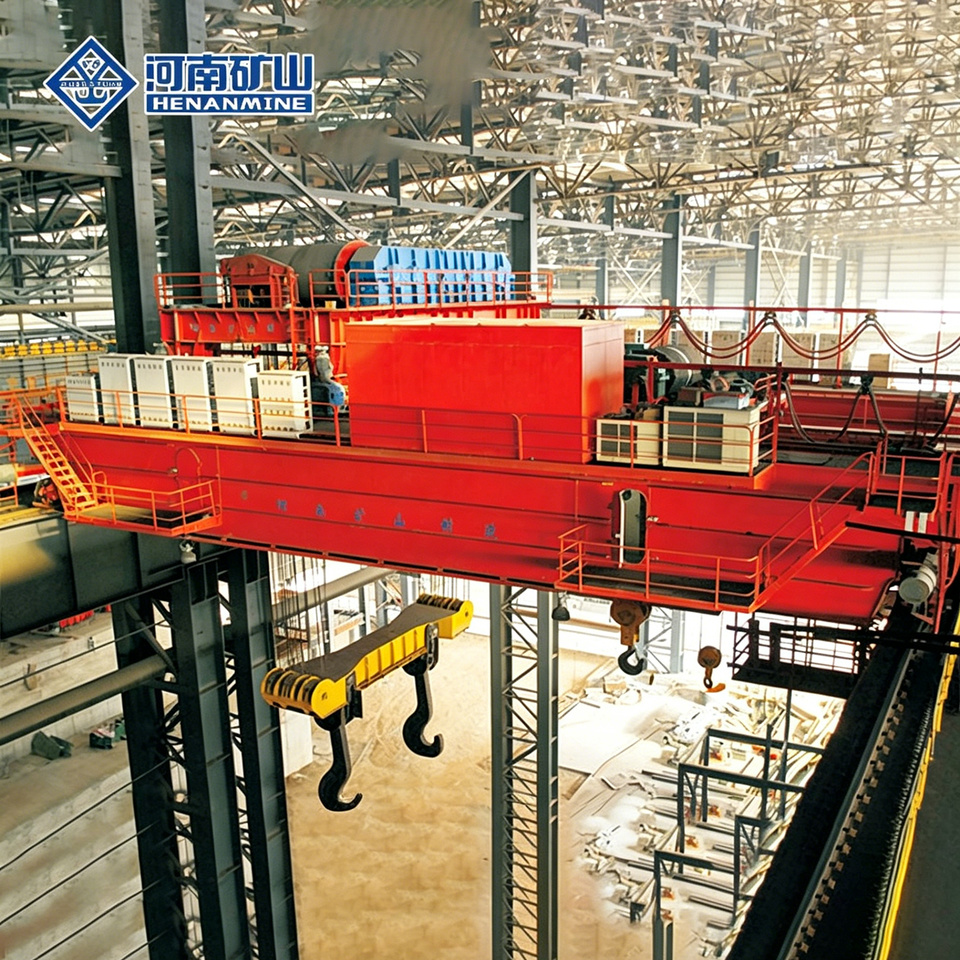
Ladle-crane comparison: review the proposed power-feed arrangement, hook-beam centres and separate main/auxiliary duties for your charging or pouring route.

Metallurgical-crane comparison: review the proposed controls, ladle connection and thermal protection for the selected route and operating cycle.
 01
 02
 03
 04
 05
 06
 07
 08
EXPLORE OUR NEWSROOM
Projects, technology and updates
from Henan Mine Crane Group.
 01
Crane projects, dispatches and on-site applications.
 02
Equipment developments, engineering and manufacturing.
 03
Factory updates, partnerships and the people behind our cranes.
 04
Trade shows, industry meetings and company events.