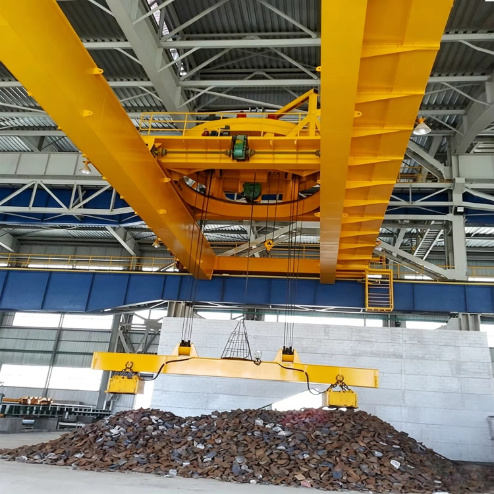
Runway and structural support
Provide runway rail-centre span, rail section, rail-top level, building clearances and available support drawings. Ask for the selected wheel loads and interface dimensions for review by your structural engineer.
Use the complete suspended load, operating cycle and building layout to review the bridge, hoisting arrangement and runway interface.

Red single-girder bridge crane spanning a green-walled workshop
Listed rated capacity
Start with your known requirements. Our team can clarify the remaining interfaces.
Separate the listed product information from the dimensions and responsibilities that need your project input.
| Area and material classification | Provide the site classification drawing and applicable project requirements. Identify gas/vapour and/or dust, material/group, zone or other classification, temperature criteria and ambient conditions; have the responsible parties review the required protection and marking basis. |
|---|---|
| Load, cycle and working route | State the workpiece, attachment and rigging masses, load range, lifting/travel sequence, starts and hours. Mark useful hook positions and the classified-area boundaries along the operating and service route. |
| Hoist and complete equipment package | Identify the selected hoist, trolley/travel drives, brakes, electrical enclosures, controls, limits and moving power components. Agree which items and interfaces require relevant protection documentation; a marking on one component does not define the complete crane package. |
| Power, controls and installation interfaces | Specify actual supply, operator devices and locations, cable route, isolation and site connection arrangements. Define responsibility for electrical installation, earthing/bonding and interfaces for review against the selected package and site requirements. |
| Runway, roof and useful hook positions | Send rail-centre span, travel length and rail/roof levels, with obstructions and workstation envelopes. Obtain selected dimensions, approaches and reaction cases, and allocate checks of the runway, supporting structure, rails and stops. |
| Environment and service conditions | Describe indoor/outdoor use, ambient range, dust/moisture/corrosion and access for inspection or removal. Agree selected duty, equipment locations and maintenance arrangements for the stated service rather than assuming one gas or dust description covers every location. |
| Documents and acceptance boundary | Request traceable selected equipment/component identifications, proposed markings and the relevant project documents, including any limitations and conditions. Allocate site suitability review, installation and inspection, then agree dimensional, control and load checks with the required handover record. |
| Area classification | Zone or division, material group, temperature class and governing site specification. |
| Crane load and geometry | Capacity, complete load, span, lift height, approach and operating route. |
| Protection scope | Required protection for drives, brakes, controls, wiring and supplied accessories. |
| Duty and operation | Load spectrum, shifts, starts, speeds and control location. |
| Documents and interfaces | Certificates required by the purchaser, power supply, installation boundary and inspection plan. |
Listed information supports initial selection. Final dimensions, loads, speeds and components are defined in the project technical offer.
Provide runway rail-centre span, rail section, rail-top level, building clearances and available support drawings. Ask for the selected wheel loads and interface dimensions for review by your structural engineer.
Show pickup and set-down points, required upper and lower hook positions, load dimensions and rigging height. Overall building height alone does not define useful hook travel.
State lifts per hour, travel distances, working shifts, voltage and frequency. Identify dust, corrosion, temperature or any classified hazardous area.
| Work package | Agree in the quotation |
|---|---|
| Crane equipment | Selected bridge, hoist or trolley, travel drives, controls and specified safety functions. |
| Runway and power feed | Rails, supporting steelwork, power-feed system and the allocation of building interfaces. |
| Delivery and installation | Named delivery term, unloading, installation work, local labour and access equipment. |
| Acceptance and handover | Inspection and test plan, records, documentation, training, spare parts and warranty terms. |
This is a scope-planning checklist. Inclusion and responsibility depend on the agreed contract.
Use the complete suspended load, operating cycle and building layout to review the bridge, hoisting arrangement and runway interface.
Use the Site interfaces tab above to check the layout and operating conditions. Record your requirements in the project brief alongside this page.
Review the product configuration and purchasing requirements for this equipment.
Explosion-Proof Overhead Crane. Available rated-load options: 1T lifting request; classified-area package suitability to review or 2T lifting request; classified-area package suitability to review or 3T lifting request; classified-area package suitability to review or 5T lifting request; classified-area package suitability to review or 10T lifting request; classified-area package suitability to review or 16T lifting request; classified-area package suitability to review or 20T lifting request; classified-area package suitability to review. An explosion-protected overhead crane enquiry requires the classified-area information and equipment protection level to be defined for the installation site. Also specified as a bridge crane, this equipment can be configured for the work area and lifting task. Stating the applicable area classification and required protection lets suppliers identify a suitable equipment package and its documented limits. Common applications include classified process areas and hazardous industrial rooms and workshops. Select the configuration, working range, controls and supply scope for your operating conditions, then request a current, itemized quotation.
Confirm model, dimensions, duty, power supply, selected options, delivery and installation scope in the current technical offer.
START WITH THE LOAD
An explosion-protected overhead crane enquiry requires the classified-area information and equipment protection level to be defined for the installation site. Stating the applicable area classification and required protection lets suppliers identify a suitable equipment package and its documented limits. Typical applications include classified process areas, hazardous industrial rooms and workshops, projects requiring specified ignition-protection equipment. Compare the proposed configuration with the actual load, reach, duty and site dimensions.
Provide the zone or division, gas or dust group, temperature class and site authority requirements.
Define the complete load, span, lift, duty and motions; identify the required protection level for each supplied component.
State inspection, certification and documentation requirements, electrical interfaces, installation limits and responsibility boundaries.
Saved supplier listing captured 2026-10-13; quantity tiers: 1-4 sets: US$5,000 per set · 5-9 sets: US$4,500 per set · ≥10 sets: US$4,000 per set. The listing does not establish a current, project-specific or delivered price. Area class, gas or dust group and required protection level affect motor, brake, controls and electrical components. Rated load, span, lifting height, duty and selected mechanisms determine the crane configuration. Required documents, inspection, installation method and purchaser interfaces affect scope. Shipping, commissioning and local compliance review require a current project quotation.
SEE THE EQUIPMENT
Review these explosion-proof overhead crane photographs alongside the requested operating conditions and layout. Visible equipment is a product-range reference; confirm the ordered configuration in the offer.
01 / EXPLOSION-PROOF OVERHEAD CRANE · 01Red single-girder bridge crane spanning a green-walled workshop. Supply the site classification documents, hazardous substances, zone or classification, temperature requirements and ambient conditions. Agree the applicable equipment scope and supporting documents before ordering. Provide the zone or division, gas or dust group, temperature class and site authority requirements.
 02 / EXPLOSION-PROOF OVERHEAD CRANE · 02
Orange single-girder crane with a blue hoist below a white ceiling. Provide complete hook loads, duty, runway levels and roof obstructions. Review useful hook travel, end approaches, support reactions and access with the selected crane arrangement. Define the complete load, span, lift, duty and motions; identify the required protection level for each supplied component.
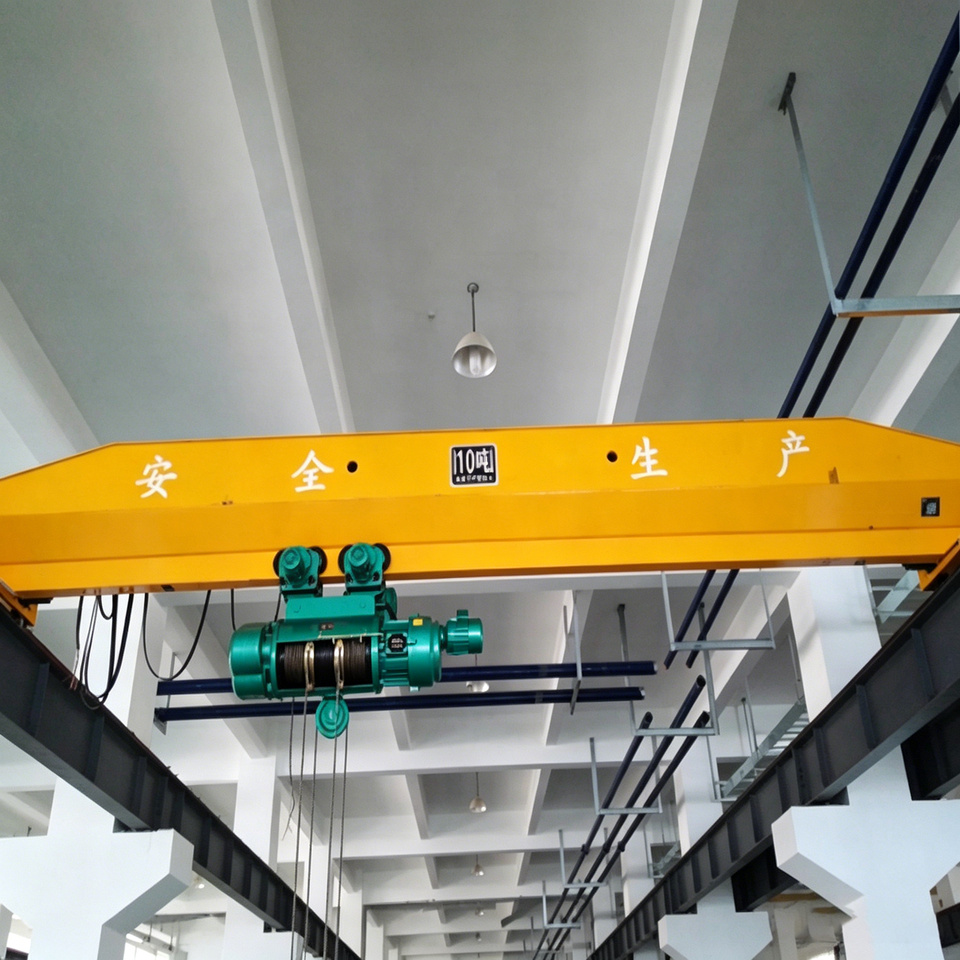 03 / EXPLOSION-PROOF OVERHEAD CRANE · 03
Yellow bridge crane and green electric hoist beneath a white ceiling. Specify the power source, control locations and interfaces for hoist, trolley and bridge motions. Confirm the selected motors, brakes, limits and inspection requirements for the actual classified location. State inspection, certification and documentation requirements, electrical interfaces, installation limits and responsibility boundaries.
Supply the site classification and required protection documents. Ask the supplier to identify the protection level and limits for each motor, brake, control and electrical component in the offered arrangement.
COMPARE THE COMPLETE PROPOSAL
Specify the equipment and services you need. Your quotation should identify what is included and what is priced separately.
Choose the equipment and services to include in the quotation. The final offer should state supplier and purchaser responsibilities for each site interface.
SITE DIMENSIONS · DUTY · EQUIPMENT SCOPE
Provide the layout and operating conditions to compare a explosion-proof overhead crane quotation against your actual project.
Discuss your workshopHenan Mine Crane Group
Compare itemized quotations with the same equipment, delivery and site-service boundaries.
Confirm 1, 2, 3, 5, 10, 16 and 20 ton, selected mechanisms, control options and required accessories.
List rail or support work, power supply, clearances and purchaser-provided services.
State transport, unloading, erection, testing, commissioning and service parts included in the offer.
Historical supplier-listing information for context. Request a current quotation for your selected configuration and project scope.
Range combines the price tiers shown in the saved listing. Captured 2026-10-13. This is not a current project quotation; capacity, dimensions, options, quantity, delivery and included services affect final price.
Archived supplier-listing reference. The saved price is not a current quotation; confirm configuration, quantity, shipping and included scope. View saved source listing ↗
Bring engineering, purchasing and the installation team into the same scope before the purchase order.
Mark the runway, span, hook positions, columns, machines and load route. Include structural support drawings and the available site power.
Send a drawing for reviewLoad or working task, layout, operating cycle, destination and timing.
Selected configuration, interface drawing, component schedule and scope exceptions.
Inspection, testing and documentation, delivery responsibilities and warranty terms.
An explosion-protected overhead crane enquiry requires the classified-area information and equipment protection level to be defined for the installation site.
Area classification: Provide the zone or division, gas or dust group, temperature class and site authority requirements. Crane and mechanism rating: Define the complete load, span, lift, duty and motions; identify the required protection level for each supplied component. Include the rated load, dimensions, operating cycle, site interfaces and required supply scope.
US$4,000–5,000 per set is the saved supplier-listing reference, captured 2026-10-13. Area class, gas or dust group and required protection level affect motor, brake, controls and electrical components. Rated load, span, lifting height, duty and selected mechanisms determine the crane configuration. Required documents, inspection, installation method and purchaser interfaces affect scope. Shipping, commissioning and local compliance review require a current project quotation. Request a current quotation for the selected configuration, quantity, delivery and services.
Provide the formal hazardous-area classification, material group, temperature class, load, span, lift, duty and required documents.
No. Protection requirements vary by classified area and authority. Confirm the exact offered component protection and supporting documents against the project specification.
 01
 02
 03
 04
 05
 06
 07
 08
EXPLORE OUR NEWSROOM
Projects, technology and updates
from Henan Mine Crane Group.
 01
Crane projects, dispatches and on-site applications.
 02
Equipment developments, engineering and manufacturing.
 03
Factory updates, partnerships and the people behind our cranes.
 04
Trade shows, industry meetings and company events.