
Material and complete suspended mass
Describe the handled material, bulk density or stock geometry and the required load. Include attachment self-weight, rigging and the host crane rating in the load review.
Match the attachment to the material, complete suspended mass and host crane interfaces. Grabs and magnets require different operating inputs.

Yellow orange-peel grab with open jaws standing on a factory-yard surface.
Listed attachment capacity
Start with your known requirements. Our team can clarify the remaining interfaces.
Separate the listed product information from the dimensions and responsibilities that need your project input.
| Attachment arrangement | Six-petal crane grab with hydraulic cylinders, onboard electric hydraulic power unit and selected hook suspension |
|---|---|
| Material specification | Scrap, waste or other bulk material assessed by loose density, piece size, moisture, abrasiveness and filling behaviour |
| Payload and volume | Project-selected payload and nominal volume, with the filling assumptions stated for the intended material |
| Gross crane load | Actual grab tare, collected material and other suspended equipment checked against crane capacity throughout the route |
| Petal geometry | Opening width, closed coverage, tip arrangement and bucket envelope selected for pickup and retention |
| Suspension and clearance | Hook connection, suspension height, open/closed envelope and clearance to the receiving structure coordinated |
| Hydraulic operation | Motor, hydraulic unit, cylinders, circuit and required opening/closing cycle selected together |
| Power feed | Site voltage, phase and frequency matched to the selected electrical equipment and cable-feed arrangement |
| Controls | Grab commands and crane operation coordinated, with agreed cable routing, connections and operating sequence |
| Service and delivery | Hydraulic and electrical access, wear parts, transport envelope and commissioning responsibilities defined |
| Material | Loose density, material dimensions, moisture, abrasiveness and filling behaviour. |
| Volume and payload | Working volume, collected material mass, attachment tare and total crane load. |
Listed information supports initial selection. Final dimensions, loads, speeds and components are defined in the project technical offer.
Describe the handled material, bulk density or stock geometry and the required load. Include attachment self-weight, rigging and the host crane rating in the load review.
Provide hook, suspension, rope or electrical interfaces as applicable. Confirm the attachment dimensions, operating clearances and compatible crane functions.
Define the working cycle, environment, power or hydraulic requirements and the required response to loss of power where relevant. Agree the selected functions and limits in the offer.
| Work package | Agree in the quotation |
|---|---|
| Selected attachment | Specified grab or magnet, connection arrangement and operating mechanism. |
| Host equipment interfaces | Crane compatibility, power or hydraulic services, controls and required interface equipment. |
| Delivery and installation | Named delivery term, unloading, installation work, local labour and access equipment. |
| Acceptance and handover | Inspection and test plan, records, documentation, training, spare parts and warranty terms. |
This is a scope-planning checklist. Inclusion and responsibility depend on the agreed contract.
Match the attachment to the material, complete suspended mass and host crane interfaces. Grabs and magnets require different operating inputs.
Use the Site interfaces tab above to check the layout and operating conditions. Record your requirements in the project brief alongside this page.
Review the product configuration and purchasing requirements for this equipment.
Electro-Hydraulic Grab. A crane grab is a suspended attachment that picks up and releases bulk or irregular material using the specified shell, jaw or clamshell arrangement. Also specified as a crane grab, this equipment can be configured for the work area and lifting task. Selecting the grab geometry and closing mechanism for the material and crane interface supports repeatable loading and transfer operations. Common applications include scrap and recycling handling and bulk material loading and transfer. Select the configuration, working range, controls and supply scope for your operating conditions, then request a current, itemized quotation.
Confirm model, dimensions, duty, power supply, selected options, delivery and installation scope in the current technical offer.
START WITH THE LOAD
A crane grab is a suspended attachment that picks up and releases bulk or irregular material using the specified shell, jaw or clamshell arrangement. Selecting the grab geometry and closing mechanism for the material and crane interface supports repeatable loading and transfer operations. Typical applications include scrap and recycling handling, bulk material loading and transfer, stockyard or process-bin service. Compare the proposed configuration with the actual load, reach, duty and site dimensions.
Identify material type, loose density, particle or piece size, moisture, abrasiveness, fill behaviour and pickup surface.
Define working volume, collected material mass, grab tare, suspension, hook or rope connection and the crane's available capacity.
State open and closed envelope, pickup depth, electrical or hydraulic supply, control sequence, cycle rate and service access.
Saved supplier listing captured 2026-10-13; quantity tiers: 1-2 sets: US$20,500 per set · ≥3 sets: US$20,300 per set. The listing does not establish a current, project-specific or delivered price. Material density, payload, volume and jaw or shell geometry determine the attachment size. Rope, motorized, hydraulic or radio control arrangements change the equipment configuration. Crane interface, electrical or hydraulic supply, wear parts and duty affect the supplied scope. Transport dimensions, quantity, commissioning and compatible crane work require confirmation.
SEE THE EQUIPMENT
Review these electro-hydraulic grab photographs alongside the requested operating conditions and layout. Visible equipment is a product-range reference; confirm the ordered configuration in the offer.
01 / ELECTRO-HYDRAULIC GRAB · 01Yellow orange-peel grab with open jaws standing on a factory-yard surface. Include all rigging and attachments, lifting points and the daily operating cycle. Identify material type, loose density, particle or piece size, moisture, abrasiveness, fill behaviour and pickup surface.
 02 / ELECTRO-HYDRAULIC GRAB · 02
Orange multi-jaw grab above a pile of scrap material. Mark the pickup and landing positions, travel route and required hook envelope on a site plan. Define working volume, collected material mass, grab tare, suspension, hook or rope connection and the crane's available capacity.
 03 / ELECTRO-HYDRAULIC GRAB · 03
Yellow multi-jaw grab with open jaws beside other grab attachments in a factory yard. Confirm supports, power, controls, service access and delivery and installation responsibilities. State open and closed envelope, pickup depth, electrical or hydraulic supply, control sequence, cycle rate and service access.
Specify the grab's opening and closing method, power and command interface. Confirm crane capacity with the grab tare and material load, and coordinate the operating sequence with the crane controls.
COMPARE THE COMPLETE PROPOSAL
Specify the equipment and services you need. Your quotation should identify what is included and what is priced separately.
Choose the equipment and services to include in the quotation. The final offer should state supplier and purchaser responsibilities for each site interface.
SITE DIMENSIONS · DUTY · EQUIPMENT SCOPE
Provide the layout and operating conditions to compare a electro-hydraulic grab quotation against your actual project.
Review material and crane compatibilityHenan Mine Crane Group
Compare itemized quotations with the same equipment, delivery and site-service boundaries.
Confirm rated capacity, selected mechanisms, control options and required accessories.
List rail or support work, power supply, clearances and purchaser-provided services.
State transport, unloading, erection, testing, commissioning and service parts included in the offer.
Historical supplier-listing information for context. Request a current quotation for your selected configuration and project scope.
Range combines the price tiers shown in the saved listing. Captured 2026-10-13. This is not a current project quotation; capacity, dimensions, options, quantity, delivery and included services affect final price.
Archived supplier-listing reference. The saved price is not a current quotation; confirm configuration, quantity, shipping and included scope. View saved source listing ↗
Bring engineering, purchasing and the installation team into the same scope before the purchase order.
Provide material data, load geometry or density, host crane rating and connection details. Show the attachment clearance and operating route.
Send a drawing for reviewLoad or working task, layout, operating cycle, destination and timing.
Selected configuration, interface drawing, component schedule and scope exceptions.
Inspection, testing and documentation, delivery responsibilities and warranty terms.
A crane grab is a suspended attachment that picks up and releases bulk or irregular material using the specified shell, jaw or clamshell arrangement.
Material and grab geometry: Identify material type, loose density, particle or piece size, moisture, abrasiveness, fill behaviour and pickup surface. Payload, tare and crane interface: Define working volume, collected material mass, grab tare, suspension, hook or rope connection and the crane's available capacity. Include the rated load, dimensions, operating cycle, site interfaces and required supply scope.
US$20,300–20,500 per set is the saved supplier-listing reference, captured 2026-10-13. Material density, payload, volume and jaw or shell geometry determine the attachment size. Rope, motorized, hydraulic or radio control arrangements change the equipment configuration. Crane interface, electrical or hydraulic supply, wear parts and duty affect the supplied scope. Transport dimensions, quantity, commissioning and compatible crane work require confirmation. Request a current quotation for the selected configuration, quantity, delivery and services.
Specify material density and piece size, working volume, filling behaviour and desired cycle. Check the total suspended load including grab tare against the crane.
Provide crane model, rated capacity, hook or reeving details, available power and control interface for a compatibility review.
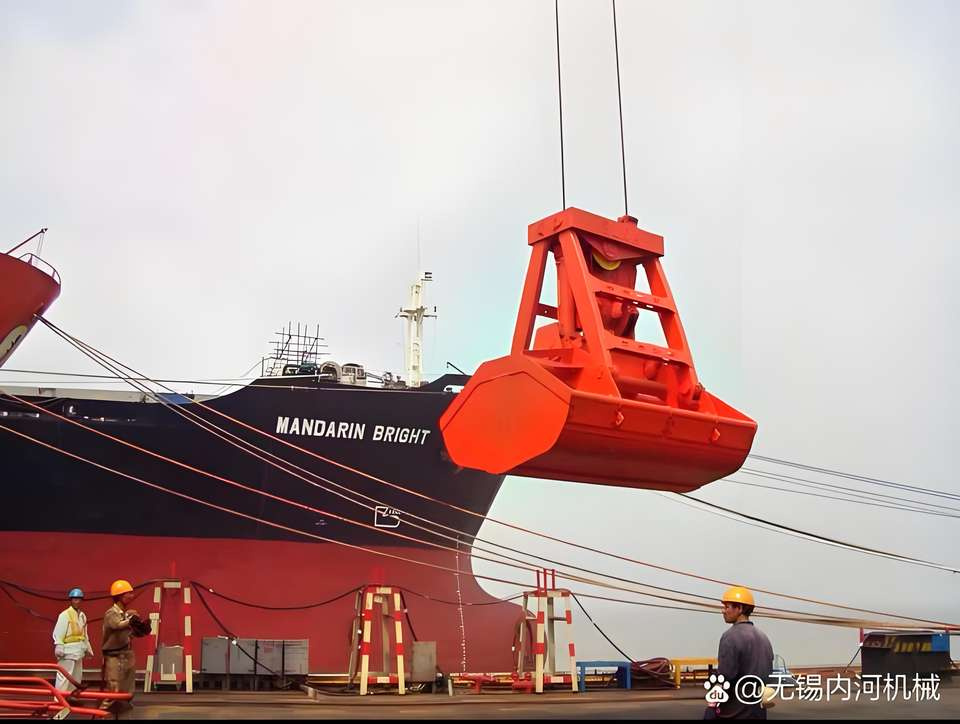
Clamshell grab comparison: bulk-material properties and the opening mechanism differ from a multi-peel grab.

Clamshell grab comparison: confirm material size, density, grab volume, suspension and opening/closing method.
 01
 02
 03
 04
 05
 06
 07
 08
EXPLORE OUR NEWSROOM
Projects, technology and updates
from Henan Mine Crane Group.
 01
Crane projects, dispatches and on-site applications.
 02
Equipment developments, engineering and manufacturing.
 03
Factory updates, partnerships and the people behind our cranes.
 04
Trade shows, industry meetings and company events.