
Runway and structural support
Provide runway rail-centre span, rail section, rail-top level, building clearances and available support drawings. Ask for the selected wheel loads and interface dimensions for review by your structural engineer.
Use the complete suspended load, operating cycle and building layout to review the bridge, hoisting arrangement and runway interface.

Yellow crane bridge and end carriage above an industrial work area with workers
Listed rated capacity
Start with your known requirements. Our team can clarify the remaining interfaces.
Separate the listed product information from the dimensions and responsibilities that need your project input.
| Gross ladle and attachment loads | Provide empty ladle, maximum metal charge, lifting beam or trunnion equipment and any attached mass. Identify normal, peak and exceptional cases; ask the supplier to state selected main/auxiliary ratings and load paths. |
|---|---|
| Process route and working positions | Mark pickup, transport, teeming, standby and return points with levels and clearances. Share the process sequence and obstructions, then request a coordinated crane envelope and travel limits. |
| Lifting arrangement and duty | State required lifting motions, hook or trunnion interfaces, synchronization needs, cycles per heat, operating hours and expected duty. Ask for the selected mechanism arrangement and rating basis. |
| Thermal environment and protection | Describe radiant heat, furnace proximity, ambient range, dust and exposure duration at each workpoint. Request the specific heat-protection provisions and stated limits for the selected equipment; generic temperature claims are not a project specification. |
| Building, runway and service access | Provide measured runway centres, elevations, support positions, end stops, headroom and maintenance access. Request selected wheel spacing, case-based runway reactions, service platforms and an interface drawing. |
| Controls, safety and operating procedure | Describe operator position, visibility, control method, interlocks, emergency response and process communication. Identify required operating modes and ask the supplier to list selected limits, protections and acceptance checks. |
| Project documentation and scope | Agree the ladle interface, selected arrangement, outline, drive schedule, reaction cases, testing and handover records. Separate crane supply, process equipment, civil work, installation and purchaser responsibilities. |
| Hook ratings | Complete ladle and contents load, rigging and each hook's independent and combined load case. |
| Ladle route | Pickup, transport, pour and set-down workpoints, hook approaches and vessel envelope. |
| Duty | Cycle timing, load spectrum, operating shifts and selected crane mechanism classification. |
| Thermal conditions | Ambient temperature, radiant exposure, shielding and specified protection for the actual route. |
| Controls and site fit | Operator location, speeds, limits, runway reactions, support data, power and installation scope. |
Listed information supports initial selection. Final dimensions, loads, speeds and components are defined in the project technical offer.
Provide runway rail-centre span, rail section, rail-top level, building clearances and available support drawings. Ask for the selected wheel loads and interface dimensions for review by your structural engineer.
Show pickup and set-down points, required upper and lower hook positions, load dimensions and rigging height. Overall building height alone does not define useful hook travel.
State lifts per hour, travel distances, working shifts, voltage and frequency. Identify dust, corrosion, temperature or any classified hazardous area.
| Work package | Agree in the quotation |
|---|---|
| Crane equipment | Selected bridge, hoist or trolley, travel drives, controls and specified safety functions. |
| Runway and power feed | Rails, supporting steelwork, power-feed system and the allocation of building interfaces. |
| Delivery and installation | Named delivery term, unloading, installation work, local labour and access equipment. |
| Acceptance and handover | Inspection and test plan, records, documentation, training, spare parts and warranty terms. |
This is a scope-planning checklist. Inclusion and responsibility depend on the agreed contract.
Use the complete suspended load, operating cycle and building layout to review the bridge, hoisting arrangement and runway interface.
Use the Site interfaces tab above to check the layout and operating conditions. Record your requirements in the project brief alongside this page.
Review the product configuration and purchasing requirements for this equipment.
Foundry Ladle Overhead Crane. Listed rated load: 100, 150 and 200 ton. A foundry or ladle overhead crane transfers a ladle or hot-metal vessel through a steelmaking or casting bay using its selected hook arrangement. Also specified as a bridge crane, this equipment can be configured for the work area and lifting task. Defining vessel mass, hook duties, process route and thermal exposure helps buyers compare a crane offer against the actual casting cycle. Common applications include ladle transfer between furnace and casting stations and foundry charging and tapping operations. Select the configuration, working range, controls and supply scope for your operating conditions, then request a current, itemized quotation.
Confirm model, dimensions, duty, power supply, selected options, delivery and installation scope in the current technical offer.
START WITH THE LOAD
A foundry or ladle overhead crane transfers a ladle or hot-metal vessel through a steelmaking or casting bay using its selected hook arrangement. Defining vessel mass, hook duties, process route and thermal exposure helps buyers compare a crane offer against the actual casting cycle. Typical applications include ladle transfer between furnace and casting stations, foundry charging and tapping operations, tundish or casting-line service. Compare the proposed configuration with the actual load, reach, duty and site dimensions.
State vessel tare, maximum contents, lifting beam and attachments. Separate main and auxiliary hook ratings and permitted combined load cases.
Mark pickup, transfer, pouring and standby positions, required hook levels, ladle tilt envelope and no-go zones.
Provide cycle frequency, load spectrum, ambient and radiant heat, operator sightlines, selected motions and acceptance requirements.
Saved supplier listing captured 2026-10-13; quantity tiers: 1-4 sets: US$12,000 per set · ≥5 sets: US$10,000 per set. The listing does not establish a current, project-specific or delivered price. Main and auxiliary hook duties, vessel load, span and process clearances determine the crane configuration. Crane classification, selected hoist or trolley, speeds and controls affect the mechanisms. Thermal protection, power, rails, support structure and installation are project-dependent. Transport, process testing, commissioning and scope boundaries must be confirmed in the current offer.
SEE THE EQUIPMENT
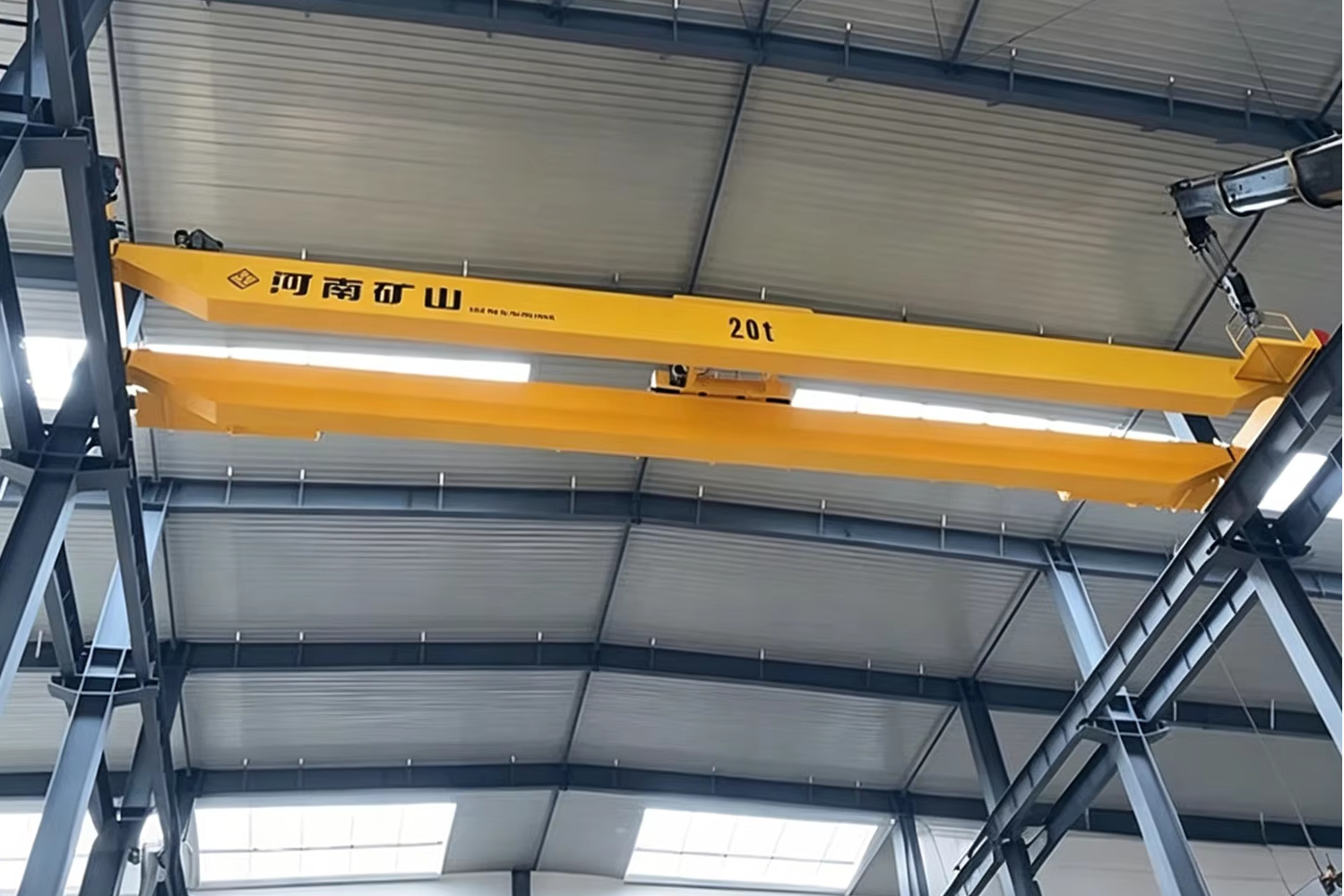
Review these foundry ladle overhead crane photographs alongside the requested operating conditions and layout. Visible equipment is a product-range reference; confirm the ordered configuration in the offer.
01 / FOUNDRY LADLE OVERHEAD CRANE · 01Yellow crane bridge and end carriage above an industrial work area with workers. State vessel tare, maximum contents, lifting beam and attachments. Separate main and auxiliary hook ratings and permitted combined load cases.
 02 / FOUNDRY LADLE OVERHEAD CRANE · 02
Yellow trolley and girder equipment beside an industrial foundation area. Mark pickup, transfer, pouring and standby positions, required hook levels, ladle tilt envelope and no-go zones.
 03 / FOUNDRY LADLE OVERHEAD CRANE · 03
Yellow double-girder crane below blue roof framing. Provide cycle frequency, load spectrum, ambient and radiant heat, operator sightlines, selected motions and acceptance requirements.
Specify pickup, transfer, pouring and standby positions, main and auxiliary hook functions, movement speeds and operator view. Confirm heat exposure, limits and agreed operating sequence for the selected crane.
COMPARE THE COMPLETE PROPOSAL
Specify the equipment and services you need. Your quotation should identify what is included and what is priced separately.
Choose the equipment and services to include in the quotation. The final offer should state supplier and purchaser responsibilities for each site interface.
SITE DIMENSIONS · DUTY · EQUIPMENT SCOPE
Provide the layout and operating conditions to compare a foundry ladle overhead crane quotation against your actual project.
Discuss the projectHenan Mine Crane Group
Compare itemized quotations with the same equipment, delivery and site-service boundaries.
Confirm 100, 150 and 200 ton, selected mechanisms, control options and required accessories.
List rail or support work, power supply, clearances and purchaser-provided services.
State transport, unloading, erection, testing, commissioning and service parts included in the offer.
Historical supplier-listing information for context. Request a current quotation for your selected configuration and project scope.
Range combines the price tiers shown in the saved listing. Captured 2026-10-13. This is not a current project quotation; capacity, dimensions, options, quantity, delivery and included services affect final price.
Archived supplier-listing reference. The saved price is not a current quotation; confirm configuration, quantity, shipping and included scope. View saved source listing ↗
Bring engineering, purchasing and the installation team into the same scope before the purchase order.
Mark the runway, span, hook positions, columns, machines and load route. Include structural support drawings and the available site power.
Send a drawing for reviewLoad or working task, layout, operating cycle, destination and timing.
Selected configuration, interface drawing, component schedule and scope exceptions.
Inspection, testing and documentation, delivery responsibilities and warranty terms.
A foundry or ladle overhead crane transfers a ladle or hot-metal vessel through a steelmaking or casting bay using its selected hook arrangement.
Ladle, contents and hook duties: State vessel tare, maximum contents, lifting beam and attachments. Separate main and auxiliary hook ratings and permitted combined load cases. Process route and clearance: Mark pickup, transfer, pouring and standby positions, required hook levels, ladle tilt envelope and no-go zones. Include the rated load, dimensions, operating cycle, site interfaces and required supply scope.
US$10,000–12,000 per set is the saved supplier-listing reference, captured 2026-10-13. Main and auxiliary hook duties, vessel load, span and process clearances determine the crane configuration. Crane classification, selected hoist or trolley, speeds and controls affect the mechanisms. Thermal protection, power, rails, support structure and installation are project-dependent. Transport, process testing, commissioning and scope boundaries must be confirmed in the current offer. Request a current quotation for the selected configuration, quantity, delivery and services.
Provide ladle tare, maximum contents, lifting attachments and the permitted main and auxiliary hook load cases. Confirm the required rating and process sequence in the technical offer.
Hook duties, span, clearance, duty cycle, thermal conditions, drives, controls, support structure, rail and installation scope affect the project price.

Review configuration and project requirements

Review configuration and project requirements

Review configuration and project requirements
 01
 02
 03
 04
 05
 06
 07
 08
EXPLORE OUR NEWSROOM
Projects, technology and updates
from Henan Mine Crane Group.
 01
Crane projects, dispatches and on-site applications.
 02
Equipment developments, engineering and manufacturing.
 03
Factory updates, partnerships and the people behind our cranes.
 04
Trade shows, industry meetings and company events.