
Task and working range
Identify lifting or pulling, normal and maximum required rope force with units, movement, load route and any reeving. Provide the required operating cycle and line speed.
Review the rope-layer schedule, mounting reactions and rope route for a 20T-class winch enquiry. Coordinate the selected equipment with its foundation and site interfaces.
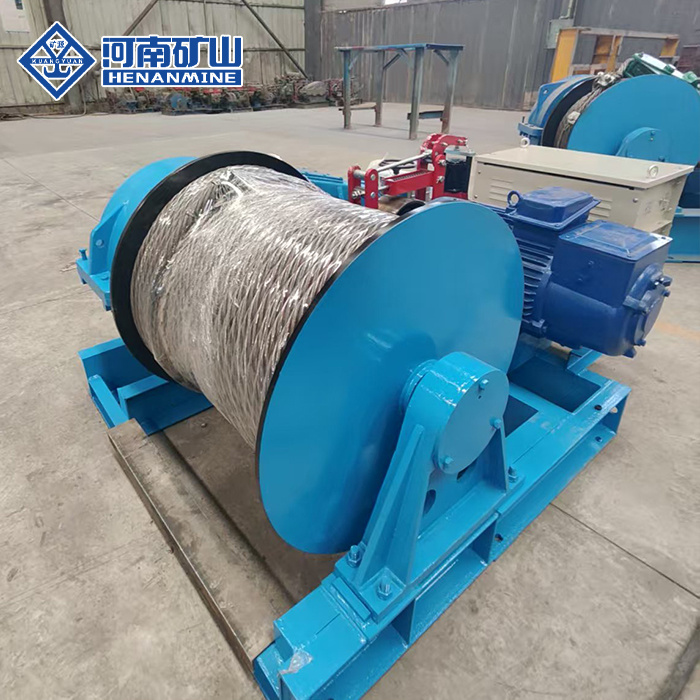
Blue winch with wire rope wound on the drum. Range reference photograph; obtain the selected drum dimensions, rope specification and working-layer schedule.
Catalogue enquiry class; rated rope force to be specified
Start with your known requirements. Our team can clarify the remaining interfaces.
Separate the listed product information from the dimensions and responsibilities that need your project input.
| Catalogue class | 20T enquiry class; selected rated rope force and reference layer specified |
|---|---|
| Drive family | JM / JK electric drum winch; selected motor and reducer stated in the offer |
| Speed options | 10 or 22 m/min listed options; actual pull and speed schedule defined by working layer |
| Rope working range | Rope diameter, construction, length, usable storage and retained wraps agreed |
| Rope lead | Winding direction, rope exit and lead-sheave geometry shown on the layout |
| Mounting interface | Base dimensions, fixing details and selected mounting reactions provided |
| Braking and controls | Stopping, holding, power-loss response, guarding and operator controls defined |
| Electrical supply | Voltage, phase, frequency, motor duty and starting or inverter arrangement confirmed |
| Operating conditions | Normal and maximum rope force, starts, running time, rest periods and environment supplied |
Listed information supports initial selection. Final dimensions, loads, speeds and components are defined in the project technical offer.
Identify lifting or pulling, normal and maximum required rope force with units, movement, load route and any reeving. Provide the required operating cycle and line speed.
Show mounting level, base area, fixing locations, rope exit and lead sheave. Obtain selected mounting reactions and winding limits to coordinate the support and anchorage design.
Allow access to the drum, drive, brake and rope route. State site power, exposure and operator position, and agree guarding, stopping, holding and control functions for the intended duty.
| Work package | Agree in the quotation |
|---|---|
| Winch and rope | Selected drum, drive, brake, controls, guards, rope and terminations itemised in the equipment schedule. |
| Foundation and rope route | Supports, anchorage, fixing hardware, guides and sheaves allocated to named parties using the agreed interface drawing. |
| Installation and site services | Transport, unloading, access, installation work, power feed and purchaser-provided equipment stated separately. |
| Acceptance and handover | Performance schedule, drawings, test plan, records, manuals, training, spare parts and warranty terms agreed. |
This is a scope-planning checklist. Inclusion and responsibility depend on the agreed contract.
Trace the rope movement and working layers, then check the winch base, lead sheave, selected reactions and available access against the same installation layout.
Use the Site interfaces tab above to check the layout and operating conditions. Record your requirements in the project brief alongside this page.
Review the product configuration and purchasing requirements for this equipment.
For a 20T-class winch enquiry, review the working rope layers and installation interfaces together. Ask for the selected pull and speed schedule, usable rope storage, mounting reactions and winding limits. The catalogue class does not define the rated force at each layer or approve a lifting duty; the equipment schedule and installation drawing must identify the intended task.
Confirm model, dimensions, duty, power supply, selected options, delivery and installation scope in the current technical offer.
CONNECT PERFORMANCE TO THE LAYOUT
The drum schedule and site drawing should describe the same working range. Compare the rope paid out at each workpoint with the selected pull, speed and winding limits before reviewing the supports.
Identify the lowest and highest working layers. Request pull and line speed for those conditions, with rope diameter, usable storage and retained wraps stated in the schedule.
Show the drum orientation, direction of winding and first sheave on the layout. Obtain the selected permissible lead geometry and check it against the available space.
Request base dimensions, fixing details and mounting reactions for the specified load cases. Coordinate these with the support and anchorage design, access and installation sequence.
READ THE PHOTO CONTEXT
These photographs illustrate visible assemblies. They do not establish a selected rating, foundation design or the configuration included in your order.
01 / RANGE REFERENCEBlue winch with wire rope wound on the drum. Range reference photograph; obtain the selected drum dimensions, rope specification and working-layer schedule.
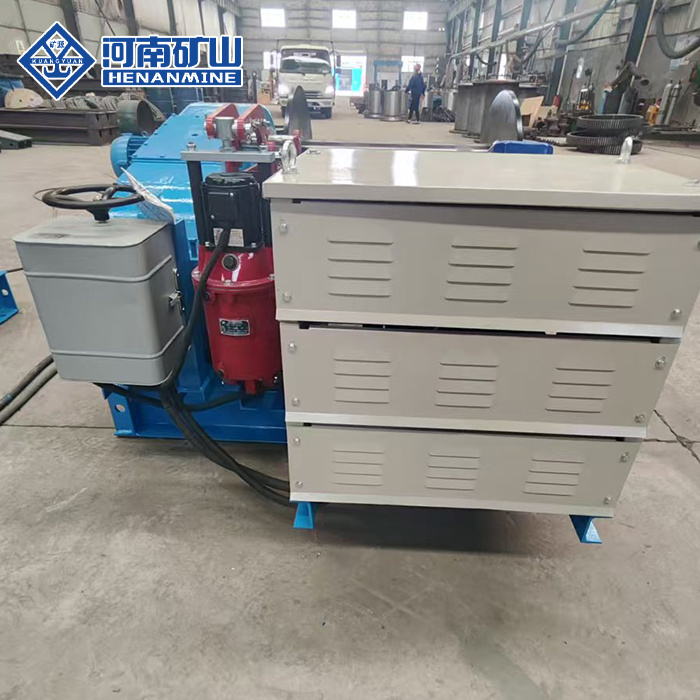 02 / RANGE REFERENCE
Pale ventilated covers and a red brake assembly on a blue winch. Range reference photograph; show guarding, access and the selected brake arrangement on the installation documents.
 03 / RANGE REFERENCE
Winch drum, blue gearbox and red brake assembly on wooden supports. Range reference photograph; these blocks do not specify the operating foundation, anchors or mounting reactions.
DEFINE THE INTERFACES
Use the Supply scope tab to assign the winch, rope, sheaves, supports, anchors, power feed and installation. Keep each responsibility explicit so a quoted equipment package is not mistaken for a completed foundation or installed system.
COORDINATE THE DRAWINGS
Mark the winch base, fixing locations, mounting level, rope exit, lead sheave and load route. Include obstructions and maintenance access. Compare supplier interface dimensions and selected reactions with the support design before fixing the installation details.
Discuss your mounting layoutKEEP THE BASIS TRACEABLE
The handover package should identify the selected pull and speed by working layer, rope specification, operating limits, controls and braking functions. Agree inspection and testing records, installation responsibilities, manuals, training, spares and warranty terms in the offer.
Historical supplier-listing information for context. Request a current quotation for your selected configuration and project scope.
Range combines the price tiers shown in the saved listing. Captured 2026-10-12. This is not a current project quotation; capacity, dimensions, options, quantity, delivery and included services affect final price.
Archived supplier-listing reference. The saved price is not a current quotation; confirm configuration, quantity, shipping and included scope. View saved source listing ↗
Bring engineering, purchasing and the installation team into the same scope before the purchase order.
Mark the winch base, mounting level, fixing points, rope exit, first sheave and load route. Add working rope travel, storage needs, clearances and the selected mounting reactions.
Send a drawing for reviewLoad or working task, layout, operating cycle, destination and timing.
Selected configuration, interface drawing, component schedule and scope exceptions.
Inspection, testing and documentation, delivery responsibilities and warranty terms.
No. Ask for rated rope force with units and its reference layer, plus the permitted pull and speed across the working layers. Identify the intended duty separately, especially any lifting or suspended-load task.
Show the base, fixing locations, mounting level, rope exit, first lead sheave, load route, obstructions and access. Obtain the selected reactions and winding limits for coordination with the support and anchorage design.
No. Define the working movement, reeving and required rope length separately. The selected drum arrangement must state usable storage, working layers and retained wraps for that task.
It is the supplier-listing reference captured 2026-10-12: US$2,900 per set for 1–2 sets and US$2,880 per set for at least 3 sets. Request a current offer itemising the selected equipment, rope, interfaces, delivery and installation services.
Only where the agreed offer includes them. Allocate the winch base, anchors, supporting structure, civil work, rope-route components and installation responsibilities explicitly, using the selected reactions and interface dimensions.
 01
 02
 03
 04
 05
 06
 07
 08
EXPLORE OUR NEWSROOM
Projects, technology and updates
from Henan Mine Crane Group.
 01
Crane projects, dispatches and on-site applications.
 02
Equipment developments, engineering and manufacturing.
 03
Factory updates, partnerships and the people behind our cranes.
 04
Trade shows, industry meetings and company events.

