Task and workpoints
Identify lifting or pulling, normal and maximum rope force with units, load direction, movement and reeving. Show where the rope starts and finishes through the working cycle.
Compare rope force and speed across the working drum layers for a 20T-class electric winch enquiry. Define the rope travel and operating cycle before selecting the drive.

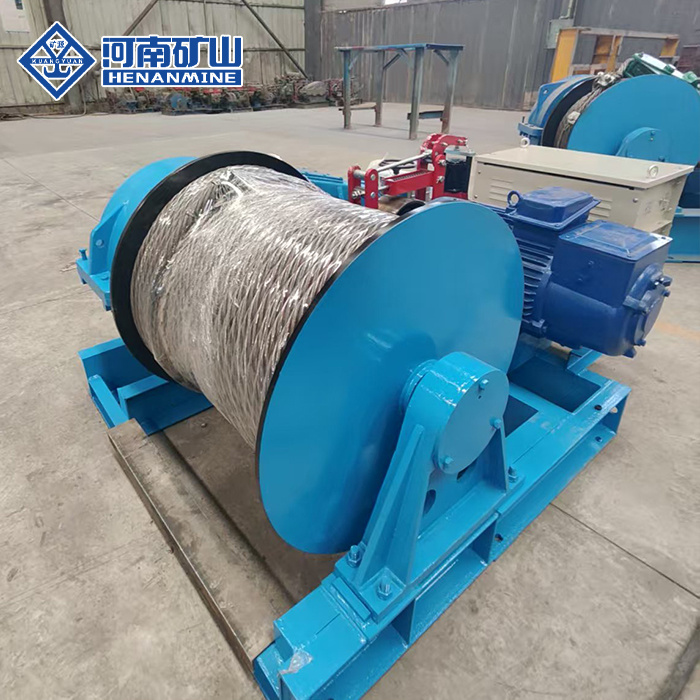
Blue winch with a wound drum, motor, gearbox and red brake assembly. Range reference photograph; the selected pull, speed and rope-layer schedule must be specified separately.
Catalogue enquiry class; rated rope force to be specified
Start with your known requirements. Our team can clarify the remaining interfaces.
Separate the listed product information from the dimensions and responsibilities that need your project input.
| Catalogue class | 20T enquiry class; selected rated rope force and reference layer specified |
|---|---|
| Drive family | JM / JK electric drum winch; selected motor and reducer stated in the offer |
| Pull and speed | Selected rope force and line speed scheduled across the working drum layers |
| Listed speed options | 10 or 22 m/min options; actual layer-dependent performance confirmed in the offer |
| Rope and storage | Rope diameter, construction, length, usable storage and retained wraps agreed |
| Operating cycle | Normal and maximum pull, running periods, starts, stops, reversals and environment supplied |
| Braking and controls | Stopping, holding, lowering if required, power-loss response and operator controls defined |
| Electrical supply | Voltage, phases, frequency, starting arrangement and any inverter range confirmed |
| Mounting and rope lead | Base reactions, fixing details, winding direction and lead-sheave geometry coordinated |
Listed information supports initial selection. Final dimensions, loads, speeds and components are defined in the project technical offer.
Identify lifting or pulling, normal and maximum rope force with units, load direction, movement and reeving. Show where the rope starts and finishes through the working cycle.
Show drum orientation, rope exit, first sheave, mounting level and access. Obtain selected drum dimensions, usable storage, retained wraps and permitted lead geometry.
State site power, required loaded and return speeds, positioning needs and operating cycle. Coordinate mounting reactions, braking, guarding and control functions with the installation layout.
| Work package | Agree in the quotation |
|---|---|
| Selected winch | Drum, motor, reducer, braking, controls, guarding and any inverter itemised against the performance schedule. |
| Rope and installation interfaces | Rope, terminations, sheaves, guides, supports, anchorage and power feed allocated to named parties. |
| Delivery and site work | Transport, unloading, installation access, local services and commissioning responsibilities stated separately. |
| Acceptance and handover | Agreed performance basis, drawings, inspection and test records, manuals, training, spares and warranty terms. |
This is a scope-planning checklist. Inclusion and responsibility depend on the agreed contract.
Compare the load route and operating cycle with the pull, speed and rope-storage schedule. Identify the required workpoints and the rope layers used between them.
Use the Site interfaces tab above to check the layout and operating conditions. Record your requirements in the project brief alongside this page.
Review the product configuration and purchasing requirements for this equipment.
Review a 20T-class electric winch against a pull-and-speed schedule covering the working rope layers. Define the force at the rope, the movement and the operating cycle before comparing drive options. The catalogue class alone does not establish the rated pull at every layer or approval for a suspended-load duty.
Confirm model, dimensions, duty, power supply, selected options, delivery and installation scope in the current technical offer.
COMPARE THE WORKING RANGE
A single speed or tonnage label is not a complete performance schedule. Compare the required rope force and speed at each working condition, using the selected rope diameter, drum and drive.
For the same available drum torque, a larger winding radius gives less rope force. Ask for the selected permitted pull at the lowest and highest working layers, rather than extending one layer rating to the whole drum.
At the same drum rotational speed, a larger winding radius gives a higher rope speed. Define loaded, return and positioning speeds, and request the operating range for the selected drive and control arrangement.
Give the normal and maximum pull, running periods, starts, stops and reversals. The selected motor, reducer, brake and controls must suit that cycle; a faster listed option alone does not establish suitability.
READ THE PHOTO CONTEXT
These photographs show visible assemblies from the saved product range. They do not establish one selected configuration, rated pull or speed.
01 / RANGE REFERENCEBlue winch with a wound drum, motor, gearbox and red brake assembly. Range reference photograph; the selected pull, speed and rope-layer schedule must be specified separately.
 02 / RANGE REFERENCE
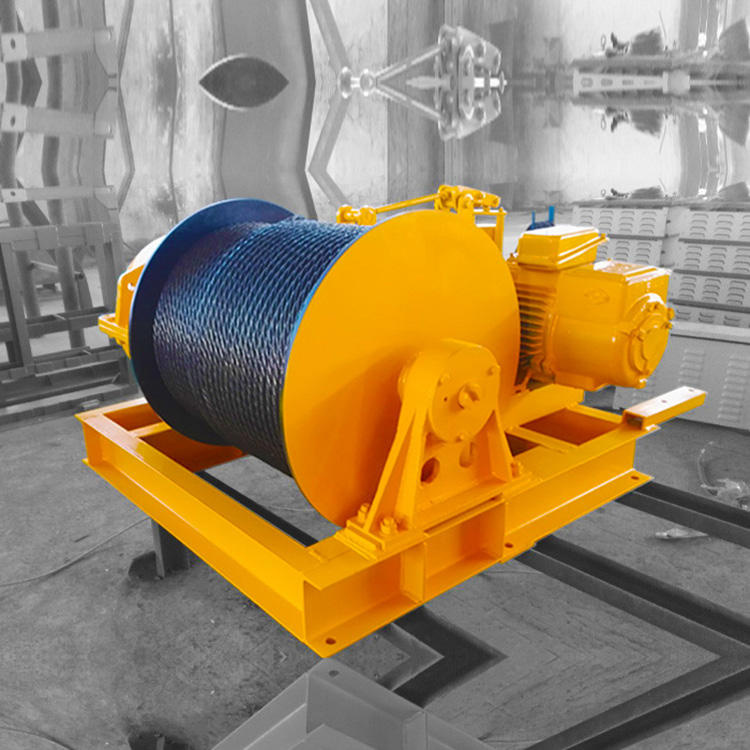
Yellow winch with a wound drum and gearbox on a steel base. Range reference photograph; confirm usable rope storage, working layers and permitted rope lead for the selected drum.
 03 / RANGE REFERENCE
Yellow gearbox, white push-button cabinet and red brake assembly. Range reference photograph; agree the ordered drive, controls and stopping and holding functions in the equipment schedule.
COMPARE THE SAME PACKAGE
Use the Supply scope tab to allocate the winch, rope, guides, sheaves, supports, anchorage, power feed and installation. Compare prices only after the selected performance schedule and included work are clear.
CONNECT PERFORMANCE TO TRAVEL
Mark the rope exit, first sheave, load route and workpoints on the layout. State the required movement and rope length separately, including reeving. Obtain usable drum storage, retained-wrap requirements and permitted winding limits for the selected arrangement.
Discuss your pull and speed requirementsKEEP THE OFFER COMPARABLE
The offer should identify rope force and speed by working layer, rope specification, duty limits, braking and control functions, power supply and mounting reactions. Agree drawings, inspection and test records, manuals, training, spare parts and warranty terms alongside that schedule.
Historical supplier-listing information for context. Request a current quotation for your selected configuration and project scope.
Range combines the price tiers shown in the saved listing. Captured 2026-10-12. This is not a current project quotation; capacity, dimensions, options, quantity, delivery and included services affect final price.
Archived supplier-listing reference. The saved price is not a current quotation; confirm configuration, quantity, shipping and included scope. View saved source listing ↗
Bring engineering, purchasing and the installation team into the same scope before the purchase order.
Show the rope route, workpoints, sheaves and reeving. State the normal and maximum rope force, required movement, rope length, loaded and return speeds and operating cycle.
Send a drawing for reviewLoad or working task, layout, operating cycle, destination and timing.
Selected configuration, interface drawing, component schedule and scope exceptions.
Inspection, testing and documentation, delivery responsibilities and warranty terms.
No. Request rated rope force with units and a reference layer, plus the permitted pull and speed across the working layers. Identify the intended lifting or pulling duty separately.
At the same drum rotational speed, rope speed rises as the winding radius increases. Ask for the selected layer schedule and define loaded, return and positioning speeds for the actual task.
They are options shown in the saved product-range description. They do not establish performance at every layer or load. The technical offer should identify the selected drive and its pull, speed and duty limits.
It is the supplier-listing reference captured 2026-10-12: US$2,900 per set for 1–2 sets and US$2,880 per set for at least 3 sets. Request a current quotation itemising the selected performance, rope, interfaces, delivery and site services.
No. State the load movement, reeving and rope route separately. Obtain the selected rope length, usable storage, working layers and retained-wrap requirements for that arrangement.
 01
 02
 03
 04
 05
 06
 07
 08
EXPLORE OUR NEWSROOM
Projects, technology and updates
from Henan Mine Crane Group.
 01
Crane projects, dispatches and on-site applications.
 02
Equipment developments, engineering and manufacturing.
 03
Factory updates, partnerships and the people behind our cranes.
 04
Trade shows, industry meetings and company events.