
Aerospace composites / Load testing
Under-Rotating Crane Load Test for Aerospace Composites
Henan Mine Crane Group completed load testing of an under-rotating crane manufactured for Xi’an Aerospace Composites Research Institute of CASC’s Fourth Academy. The configuration combines modular design, finite-element structural development and dual lifting attachments for aerospace composite manufacturing.

- Customer
- Xi’an Aerospace Composites Research Institute, CASC Fourth Academy
- Equipment
- Under-rotating crane with dual lifting attachments
- Milestone
- Load test completed successfully
- Design methods
- Modular construction and finite-element structural analysis
- Reported control precision
- Below 1mm for this project configuration
- Cooperation
- Long-term strategic relationship and technical discussion
Handling within composite-component production
The institute manufactures composite casings and nozzles for solid rocket motors and large composite launch tubes. These customer activities establish the manufacturing environment in which the crane was developed. A lifting arrangement must protect the component and present it correctly to the next production fixture.
For a comparable purchase, identify the particular part, its lifting points and its permitted orientation. Component length, stiffness and centre of gravity influence the attachment as much as mass does. Show where the part may be contacted and any handling restrictions imposed by the production process.
Dual attachments and an under-rotating interface
The crane uses a proprietary dual-attachment arrangement and under-rotating handling. Modular design and finite-element structural analysis formed part of its development. These features address the interaction between the crane structure, attachment and workpiece during controlled handling.
The project description gives control precision below 1mm. That figure belongs to the documented configuration and should be discussed alongside the measurement method, load condition and movement being controlled. For your equipment, specify the required handover tolerance at the relevant interface and agree how it will be checked.
A completed load test is a defined project milestone
Successful load testing demonstrates a stage in the crane’s development and acceptance. It should sit alongside checks of the attachment, rotation and operating sequence when the equipment is prepared for a particular manufacturing task. An effective procurement plan distinguishes load testing from installed production performance.
Henan Mine Crane Group had previously developed a separate 160t+160t new-type explosion-proof double-girder crane. The under-rotating crane in this application is a different configuration. Select the required capacity and area protection for your purchase from the actual component and work environment.
Technical cooperation that begins with the workpiece
A delegation led by institute director Wang Zhijun visited Henan Mine Crane Group for discussions on 8 November, hosted by company vice-president Yue Xiangbin. The visit accompanied the continuing strategic relationship and discussion of further cooperation.
Use the first engineering exchange to settle the workpiece envelope, lifting method and acceptance expectations. Bring the component and fixture teams into the review where they control attachment interfaces. Define factory demonstrations using representative loads or agreed test fixtures, and identify what must be verified again after site installation.
Application photographs
See the equipment and working context.
Photographs and accompanying illustrations from this application report. Open an image for a larger view.

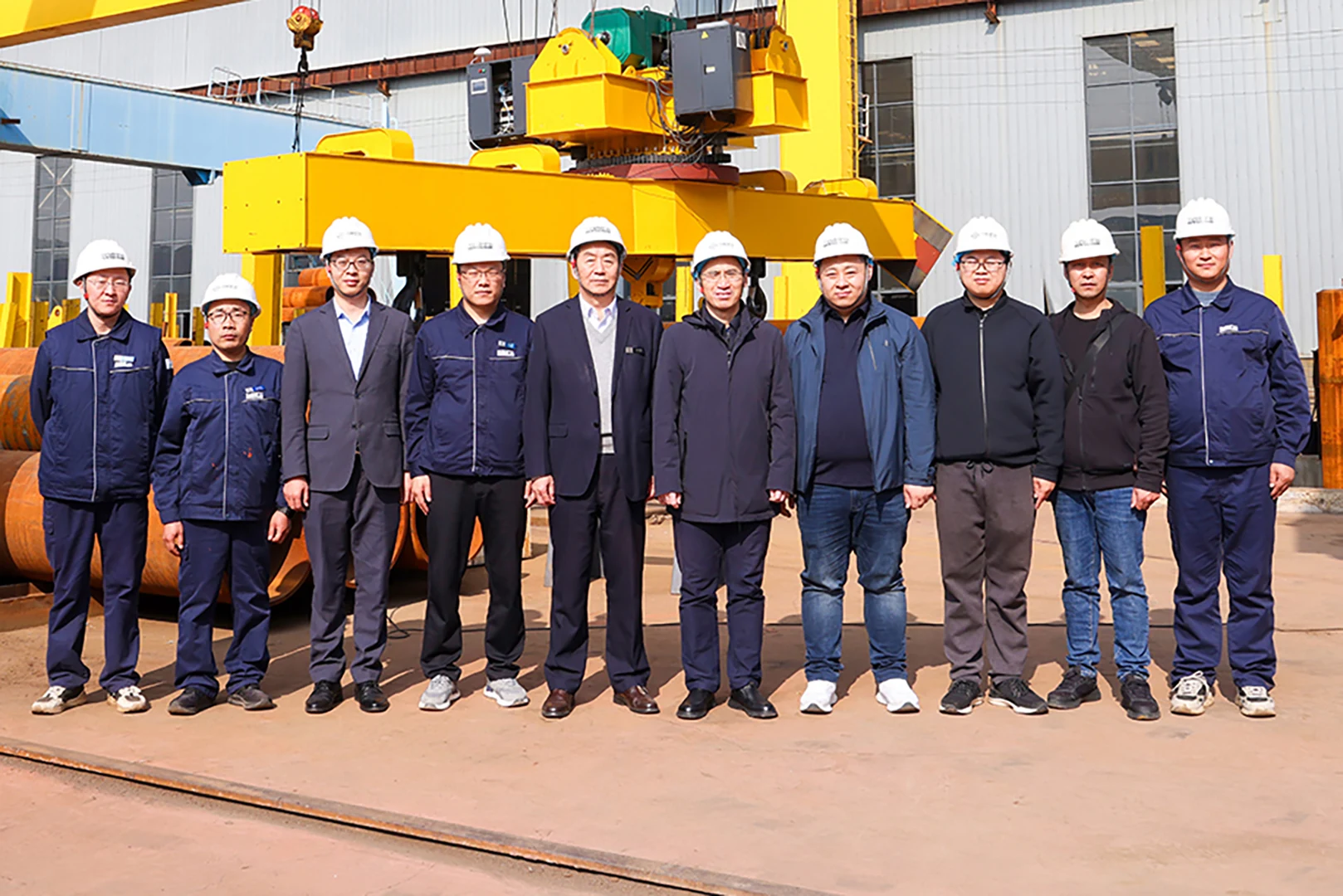
Application reference: Henan Mine Crane Group official application report. Equipment and operating advice for a new project should be specified against your load, process and site.
Start the equipment discussion
Relevant equipment families.
Compare the equipment family with your operating duty. Final attachments, controls and protection follow the application requirements.
Double-girder overhead cranes
Evaluate an overhead structure with a workpiece-specific under-rotating attachment.
View equipment options ↗Explosion-proof double-girder cranes
Review only when the actual process area requires a documented explosion-protected arrangement.
View equipment options ↗Plan a similar application
Build the specification
around your operation.
Send composite-part and fixture drawings to discuss controlled rotation and the required load-test programme.
- Composite component geometry, mass, stiffness and permitted support locations
- Centre of gravity, lifting points and dual-attachment load distribution
- Rotation range, extension needs and required production orientations
- Fixture clearances and the complete pickup-to-handover route
- Required control tolerance with measurement and representative load conditions
- Factory load tests, site demonstrations, records and approval responsibilities
Before you specify
Questions for
your project.
How should we specify positioning precision?
State the position or movement that matters to the process and the permitted error at that interface. Agree the load, measurement method and acceptance procedure for the proposed configuration.
Why use dual lifting attachments?
They can be evaluated where the part needs support at more than one defined location or controlled orientation. The design must follow the workpiece’s approved lifting and contact conditions.
What belongs in the load-test plan?
Identify the test arrangement, representative load, attachment functions and records required by the project. Keep factory load checks and installed process demonstrations as clearly defined stages.
Continue exploring
More aerospace applications.

Rotating-Beam Cranes for Controlled Aerospace Assembly
24 lifting devices completed on-site inspection for an aerospace research institute. Six under-rotating beam cranes combine controlled attachment rotation, anti-sway and multiple operating modes.
Explore this application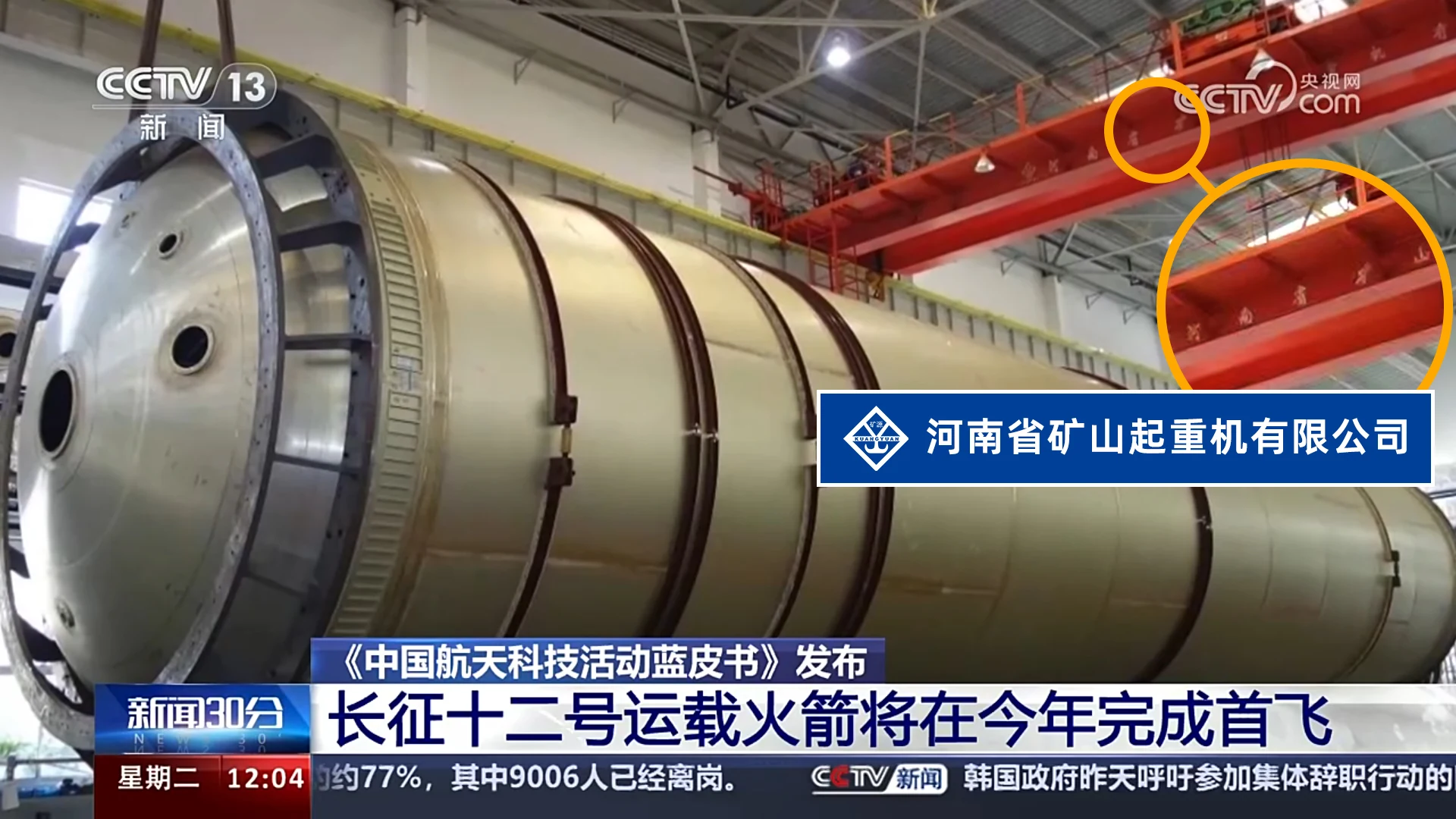
Lifting-Equipment Support for Aerospace Manufacturing Programmes
Henan Mine Crane Group’s aerospace support includes equipment development, technical problem-solving, service and quality work. This programme reference provides a starting point for discussing manufacturing lifting requirements.
Explore this application
Large-Span Crane Delivery for Aerospace Composite Production
More than 20 crane units support aerospace-material production at Xi’an Aerospace Composites Research Institute. Twelve had been delivered when this project milestone was announced.
Explore this application


