
Aerospace manufacturing / Site acceptance
Rotating-Beam Cranes for Controlled Aerospace Assembly
Henan Mine Crane Group’s 24 lifting devices for an unnamed aerospace research institute passed on-site acceptance by Xi’an’s special-equipment inspection institute and met the conditions for handover into use. The package includes six under-rotating lifting-beam overhead cranes for controlled handling in aerospace manufacturing.

- Supply package
- 24 lifting devices
- Featured configuration
- Six under-rotating lifting-beam overhead cranes
- Customer
- Unnamed aerospace research institute
- Milestone
- On-site inspection completed; conditions for delivery into use met
- Attachment control
- Servo-driven automatic extension and rotation
- Operating modes
- Remote, manual and tablet control
Control the component as well as the lifting hook
Aerospace manufacturing can require a load to arrive with a controlled orientation, ready for the next fixture or process station. The under-rotating lifting beam adds an actively controlled interface between the crane and the workpiece. In this package, six such cranes sit within a wider supply of 24 lifting devices.
For your enquiry, identify the component’s lifting points, centre of gravity and permitted handling orientation. Describe the receiving fixture and the clearances needed as the load turns. This connects the attachment design to the actual manufacturing task rather than selecting the crane only by its rated load.
Closed-loop movement and servo attachment functions
The cranes use PLC and variable-frequency-drive closed-loop vector control. Anti-sway supports stable transfer, while the attachment’s servo control provides automatic extension and rotation. Together, these address both movement through the bay and adjustment of the lifting interface at the workpiece.
Define the required extension and rotation ranges, approach speeds and acceptance positions using your component and fixture drawings. Include permitted contact points and restrictions on loads during orientation changes. This allows the proposed attachment and motion controls to be evaluated as one handling system.
Operator choices, obstacle detection and monitoring
Remote, manual and tablet operating modes give different ways to command the equipment. High-precision detection devices support obstacle avoidance in the working area. Remote monitoring provides digital operating information and lifecycle management.
Specify how operators select a mode and how control authority transfers between locations. Map the actual obstructions, access routes and workstations. Camera views, operating information and event records should support the lifting procedure, particularly where a component or fixture can obscure the operator’s view.
Acceptance tied to the complete manufacturing route
The package reached an on-site inspection milestone through Xi’an’s special-equipment inspection institute. Engineering exchanges, manufacture, installation and commissioning formed part of the customer relationship described for these devices. Handover readiness should remain distinct from a quantified long-term production result.
For a new project, agree tests covering the lifting attachment, coordinated motion, operating-mode changes, obstacle handling and the relevant fixtures. Henan Mine Crane Group previously developed a separate 160t+160t explosion-proof double-girder crane for an aerospace power company. That earlier reference is a different configuration; define the required rating and area protection directly for your own component-handling duty.
Application photographs
See the equipment and working context.
Photographs and accompanying illustrations from this application report. Open an image for a larger view.

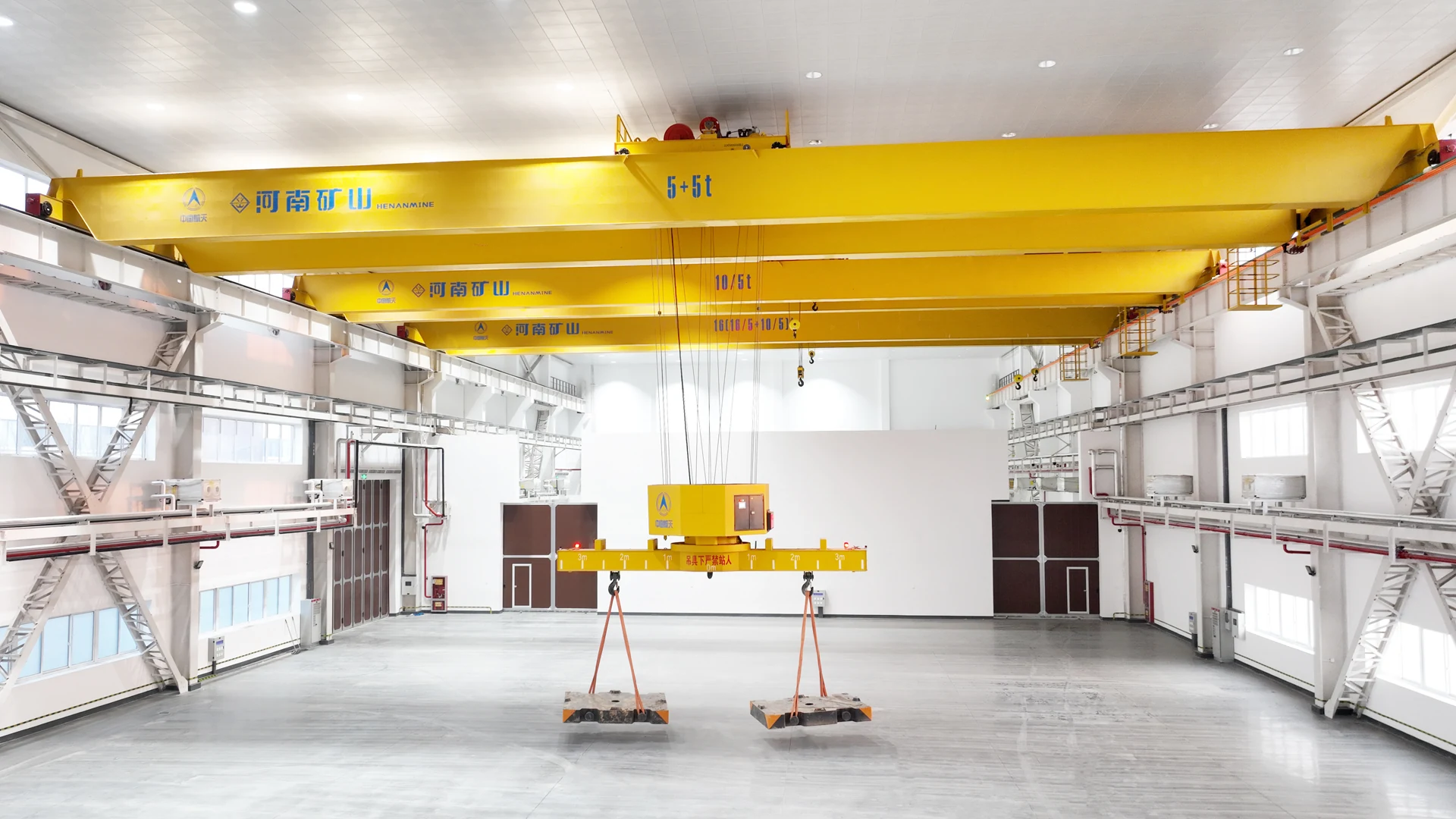
Application reference: Henan Mine Crane Group official application report. Equipment and operating advice for a new project should be specified against your load, process and site.
Start the equipment discussion
Relevant equipment families.
Compare the equipment family with your operating duty. Final attachments, controls and protection follow the application requirements.
Double-girder overhead cranes
Evaluate the bridge layout with a project-engineered rotating attachment and controlled handling route.
View equipment options ↗Explosion-proof double-girder cranes
Consider this family only if the actual operating area requires documented explosion protection; it is not implied by aerospace use.
View equipment options ↗Plan a similar application
Build the specification
around your operation.
Send component and fixture drawings to discuss controlled rotation, attachment extension and the complete handover sequence.
- Component dimensions, masses, centre of gravity and approved lifting points
- Attachment extension/rotation ranges and permitted component orientations
- Bay layout, fixtures, obstructions and required hook approaches
- Transfer speeds, anti-sway expectations and final positioning criteria
- Remote/manual/tablet mode requirements and operator-control responsibilities
- Site inspection, functional demonstrations, records and handover scope
Before you specify
Questions for
your project.
When is an under-rotating lifting beam useful?
It is worth evaluating when the workpiece must be turned or its lifting interface adjusted before handover. Provide the permitted orientations, lifting points and fixture clearances so the attachment can be assessed.
Can several operating modes be included?
The documented package includes remote, manual and tablet control. A new specification should define the required modes, control authority and procedures for changing between them.
What should an acceptance demonstration include?
Use representative components or agreed test fixtures to check attachment movement, load handling, mode selection and the intended travel route. Agree the applicable inspection and documentation requirements before manufacture.
Continue exploring
More aerospace applications.
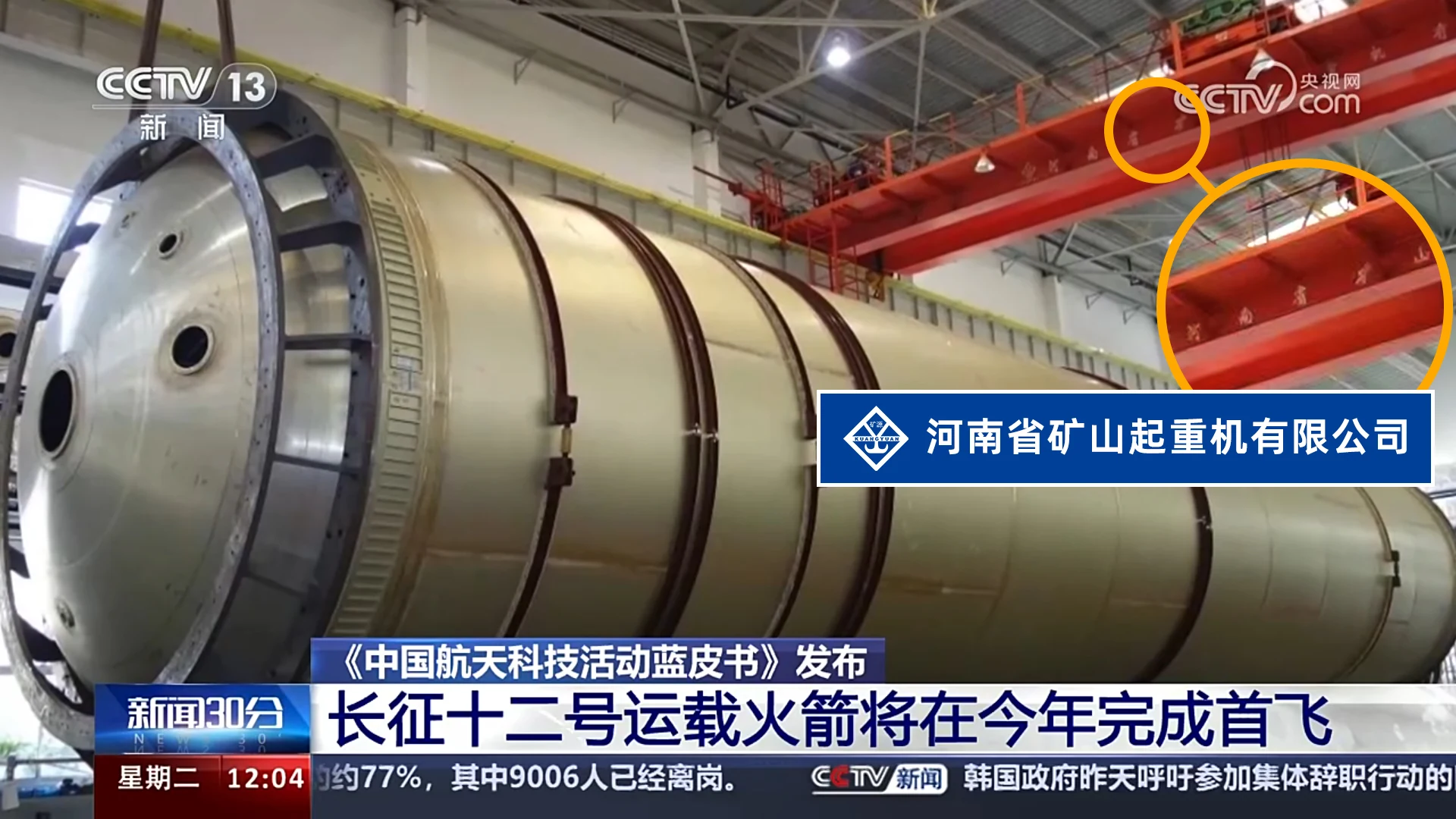
Lifting-Equipment Support for Aerospace Manufacturing Programmes
Henan Mine Crane Group’s aerospace support includes equipment development, technical problem-solving, service and quality work. This programme reference provides a starting point for discussing manufacturing lifting requirements.
Explore this application
Under-Rotating Crane Load Test for Aerospace Composites
An under-rotating crane for Xi’an Aerospace Composites Research Institute completed its load test. Dual attachments and a modular, FEA-developed structure support controlled handling of production components.
Explore this application
Large-Span Crane Delivery for Aerospace Composite Production
More than 20 crane units support aerospace-material production at Xi’an Aerospace Composites Research Institute. Twelve had been delivered when this project milestone was announced.
Explore this application


