
Bridge construction / Project-site equipment
300t Modular Double-Girder Overhead Crane for Zhangjinggao Bridge Construction
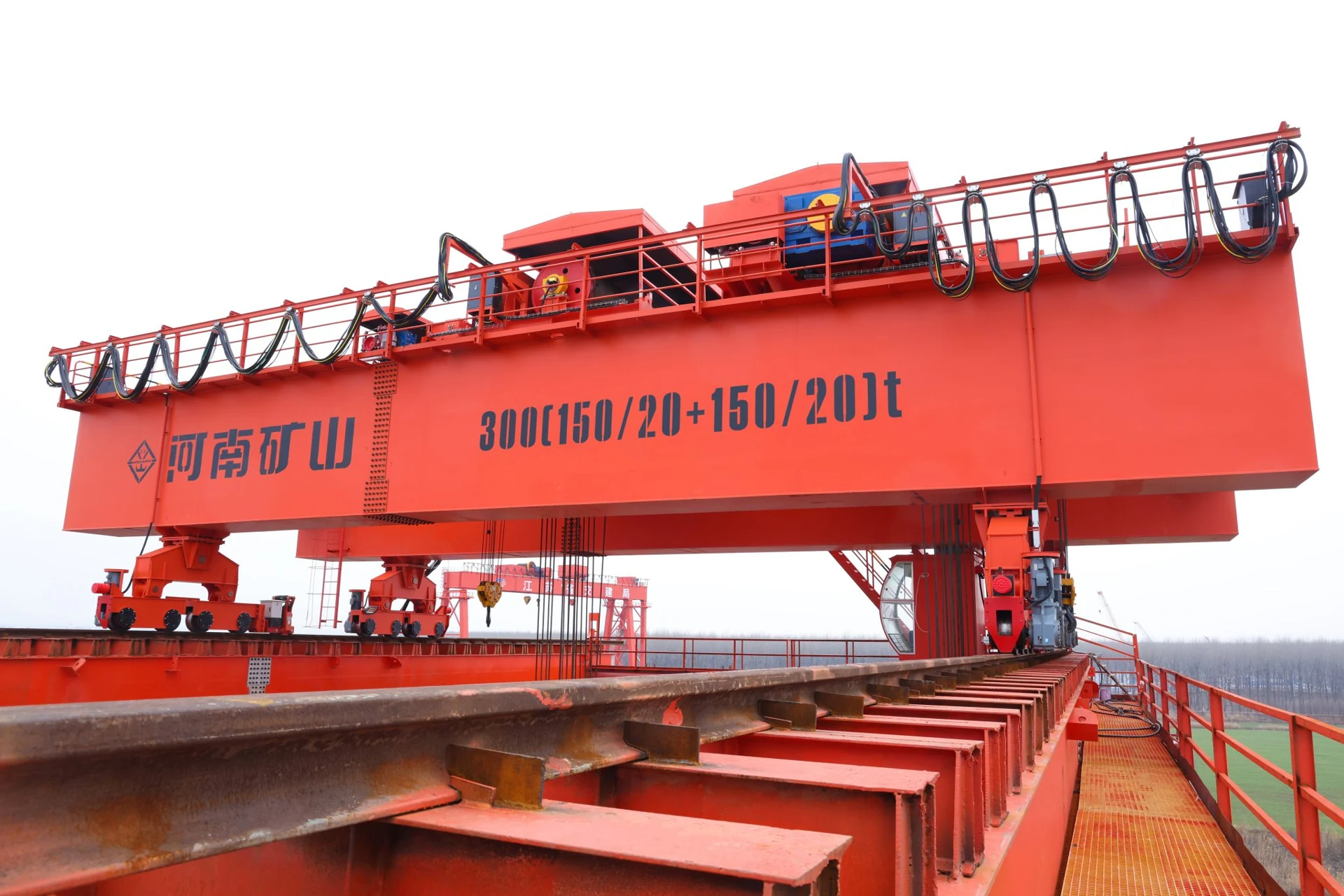
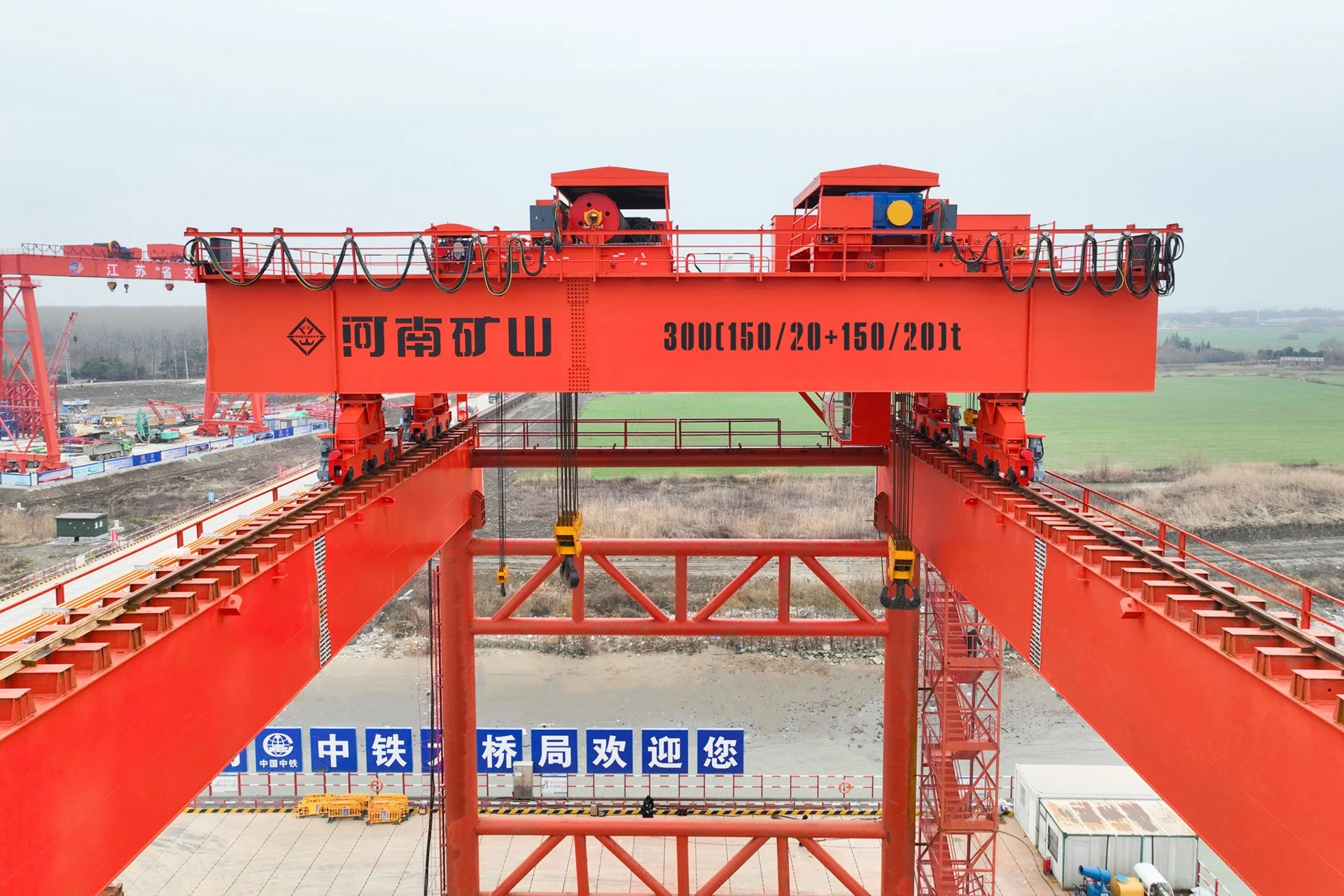
Bridge-component handling at the Zhangjinggao Yangtze River Bridge project uses a Henan Mine Crane Group 300t new-type double-girder overhead crane. The configuration combines a modular, lightweight structural approach with hardened-gear reducers, integrated electrical design and full variable-frequency control.

- Project
- Zhangjinggao Yangtze River Bridge
- Equipment
- 300 t new-type double-girder overhead crane
- Structure
- Modular lightweight design with standardised components
- Reducers
- Hardened-gear reducers throughout the described crane
- Electrical design
- Integrated electrical arrangement and full variable-frequency control
- Future provision
- Multiple reserved interfaces for later equipment upgrades
A 300t overhead arrangement for bridge construction
The project-site application features a 300 t double-girder overhead crane. Its role is within Zhangjinggao bridge construction, with the crane designed as a new-type modular configuration. The lifting schedule for a comparable project should identify the actual bridge components and the local area where they are transferred or positioned.
Provide the component masses and dimensions with the supporting building or runway layout. The overhead arrangement must be matched to those supports and to the required hook path. Bridge-project scale alone does not determine the crane's working envelope.
Modular components and a lightweight structure
The design uses a modular approach and standardised components, developed with computer-based engineering and the selected materials and manufacturing processes. Reduced structural self-weight is a stated design characteristic. These features concern the configuration of the crane itself, not an unrestricted reduction in the customer's supporting-structure requirements.
For procurement, establish the runway and support interfaces alongside the load specification. Ask for the equipment arrangement, relevant loads and access provisions needed by the civil or building team. Modular construction is most useful when the proposed installation and maintenance interfaces are defined clearly.
Hardened gears and full variable-frequency control
Hardened-gear reducers are used throughout the described crane, with an integrated electrical design. Full variable-frequency control supports controlled movement and positioning. The operating requirements should connect those mechanisms to the load cases, frequency of use and handover conditions at the site.
Specify required travel and lifting movements, the positioning tolerances that matter and the conditions for testing them. Also include inspection and service access. A configuration promoted for lower maintenance still needs a defined maintenance plan and the information required to carry it out.
Reserve upgrade interfaces with a defined future scope
Multiple interfaces were reserved for later crane upgrades. This is a useful planning provision where the project may add functions after the initial operating stage. The value depends on documenting what each interface supports and how later changes will be integrated.
Separate the initial control scope from proposed future options in the enquiry. List any expected data connections or automatic sequences and agree which provisions are included now. This allows the project team to review future compatibility without assuming that reserved ports mean automatic or unattended operation has already been delivered.
Application photographs
See the equipment and working context.
Photographs and accompanying illustrations from this application report. Open an image for a larger view.
Application reference: Henan Mine Crane Group official application report. Equipment and operating advice for a new project should be specified against your load, process and site.
Start the equipment discussion
Relevant equipment families.
Compare the equipment family with your operating duty. Final attachments, controls and protection follow the application requirements.
Double girder overhead cranes
Evaluate a modular project crane against required capacity, runway geometry and control scope; the 300 t project configuration needs its own engineering.
View equipment options ↗Lifting attachments
Select load connections from the bridge-component drawings and the required lifting orientations.
View equipment options ↗Plan a similar application
Build the specification
around your operation.
Send the bridge-component handling schedule and runway layout to assess the overhead configuration and future-interface scope.
- Component mass, geometry, lifting points and handling sequence
- Runway/support drawings and available building envelope
- Required span, hook paths and pickup/handover positions
- Duty cycles, movement speeds and positioning acceptance conditions
- Electrical integration, reducer/service access and maintenance requirements
- Initial functions, reserved interfaces and separately defined future upgrades
Before you specify
Questions for
your project.
What information establishes an overhead crane's coverage?
Provide runway/support geometry, the load envelope and pickup/placement positions. Required span and hook paths must be checked against those details.
How should reserved upgrade ports be specified?
List the future functions and data interfaces you expect, then define which physical and control provisions are included in the initial supply. Later implementation remains a separate scope.
What should be included for ongoing maintenance?
Agree inspection tasks, access to reducers and electrical equipment, service documentation and spares requirements for the chosen duty and site environment.
Continue exploring
More construction & infrastructure applications.

500t Double-Girder Crane for Heavy Component Handling in High-Speed-Rail Construction
The 500t crane was put into use for heavy component handling on an unnamed high-speed-rail project. Synchronized hooks, anti-sway and digital/video monitoring address complex construction conditions.
Explore this application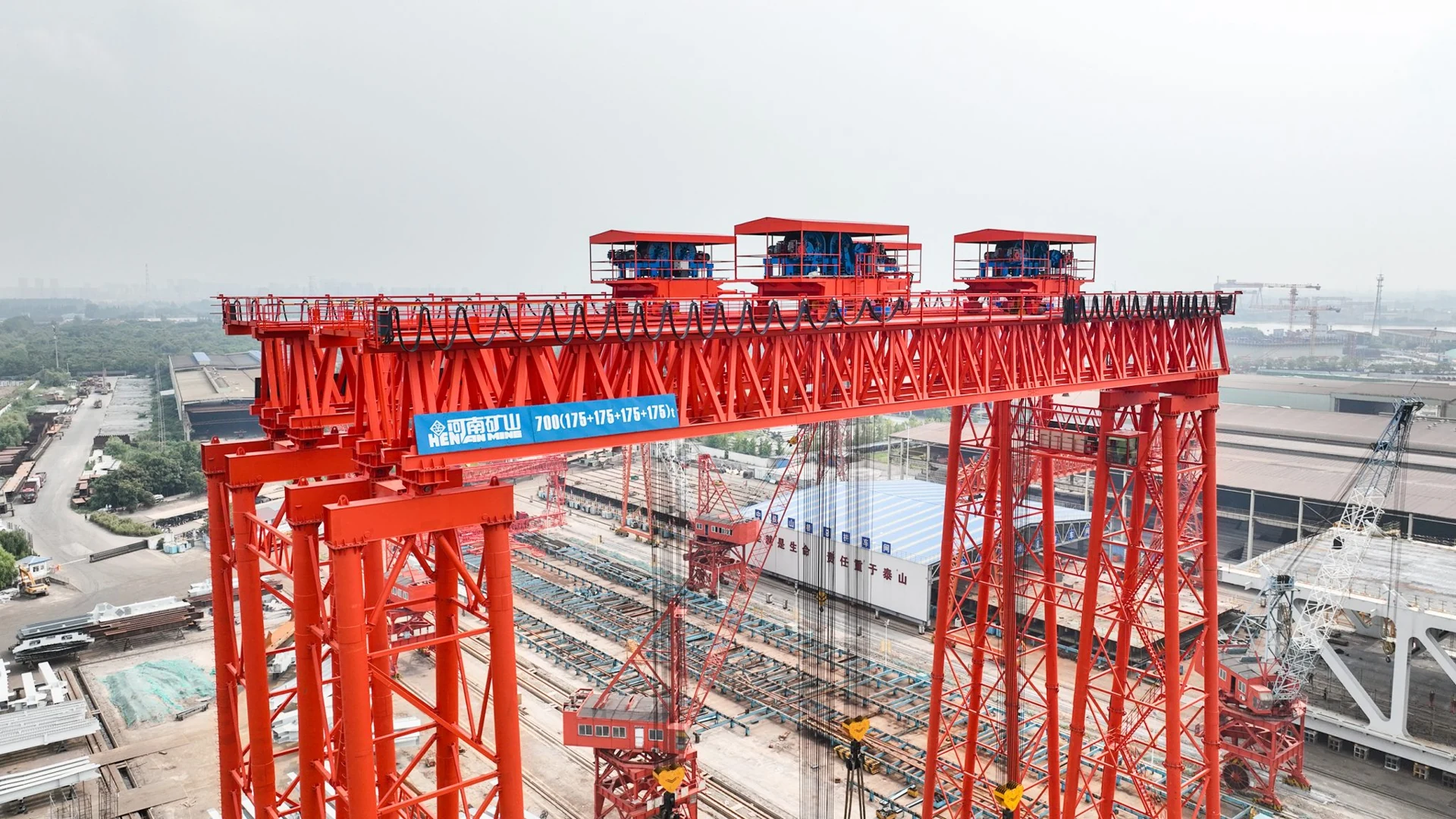
700t Gantry Crane Type Testing for Zhangjinggao Bridge Steel-Tower Construction
The 700t gantry crane passed type testing for the Zhangjinggao Yangtze River Bridge steel-tower project. It belongs to a wider crane package intended for main-tower and other bridge-structure lifting.
Explore this application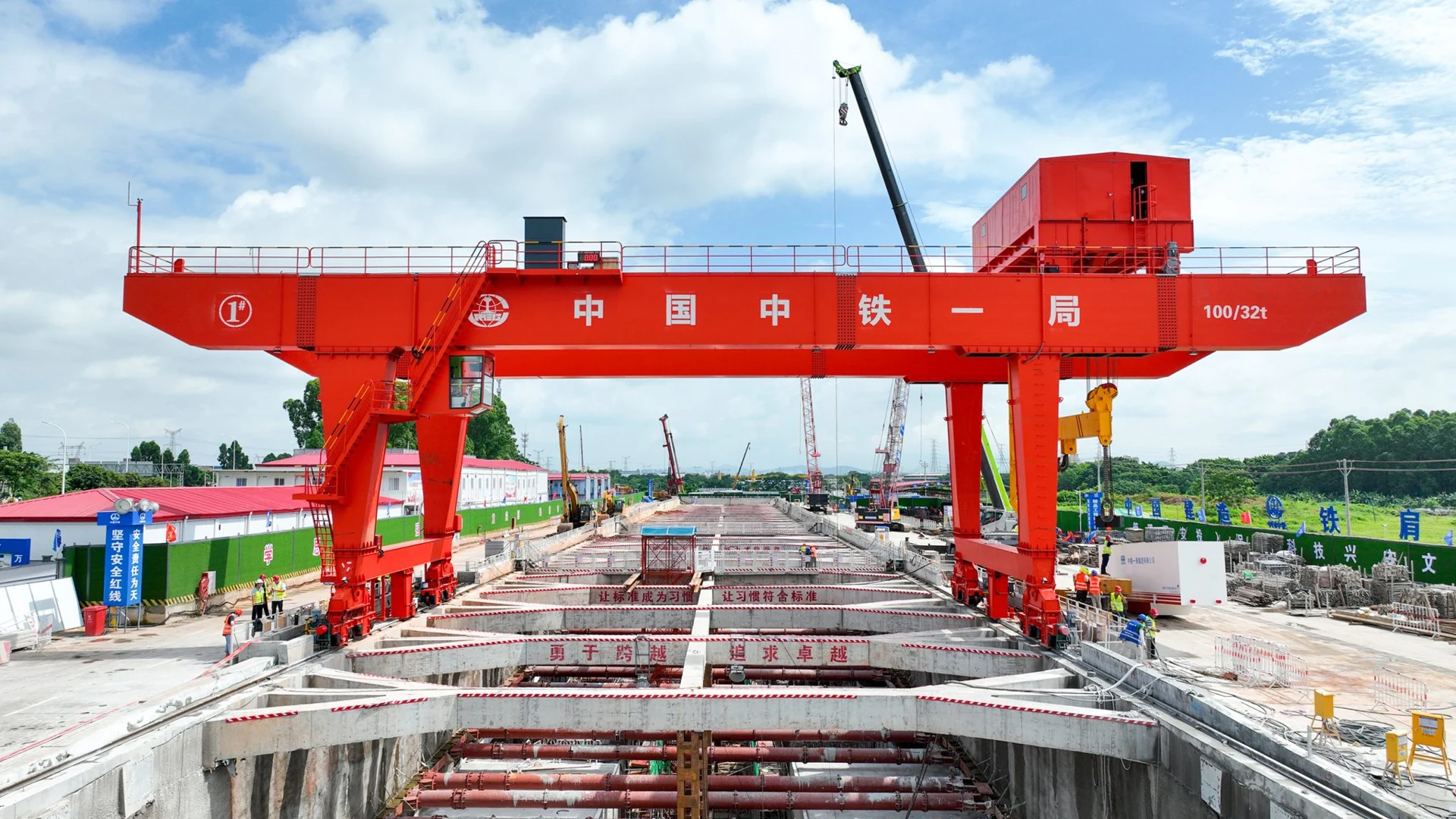
Two 100t Metro Muck-Handling Gantry Cranes for the Guangfo Ring Railway
The Guangfo Ring project uses two 100t gantries for underground-railway spoil and material handling. Their attachments reach a working depth of 40 m below rail level.
Explore this application


