
Rail infrastructure / Equipment in use
500t Double-Girder Crane for Heavy Component Handling in High-Speed-Rail Construction
Heavy components on an unnamed national high-speed-rail construction project are handled by a 500t new-type double-girder crane from Henan Mine Crane Group. The crane was put into use with coordinated hooks, electrical anti-sway and monitoring features suited to the project's complex construction environment.

- Project
- Unnamed national high-speed-rail construction project
- Equipment
- 500 t new-type double-girder crane
- Stage
- Put into use at the project
- Motion
- High-lift configuration, variable-frequency control and synchronized hooks
- Load control
- Electrical anti-sway for heavy component handling
- Monitoring
- Digital monitoring, video-based protection and lifecycle management
- Environment
- Complex rail/tunnel construction conditions, including humidity and dust
Heavy component movements within rail construction
The featured application is a high-speed-rail construction project, with a 500 t double-girder crane already put into use. Heavy component handling and difficult tunnel/construction conditions define the task. The crane configuration is described around that duty rather than a particular bridge tower, box girder or named railway location.
For a similar project, prepare the construction lift schedule with component drawings and site receiving positions. Show where loads enter the crane's working area and where they must be handed over. That establishes the operating route before span, hook height and control requirements are fixed.
Synchronized hooks and electrical anti-sway
Multiple hooks operate synchronously, with electrical anti-sway supporting stable heavy-component movement. Variable-frequency control is combined with a high-lift configuration. These features connect the lifting-point arrangement to controlled travel and placement through the construction working envelope.
A new enquiry should define the lifting points, centre of gravity and permitted differences between hook movements. Include the component orientation and any support changes during placement. Required synchronization and stopping tolerances should be agreed for representative loads and paths rather than left as general requests for precision.
Visibility and monitoring in humid, dusty conditions
The installation includes digital monitoring, video-based protective visibility and a lifecycle management system. The working environment is described as humid and dusty, with the complexity associated with rail and tunnel construction. These conditions affect both normal operation and the information needed to recognise an interrupted or abnormal movement.
Specify the operating positions and areas where the load or handover point is difficult to see. Define which equipment states need to be displayed, recorded or signalled to the site team. Monitoring scope should follow those practical operating needs and the project's maintenance arrangements.
Connect lightweight design to the installation interfaces
A lightweight structural approach is part of the crane configuration. Its value to a proposed site must be assessed with the support layout and required working envelope. Capacity, structure and motion requirements remain connected: a 500 t rating alone does not resolve the rail or foundation interfaces.
Supply the site sections, support constraints and electrical provisions with the lift plan. Agree the tests for coordinated hooks, anti-sway, monitoring and emergency/interrupted-cycle response. This gives construction and equipment teams a common basis for acceptance while retaining the specific environmental and access requirements of the project.
Application photographs
See the equipment and working context.
Photographs and accompanying illustrations from this application report. Open an image for a larger view.
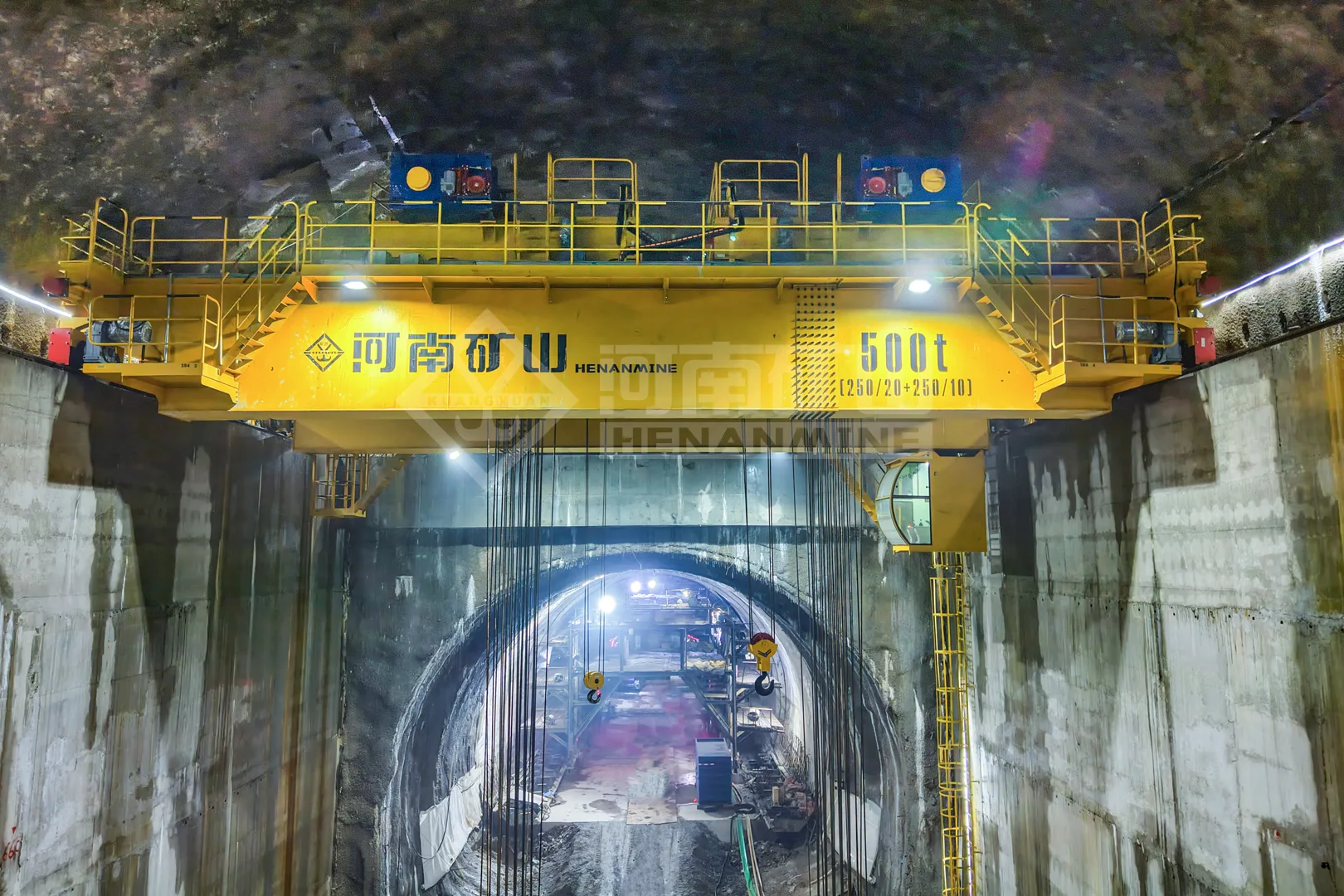
Application reference: Henan Mine Crane Group official application report. Equipment and operating advice for a new project should be specified against your load, process and site.
Start the equipment discussion
Relevant equipment families.
Compare the equipment family with your operating duty. Final attachments, controls and protection follow the application requirements.
Double girder overhead cranes
Evaluate an overhead arrangement against the proposed support structure, heavy-load route and required coordinated-hook duty.
View equipment options ↗Double girder gantry cranes
Evaluate a gantry alternative where site supports and ground/rail interfaces require that layout, using the same load and synchronization schedule.
View equipment options ↗Plan a similar application
Build the specification
around your operation.
Share the rail-construction lift plan and site constraints to evaluate heavy-load coordination, visibility and installation interfaces.
- Component masses, dimensions, centres of gravity and lifting points
- Hook coordination, support changes and permitted load orientation
- Pickup/placement positions, travel route and required hook height
- Support structure, rail/foundation constraints and erection access
- Humidity, dust, visibility and operator-position requirements
- Synchronization/anti-sway acceptance cases and monitoring/lifecycle data needs
Before you specify
Questions for
your project.
What is needed to specify synchronized hooks?
Provide lifting-point geometry, component mass and centre of gravity, movement sequence and permitted hook differences. Include the load conditions for acceptance testing.
How should monitoring be planned for restricted visibility?
Identify blind areas, operator positions and handover points. Specify the views, status signals and records needed for the actual construction sequence.
What site information affects the crane layout?
Support and access drawings, required travel coverage, hook heights, power availability and the environmental conditions all belong with the heavy-lift schedule.
Continue exploring
More construction & infrastructure applications.
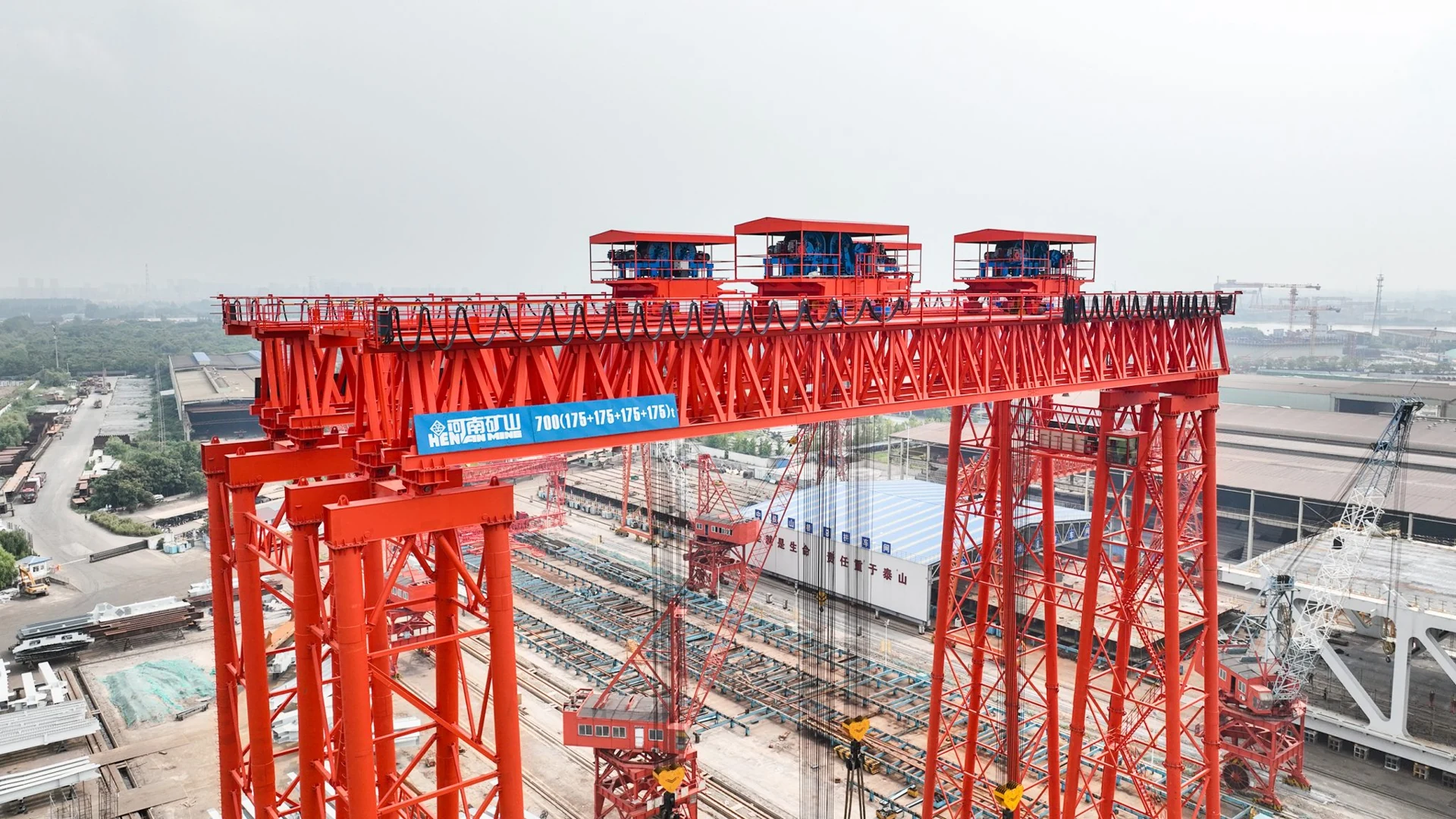
700t Gantry Crane Type Testing for Zhangjinggao Bridge Steel-Tower Construction
The 700t gantry crane passed type testing for the Zhangjinggao Yangtze River Bridge steel-tower project. It belongs to a wider crane package intended for main-tower and other bridge-structure lifting.
Explore this application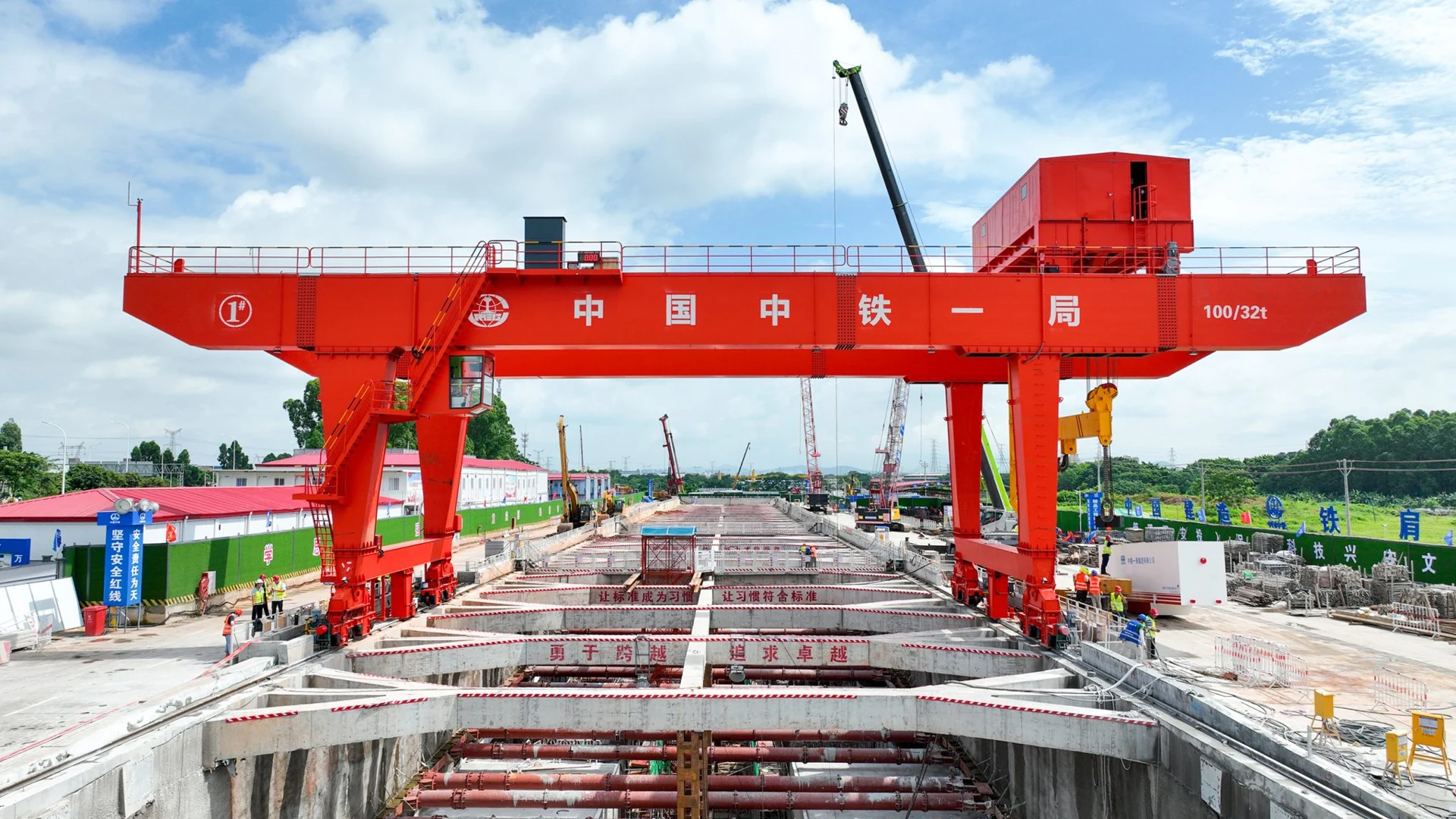
Two 100t Metro Muck-Handling Gantry Cranes for the Guangfo Ring Railway
The Guangfo Ring project uses two 100t gantries for underground-railway spoil and material handling. Their attachments reach a working depth of 40 m below rail level.
Explore this application
500t Gantry Crane Supports Z3 Steel-Tower Assembly at Maanshan Yangtze River Bridge
A 500t gantry supported the first-round assembly acceptance of Maanshan Bridge's Z3 steel tower. More than ten supplied cranes, including 500t and 400t configurations, handle main-tower and other bridge structures.
Explore this application


