
Bridge structural assembly / Project acceptance milestone
500t Gantry Crane Supports Z3 Steel-Tower Assembly at Maanshan Yangtze River Bridge
Z3 steel-tower assembly at Maanshan Yangtze River road–rail bridge reached its first-round assembly acceptance milestone with support from a Henan Mine Crane Group 500t gantry crane. The project, involving China Railway Jiuqiao, uses a wider package exceeding ten crane units/sets for bridge-structure lifting.

- Project
- Maanshan Yangtze River road–rail bridge
- Construction participant
- China Railway Jiuqiao (中铁九桥)
- Featured crane
- 500 t gantry crane
- Supply scope
- More than ten crane units/sets, including 500 t and 400 t configurations
- Milestone
- Z3 steel tower passed first-round overall assembly acceptance
- Bridge dimensions
- Three towers and two main spans; 1,120 m per main span and 2,240 m continuous double-span length
Lifting for the Z3 steel-tower assembly sequence
The 500 t gantry supported assembly work on the Z3 steel tower. The completed milestone was the tower's first-round overall assembly acceptance. This connects the crane to a specific structural-production outcome, with the lifting task centred on the tower sections and their assembly arrangement.
For another bridge project, identify the sections involved in each assembly stage and the places where they must be supported. The crane's movement route and lifting fixtures should be reviewed with those drawings. The key procurement question is how the required load reaches the right assembly position.
A wider package for main-tower and bridge structures
Henan Mine Crane Group's supply exceeds ten crane units/sets and includes 500 t and 400 t configurations. The package serves the main steel tower and other bridge structural lifting. It is a mixed supply rather than a count of identical 500 t gantries.
A project crane schedule should distinguish the largest assembly lift from supporting transfer and positioning tasks. Define which crane serves each area and any interface between those areas. This allows the capacities and layouts to follow the structural assembly sequence rather than using one large-crane rating for every duty.
Bridge spans establish project scale, not gantry span
The bridge uses a three-tower, two-main-span arrangement. Each main span is 1,120 m, with a continuous double-span length of 2,240 m. Those dimensions describe the bridge itself; they do not define the crane's span, travel length or lifting height.
The gantry working area must instead be derived from the local assembly layout. Provide the receiving area, fixtures, gantry rails and section placement locations. Construction exposure and access restrictions also belong on that drawing so the proposed crane coverage can be checked against the actual worksite.
Turn the structural plan into acceptance movements
For procurement, use representative structural sections to define pickup, transfer and placement demonstrations. Include load mass, centre of gravity and approved lifting points, together with any change of orientation or support condition. Define required tolerances at the interface where the section is positioned.
Agree the crane verification and site acceptance scope separately from acceptance of the finished steel assembly. The Z3 milestone concerns structural assembly; a new equipment contract still needs its own inspection, testing and documentation requirements. A clear task schedule gives both bridge and crane teams a common basis for review.
Procurement review
Build a review pack around the structural lift
The featured 500 t gantry supported the Z3 steel-tower assembly milestone. For another bridge or fabrication project, the approval pack should connect each planned lift to the selected crane configuration, lifting fixture and temporary support arrangement.
Swipe across the table to view all columns.
| Review item | Include in your procurement pack | Decision it supports |
|---|---|---|
| Load and fixture drawing | Section mass, centre of gravity, approved lifting points, fixture and rigging mass, pickup orientation and changes of support during the movement. | Establish the complete suspended load and the planned load path. |
| Crane and site interface | Selected crane configuration, working positions, hook coverage, rail geometry, support reactions and civil/temporary-works responsibilities. | Review the crane against the assembly area and its support design. |
| Assembly sequence | Pickup, transfer, alignment and set-down steps; clearance envelope, exclusion areas, communication and work-release responsibilities. | Coordinate equipment movements with the structural assembly programme. |
| Acceptance records | Separate equipment inspection/test records from the structural assembly acceptance; define witnesses, record IDs and closure of outstanding items. | Give crane handover and steel-assembly approval clear evidence and owners. |
State separately which party supplies fixtures, rails, foundations, installation work and temporary support. Put the selected crane rating and permitted operating cases on the same technical schedule used for review.
Application reference: Henan Mine Crane Group official application report. Equipment and operating advice for a new project should be specified against your load, process and site.
Start the equipment discussion
Relevant equipment families.
Compare the equipment family with your operating duty. Final attachments, controls and protection follow the application requirements.
Double girder gantry cranes
Evaluate project-specific gantry configurations against tower-section loads and the local assembly area.
View equipment options ↗Lifting attachments
Define structural-section fixtures and load connections from the approved bridge lifting plan.
View equipment options ↗Plan a similar application
Build the specification
around your operation.
Send the tower-section schedule and assembly layout to evaluate a bridge-structure crane package.
- Tower/bridge-section weights, dimensions and centres of gravity
- Approved lifting points, fixtures and any orientation changes
- Receiving, assembly and support positions for each stage
- Required gantry span, rail route, hook heights and site exposure
- Crane allocation by area and interfaces between lifting tasks
- Placement tolerances, representative test lifts and equipment acceptance scope
Before you specify
Questions for
your project.
How should a mixed bridge crane package be scheduled?
Allocate each section and handling task to its working area, then define the capacity, coverage and handover interfaces for that area. Supporting tasks may need different configurations from the largest tower lift.
Which dimensions are needed for gantry coverage?
Use the local receiving and assembly layout, rail positions and hook working heights. The bridge's 1,120 m main span is project context rather than a crane span.
What should acceptance demonstrate for tower-section placement?
Agree representative loads, lifting points, transfer paths and placement tolerances, plus the inspection and documentation scope for the equipment itself.
Continue exploring
More construction & infrastructure applications.

500t Double-Girder Crane for Heavy Component Handling in High-Speed-Rail Construction
The 500t crane was put into use for heavy component handling on an unnamed high-speed-rail project. Synchronized hooks, anti-sway and digital/video monitoring address complex construction conditions.
Explore this application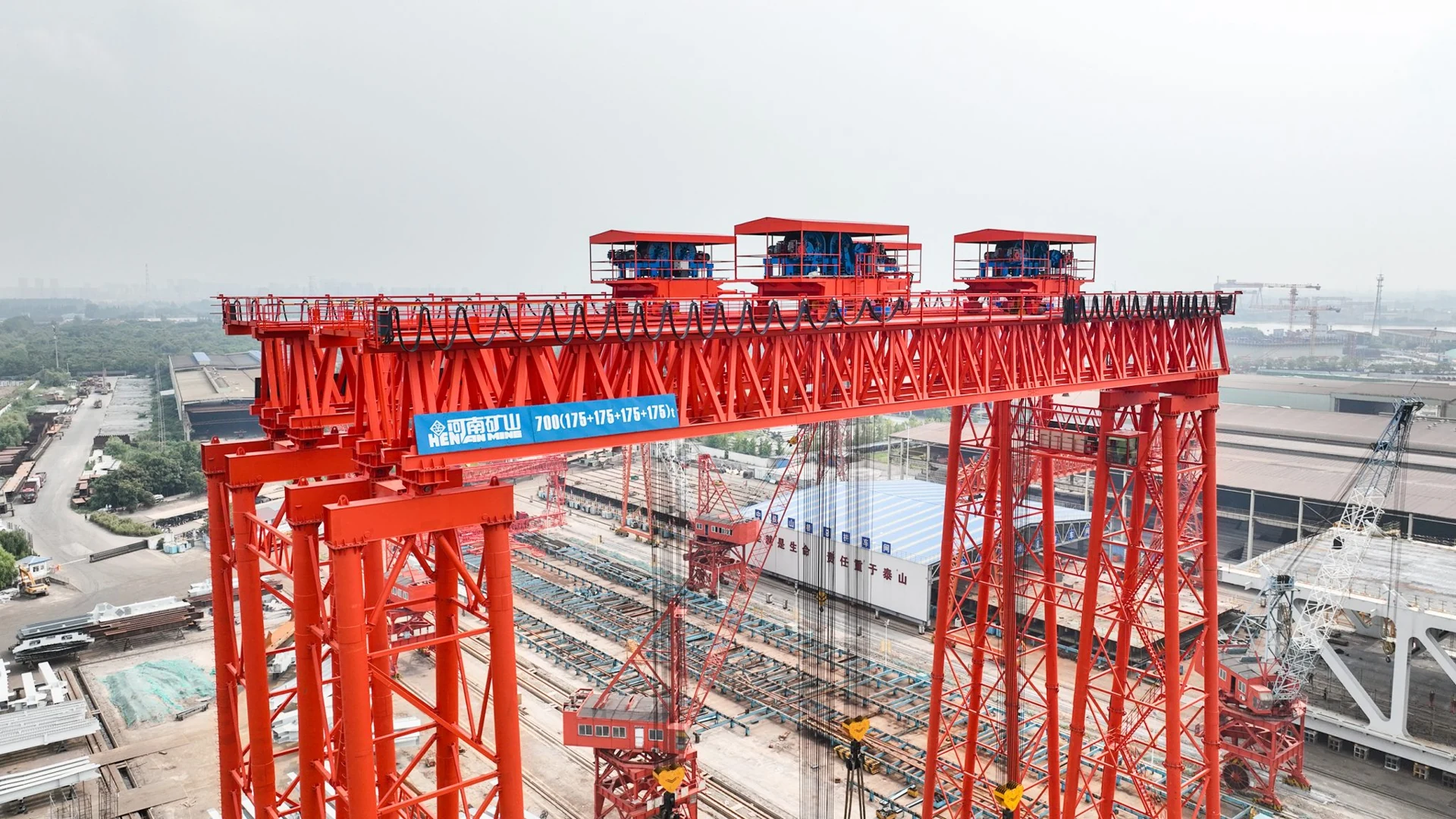
700t Gantry Crane Type Testing for Zhangjinggao Bridge Steel-Tower Construction
The 700t gantry crane passed type testing for the Zhangjinggao Yangtze River Bridge steel-tower project. It belongs to a wider crane package intended for main-tower and other bridge-structure lifting.
Explore this application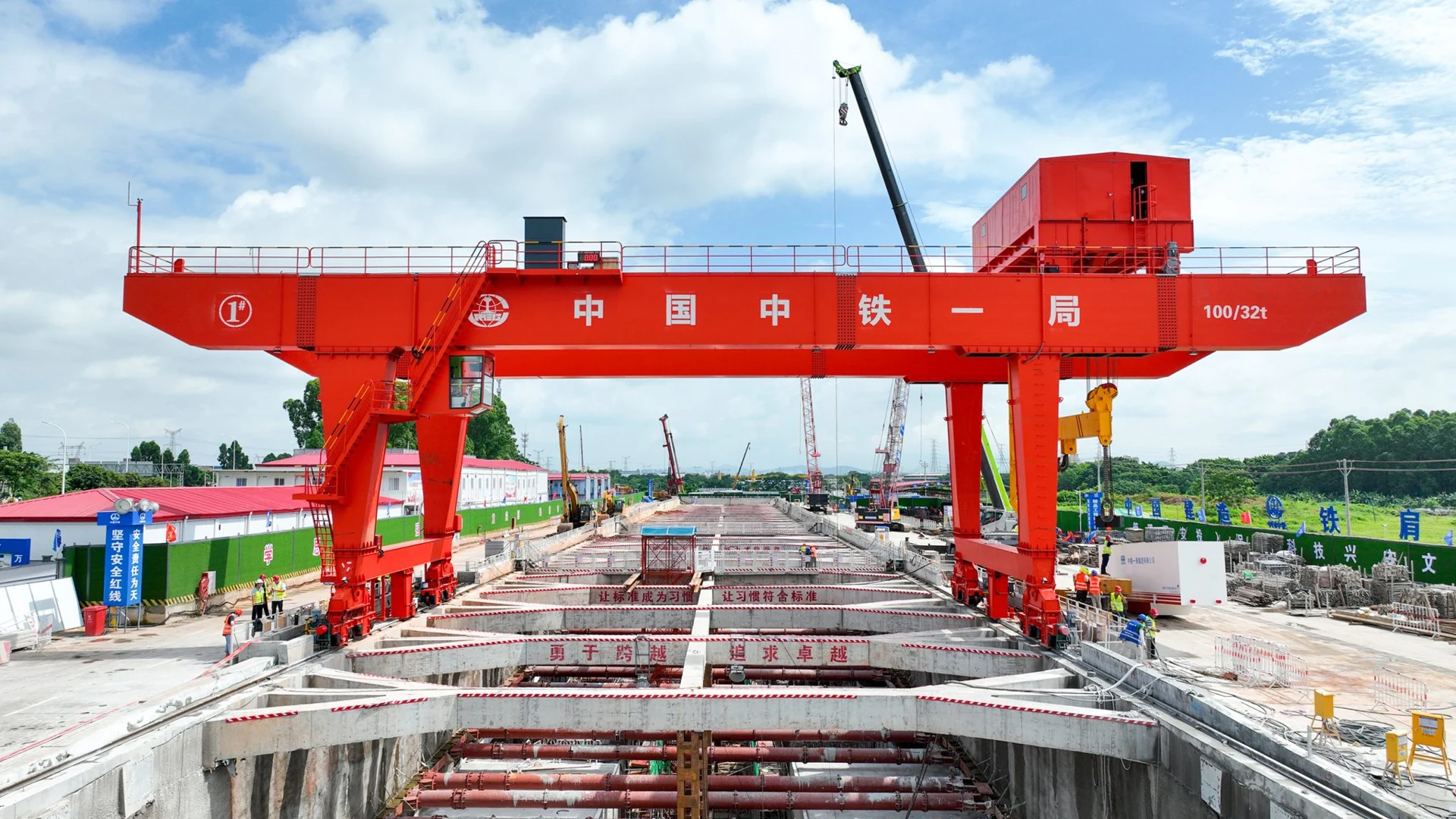
Two 100t Metro Muck-Handling Gantry Cranes for the Guangfo Ring Railway
The Guangfo Ring project uses two 100t gantries for underground-railway spoil and material handling. Their attachments reach a working depth of 40 m below rail level.
Explore this application


