
Bridge foundations / Caisson construction support
Gantry Crane Support for Steel-Caisson Works at Changtai Yangtze River Bridge
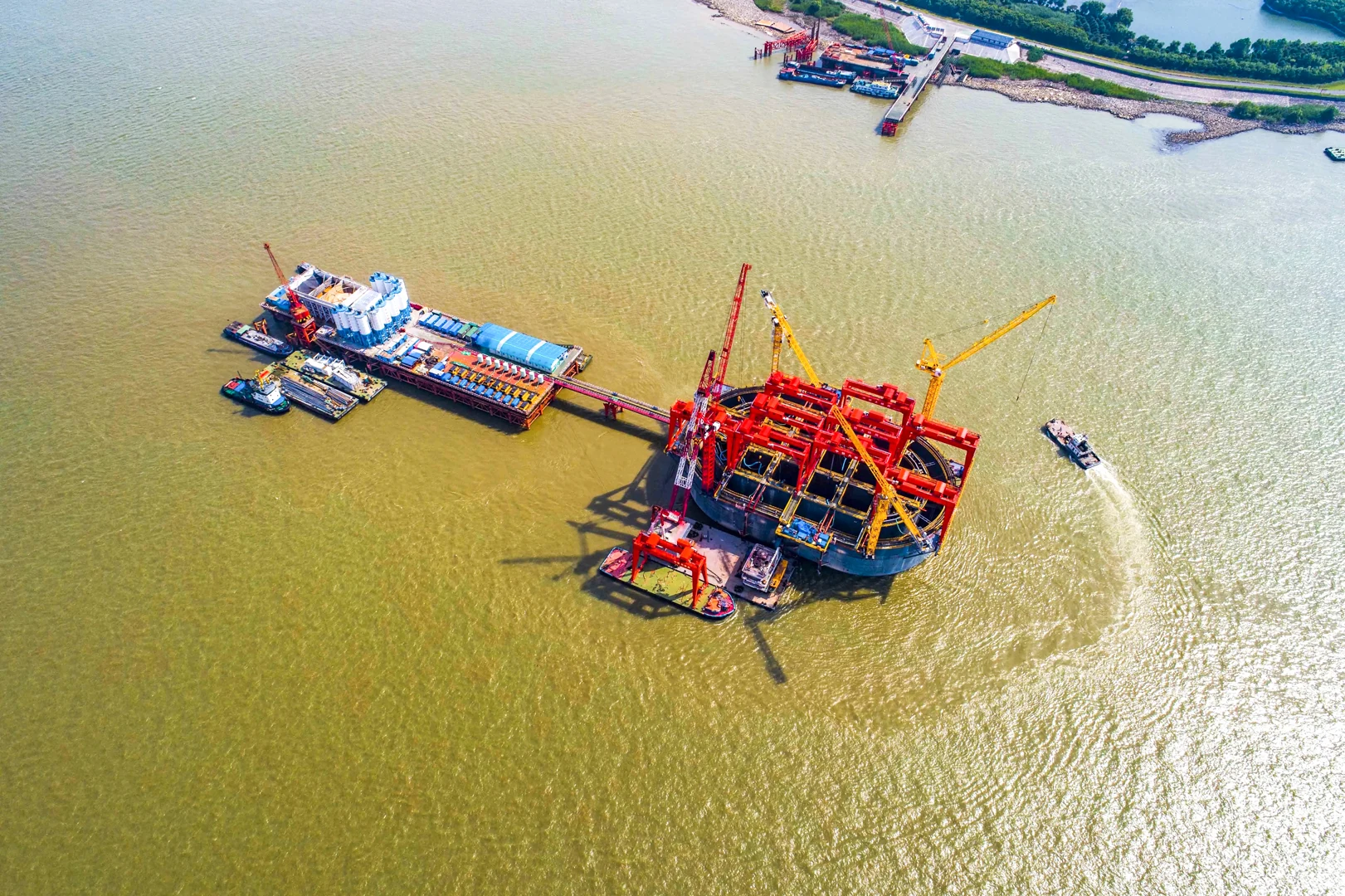
Steel-caisson construction at Changtai Yangtze River Bridge uses multiple gantry cranes from Henan Mine Crane Group. The application connects crane support with intelligent cutter-suction and other excavation equipment for a planned automatic excavation sequence within individual caisson cells.
- Project
- Changtai Yangtze River Bridge
- Equipment scope
- Multiple gantry cranes; exact quantity and capacity are not specified
- Construction stage
- Steel-caisson excavation and sinking support
- Combined equipment
- Gantry cranes alongside intelligent cutter-suction/excavation equipment
- Planned process
- Automatic soil excavation within an individual steel-caisson cell
- Bridge use
- Combined expressway, conventional road and railway crossing
Crane support within the caisson construction system
The gantry application serves the steel-caisson works at Changtai Yangtze River Bridge. Multiple cranes contribute to the excavation and sinking stage, where equipment and operations must be coordinated within the foundation-construction sequence. The cranes form one part of that system.
For a similar enquiry, identify what the crane will lift, where those loads are received and how their working positions change as construction advances. Separate equipment handling from the soil-excavation function so the proposed crane scope has a clear load and movement schedule.
Define interfaces with cutter-suction excavation equipment
The intended combined sequence uses intelligent cutter-suction robots and other excavation equipment to perform automatic excavation within a single caisson cell. Crane handling and excavation therefore need compatible coverage, equipment interfaces and working sequences. The excavating function belongs to the combined system, not to a gantry alone.
Supply drawings of the excavation equipment and any handling frames or lifting connections. Identify when each item must be installed, repositioned or removed. Those movements establish the crane's role in supporting the changing work area and help define responsibilities between equipment suppliers.
Plan coverage as the caisson works progress
Caisson excavation and sinking create a construction sequence with changing levels and equipment positions. A practical crane proposal needs the caisson layout, cell geometry and the relevant construction stages, alongside pickup locations and access routes. The load path should be checked for each stage that requires crane handling.
Include temporary works and restrictions on simultaneous operations. Where other equipment occupies the same cell or working area, define the required clearances and the permissions for movement. These are project-planning inputs that help the crane team evaluate coverage and interfaces.
Specify a support package with clear acceptance boundaries
Changtai Bridge combines expressway, conventional-road and railway functions across the Yangtze. Its foundation works illustrate the importance of matching lifting equipment to a particular construction process. The crane enquiry should follow that process rather than assume a capacity or control package from the bridge's overall scale.
Provide representative equipment loads and handling demonstrations for crane acceptance. Define separately the excavation system's sequence and integration checks. Include erection, inspection and maintenance access at the planned work levels. This gives the crane supply a clear scope within the wider caisson-construction programme.
Application photographs
See the equipment and working context.
Photographs and accompanying illustrations from this application report. Open an image for a larger view.

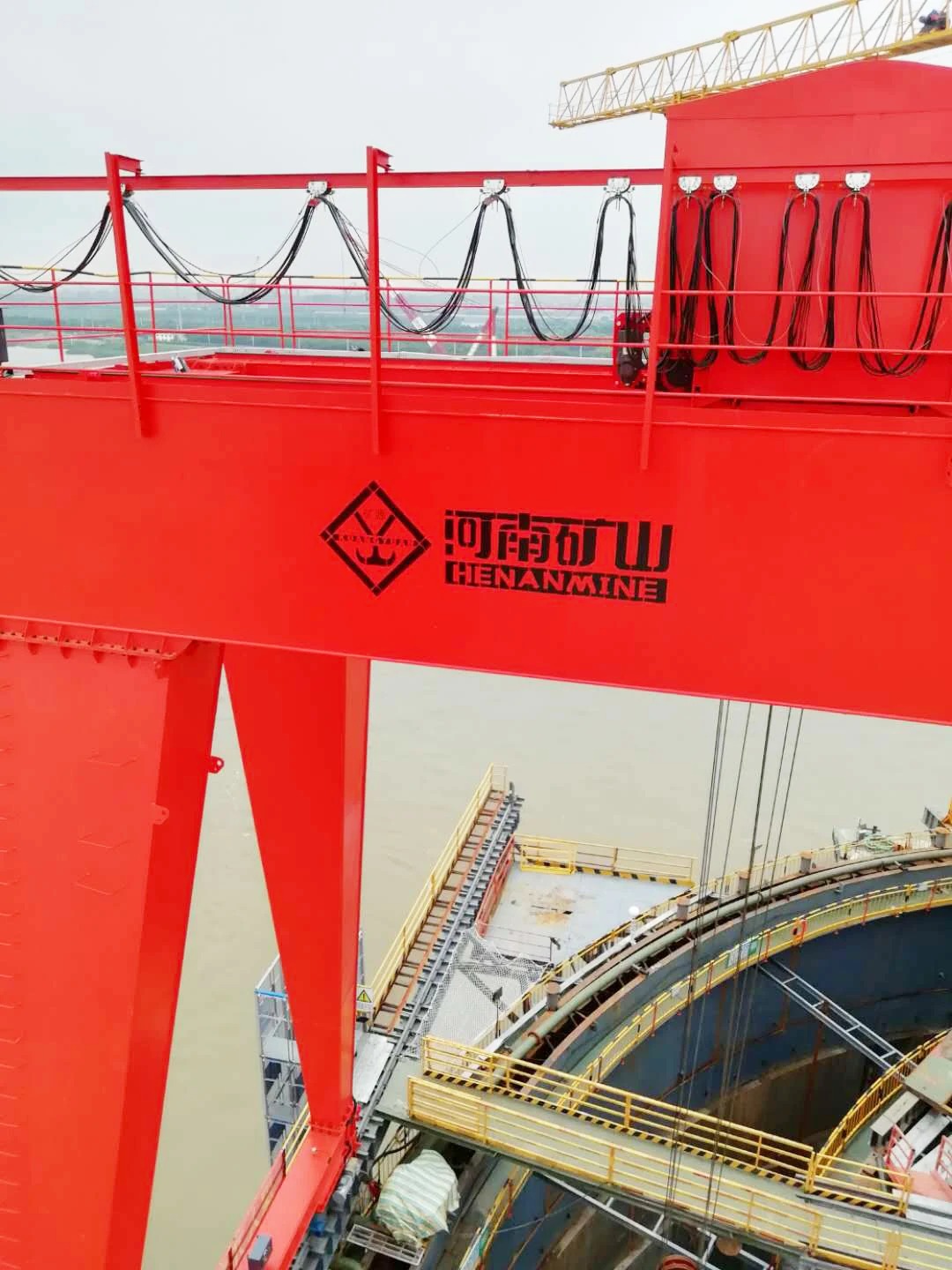
Application reference: Henan Mine Crane Group official application report. Equipment and operating advice for a new project should be specified against your load, process and site.
Start the equipment discussion
Relevant equipment families.
Compare the equipment family with your operating duty. Final attachments, controls and protection follow the application requirements.
Double girder gantry cranes
Evaluate where the caisson working layout and equipment loads call for this arrangement; exact original gantry models are not given.
View equipment options ↗Lifting attachments
Review equipment-handling frames and connections from the excavation-equipment drawings and construction sequence.
View equipment options ↗Plan a similar application
Build the specification
around your operation.
Send the caisson construction sequence and excavation-equipment handling list to define the gantry support scope.
- Equipment/auxiliary loads with masses, dimensions and lifting points
- Caisson plan, individual cell geometry and work levels by stage
- Pickup positions, transfer routes and equipment installation/removal sequence
- Interfaces with cutter-suction equipment, frames and temporary works
- Simultaneous-operation restrictions, clearances and movement permissions
- Crane acceptance loads, integration responsibilities and service access
Before you specify
Questions for
your project.
Which loads should be listed for caisson crane support?
List the excavation equipment and auxiliary items the crane must install, reposition or remove, including their gross mass, lifting points and handling frames.
How are changing construction levels handled in the enquiry?
Provide the caisson layout and work levels for each relevant stage, with pickup and placement positions. Review the crane route and clearances across those stages.
How should crane and excavation acceptance be separated?
Define representative crane handling tests and separately define the combined excavation sequence and interfaces. Allocate equipment, control and integration responsibilities explicitly.
Continue exploring
More construction & infrastructure applications.

500t Double-Girder Crane for Heavy Component Handling in High-Speed-Rail Construction
The 500t crane was put into use for heavy component handling on an unnamed high-speed-rail project. Synchronized hooks, anti-sway and digital/video monitoring address complex construction conditions.
Explore this application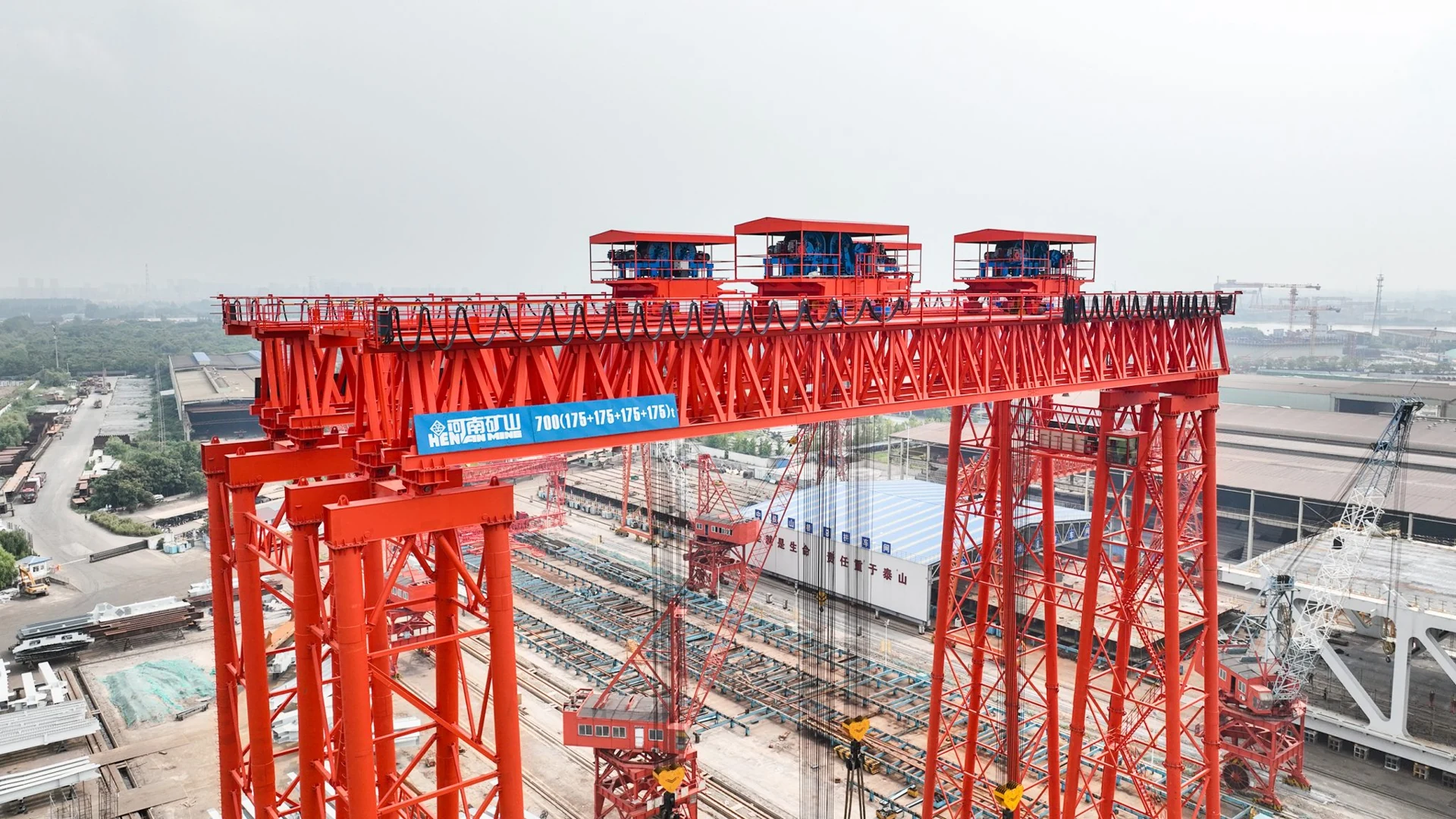
700t Gantry Crane Type Testing for Zhangjinggao Bridge Steel-Tower Construction
The 700t gantry crane passed type testing for the Zhangjinggao Yangtze River Bridge steel-tower project. It belongs to a wider crane package intended for main-tower and other bridge-structure lifting.
Explore this application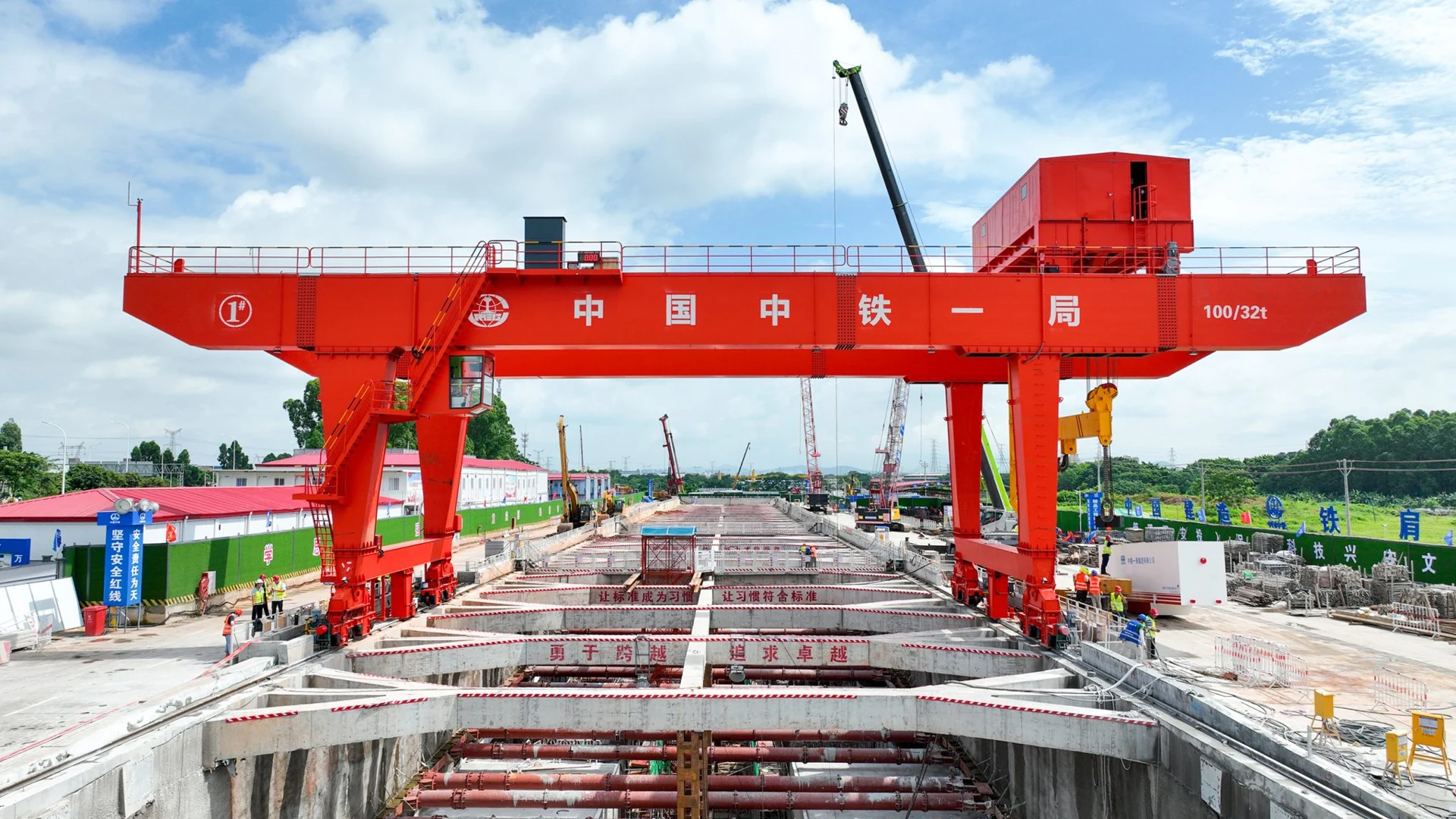
Two 100t Metro Muck-Handling Gantry Cranes for the Guangfo Ring Railway
The Guangfo Ring project uses two 100t gantries for underground-railway spoil and material handling. Their attachments reach a working depth of 40 m below rail level.
Explore this application


