
Produce cold storage / In use since 2018
(8+8)t Automated Basket Crane for Garlic Cold Storage
Shandong Lingdong Electronic Technology's Suantong Tianxia industrial park brought an (8+8)t intelligent warehouse crane into use in 2018. Henan Mine Crane Group replaced a small-basket workflow with coded large baskets, dedicated lifting attachments and automatic stacking and retrieval for garlic cold storage.
- Customer
- Shandong Lingdong Electronic Technology / Suantong Tianxia industrial park
- Crane arrangement
- (8+8)t intelligent warehouse crane
- Operating milestone
- Put into use in 2018
- Positioning
- More than 1,400 points; reported accuracy ≤±5mm at the spreader
- Stacking arrangement
- 'Stack four, pass five'
- Control modes
- Manual remote control, semi-automatic and fully automatic
- Information links
- Backend database and intelligent terminals
Replace loose manual movement with coded baskets
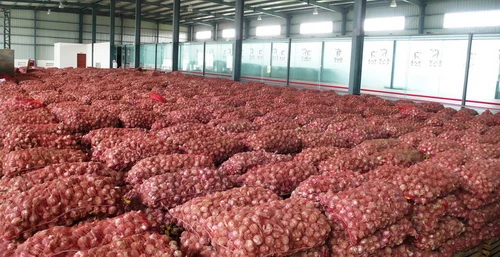
Jinxiang in Shandong is a major garlic-growing area. The project background describes around 700,000 mu of annual cultivation and output above 800,000 tonnes, creating a seasonal storage and handling challenge. Manual work around the garlic stock involved an unpleasant environment and respiratory protection during extended handling.
Henan Mine Crane Group's approach replaced small-basket storage with dedicated large baskets and matching lifting attachments. The crane recognises each basket's code, stacks it automatically and retrieves it for dispatch. The handling unit and its identity are therefore designed together, rather than adding automation to an undefined load.
Lay out the storage positions and clearance
The (8+8)t crane combines a large span, long travel route and high lifting coverage with more than 1,400 positioning points. Reported accuracy at the spreader is no greater than ±5mm for this installation. Its storage arrangement is described as 'stack four, pass five'.
For another cold store, provide the actual basket dimensions, loaded mass and stack geometry. The clearance needed to move above stored baskets should be checked against the building section and lifting interface. The position list and attachment geometry make the storage concept practical; a crane rating alone cannot define it.
Define automatic handling and the available modes
Manual remote-control, semi-automatic and fully automatic modes are available. Automatic attachment gripping and release, stacking, positioning, electrical anti-sway, remote monitoring and intelligent management support the basket-handling sequence.
These modes give a useful structure for a new specification. Define which tasks run automatically, which require an operator command and how an interrupted movement is recovered. Include representative loaded baskets and placement conditions in the acceptance plan so that movement and gripping are reviewed together.
Keep the basket record aligned with the physical load
The crane connects to a backend database and intelligent terminals to monitor the stored goods. Computer-based information tracking, location storage, load-allocation optimisation and positioning link each basket to its recorded place in the warehouse.
The operating concept includes capability for round-the-clock work and continuous tracking through the handling sequence. Accurate positioning and anti-sway also address damage associated with manual basket lifting. For a purchaser, the key interfaces are basket identity, job order, location and completed movement. Agree what happens when a code is unreadable or the recorded position differs from the physical condition, and assign responsibility for correcting the record.
Read the historical operating figures in context
At this installation, Henan Mine Crane Group reported a 60,000-tonne single cold store and ten times the storage/land-use efficiency of a conventional cold store. It also reported a 60% reduction in combined storage costs, linking the result to concentrated refrigeration space, standardised work and shorter inbound/outbound handling.
The historical account described a reduction from roughly 20–30 handling workers in one building to two, about five minutes to load or unload a large truck, and a 100-fold comparison with conventional manual handling. These are the project's reported comparisons, rather than targets automatically transferable to another warehouse. New targets should follow a review of basket mix, layout, refrigeration boundaries and complete operating cycles.
Prepare the cold-store workflow before selecting equipment
Send the basket drawing and the full inbound, storage and outbound sequence together. Include cold-room operating conditions, defrost or condensation exposure and how goods are presented at each handover.
The enquiry should connect handling accuracy, inventory records and operating modes to the same workflow. Define the required service windows and the acceptance demonstration with representative baskets so the supplier can assess the proposed crane, attachment and information-system scope as one application.
Application photographs
See the equipment and working context.
Photographs and accompanying illustrations from this application report. Open an image for a larger view.
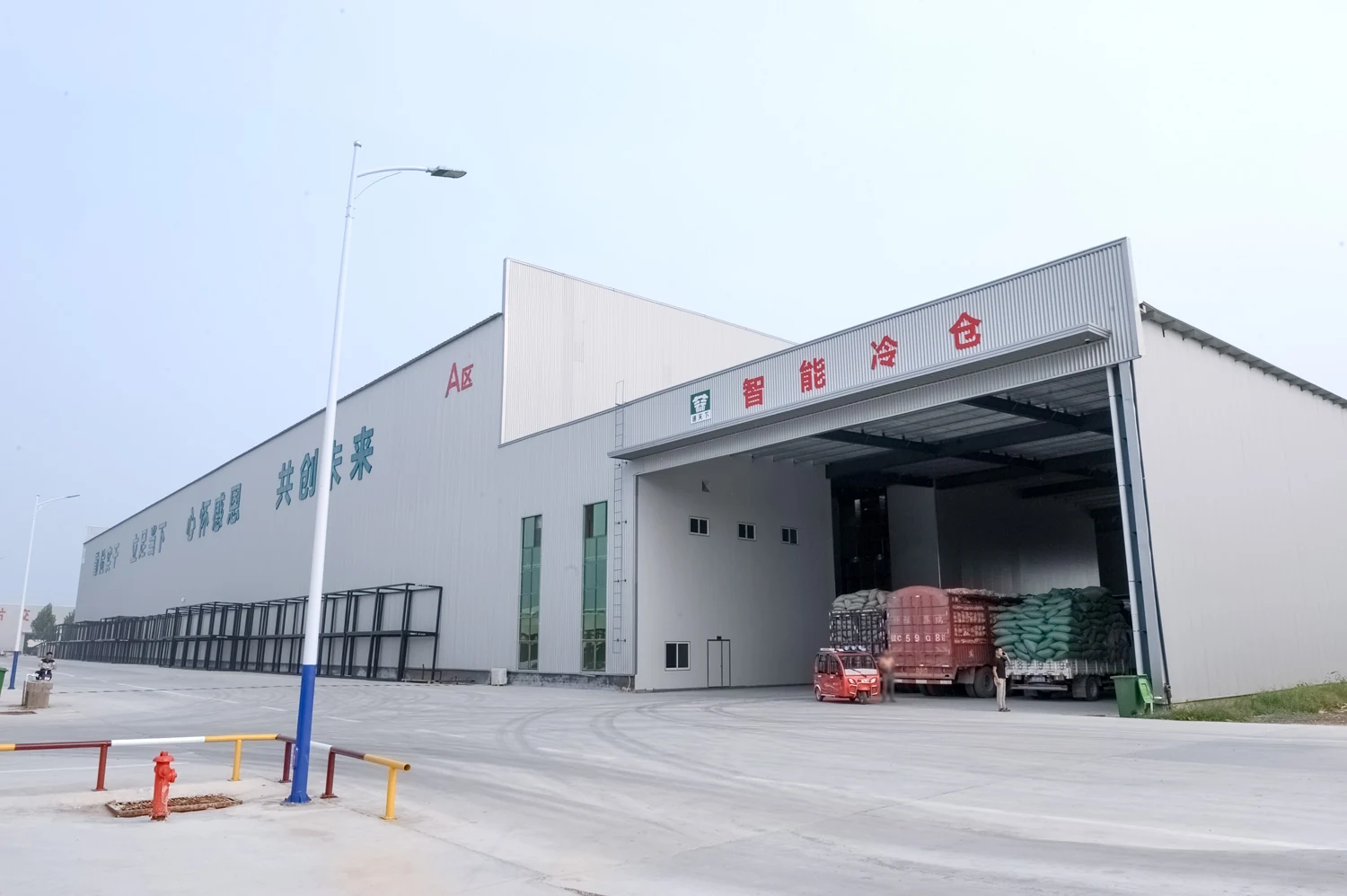

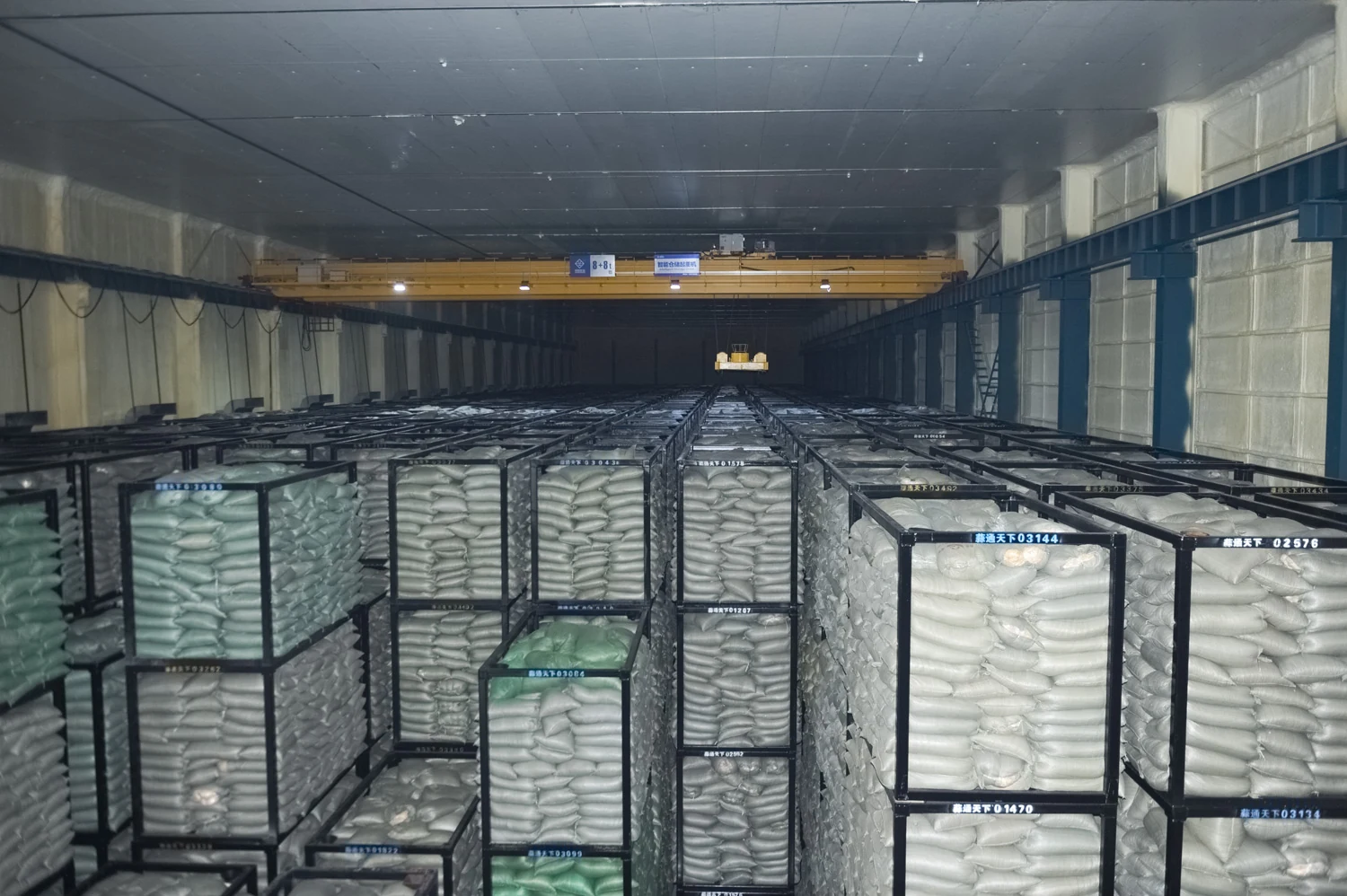
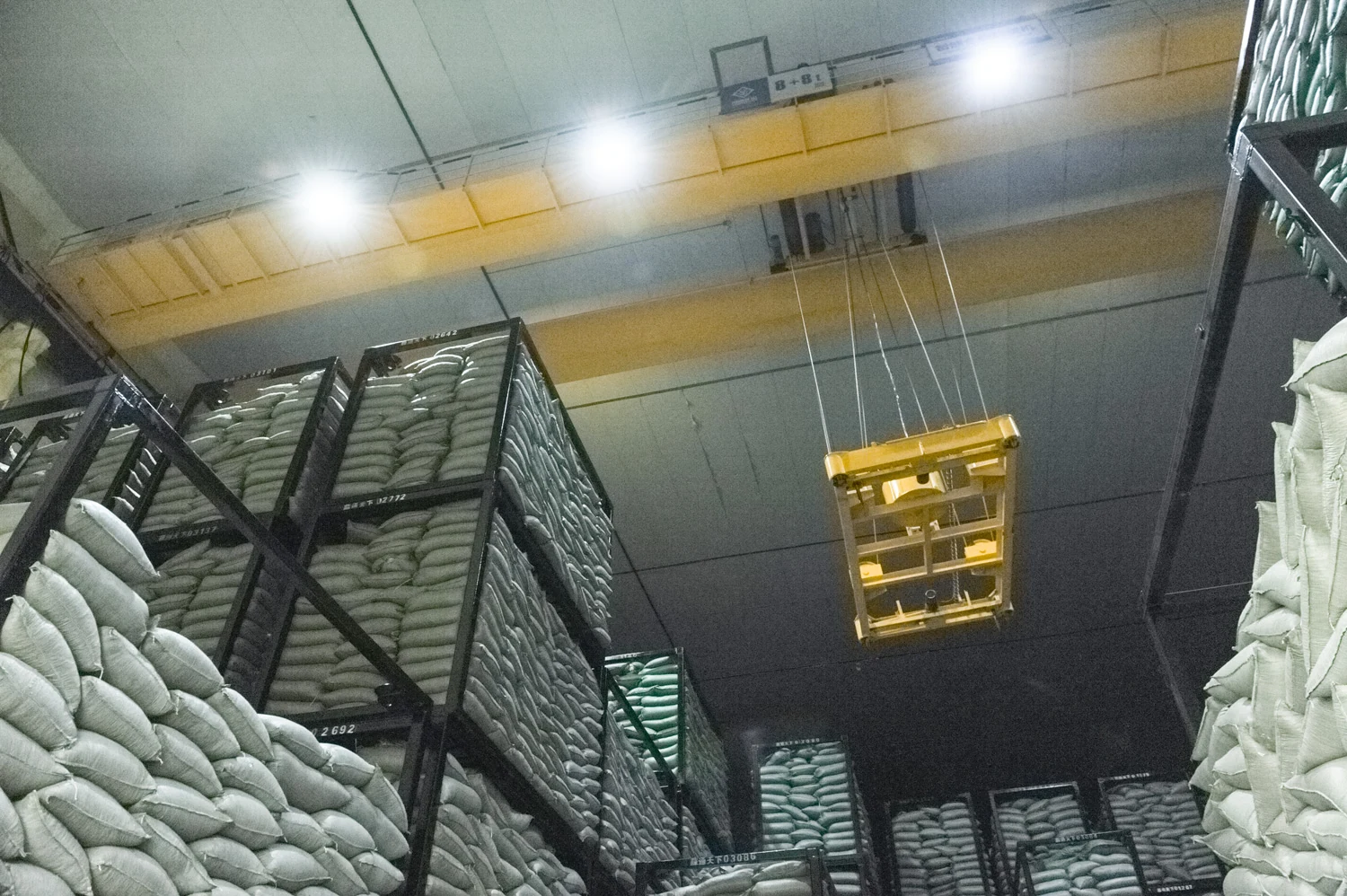

Application reference: Henan Mine Crane Group official application report. Equipment and operating advice for a new project should be specified against your load, process and site.
Start the equipment discussion
Relevant equipment families.
Compare the equipment family with your operating duty. Final attachments, controls and protection follow the application requirements.
Warehouse overhead cranes
Assess an engineered storage arrangement against the basket load, positions and cold-room duty.
View equipment options ↗Basket lifting attachments
A dedicated attachment must match the basket structure, gripping/release sequence and identification workflow.
View equipment options ↗Plan a similar application
Build the specification
around your operation.
For automated basket storage in a cold room, provide:
- Basket dimensions, loaded mass, identification code and approved lifting interface.
- Storage layout, stack heights, building section and clearance above stored baskets.
- Cold-room temperature, condensation/defrost regime and expected exposure.
- Inbound/outbound sequence, basket mix, service windows and target operating cycles.
- Database/terminal interfaces, identity/location records and exception responsibilities.
- Manual/semi-auto/auto modes, placement requirements and loaded-basket acceptance cases.
Before you specify
Questions for
your project.
What is needed to assess our existing baskets?
Provide dimensions, loaded mass, lifting interfaces, coding method and stacking rules. The attachment and recognition sequence should be reviewed against the complete basket range.
How do we specify warehouse positioning?
Define the placement point, basket condition and allowable movement, then agree how accuracy is checked at the attachment during representative storage and retrieval operations.
Can the historical staffing and cost figures be used as our target?
Use them as application context. Set your targets after reviewing the layout, basket mix, refrigeration and process boundaries, complete cycle and operating responsibilities.
Continue exploring
More warehousing & logistics applications.
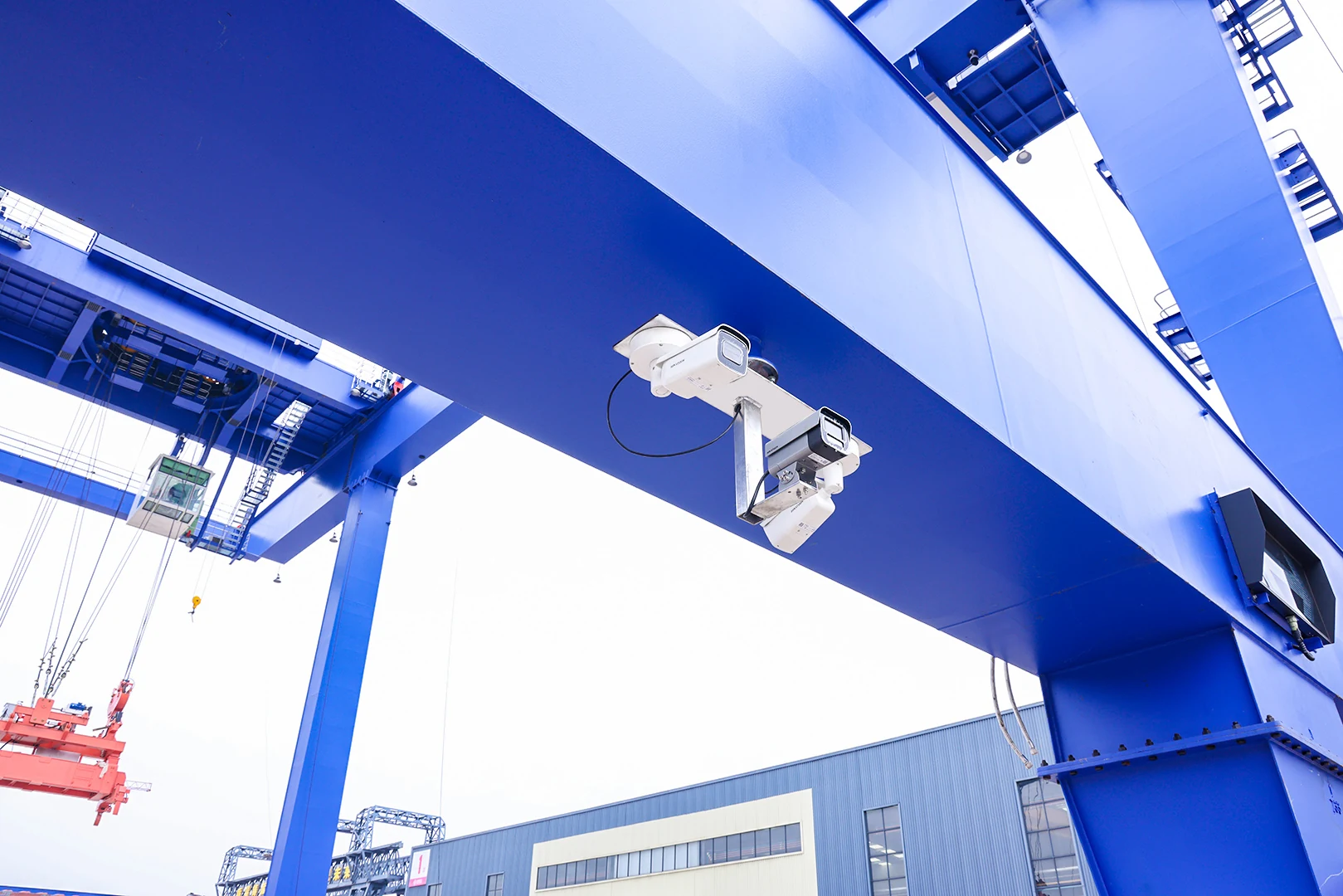
A8 Automated Container Gantry Crane for a Cold-Climate Railway Project
The container gantry completed load testing for an unnamed overseas railway project. Its A8 duty and -40°C design basis are paired with variable-frequency drives, energy feedback, ACCS control and GPS positioning.
Explore this application
Intelligent Steel Plate Warehouse Crane: Recognition, Coding and Automatic Stacking
Henan Mine Crane Group tested an intelligent warehouse crane built for a steel-structure company. The reported functions connect plate recognition and coding with automatic unloading, turning and stack management.
Explore this application
Container Gantry Crane for Wanli Smart Inland Port
Delivered into use at Wanli Smart Inland Port, the rail-mounted gantry supports container-yard movements. RCMS, automatic container seeking and spreader guidance connect supervision with the handover task.
Explore this application


