
Inland-port logistics / Delivered project
Container Gantry Crane for Dongfanghong Luoyang Inland Port
China YTO's Dongfanghong Luoyang International Inland Port received a custom rail-mounted container gantry crane from Henan Mine Crane Group. Variable-frequency speed control, Siemens PLC and anti-sway support handling through a ring-trolley arrangement and interchangeable upper/lower-frame spreader structures.

- Customer
- China YTO Dongfanghong (Luoyang) International Inland Port
- Equipment
- Custom rail-mounted container gantry crane
- Motion control
- Variable-frequency speed regulation
- Control system
- Siemens PLC with anti-sway
- Lifting arrangement
- Ring trolley and interchangeable upper/lower-frame spreader structure
- Project stage
- Delivered to the inland-port site
Fit the crane to the inland-port role
The delivered crane supports container-yard loading and unloading at Dongfanghong Luoyang International Inland Port. The project links Henan Mine Crane Group with China YTO in developing the inland logistics hub and its wider land-route trade network.
For another inland terminal, define the movement pattern before selecting the crane. Show where containers arrive, where they are stored and how they leave the crane's working area. This turns the port's logistics role into a set of identifiable pick-up and handover duties.
Coordinate VFD movement with anti-sway
Variable-frequency speed control and Siemens PLC form the control basis. An anti-sway system supports positioning during container movement, connecting the travel command with the behavior of the suspended load.
A useful enquiry defines where controlled approach and placement are most important. Include travel distances, lifting range and the conditions around the receiving position. These details help the supplier assess movement behavior against the actual yard task and proposed operating cycle.
Plan the ring trolley and spreader interfaces
The crane uses a ring trolley as its lifting arrangement. Upper/lower-frame spreader structures allow spreaders to be interchanged to address different goods-handling needs at the inland port.
Provide drawings and weights for every intended load interface. Show how an attachment is changed and where it is stored when not in use. The proposal should make compatibility and the exchange procedure explicit, linking attachment selection to the crane layout and available access.
Translate the logistics plan into an equipment schedule
Dongfanghong's development was framed around a national logistics-hub role and a planned ten-billion-yuan-scale open platform. Those are development objectives; the crane's selection remains tied to container and goods movements within its working area.
Prepare a schedule with loads, positions, required movements and operating hours. If the new terminal needs additional remote, information-system or automatic functions, define those as explicit requirements. A clear scope helps the supplier propose the right equipment without assuming that every inland port needs the same control architecture.
Application photographs
See the equipment and working context.
Photographs and accompanying illustrations from this application report. Open an image for a larger view.
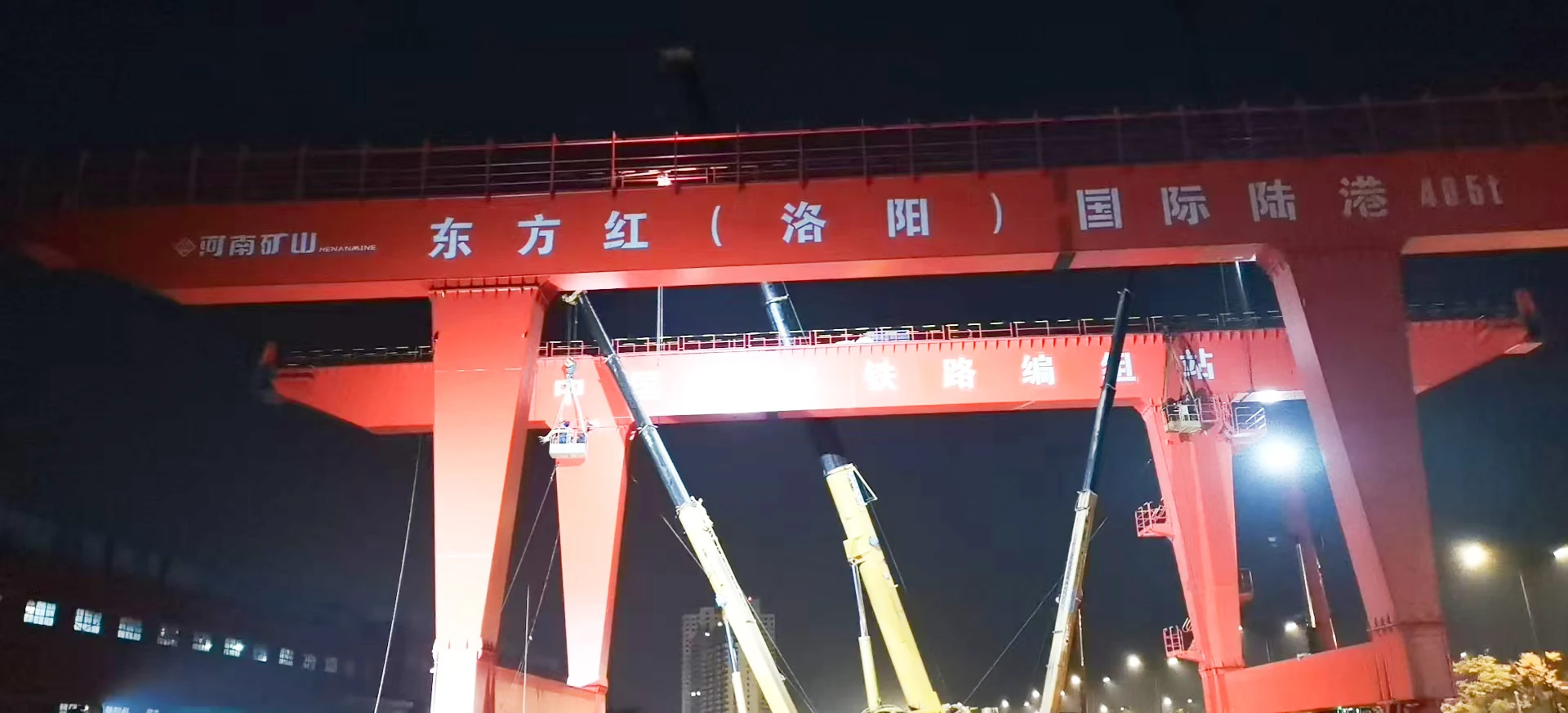
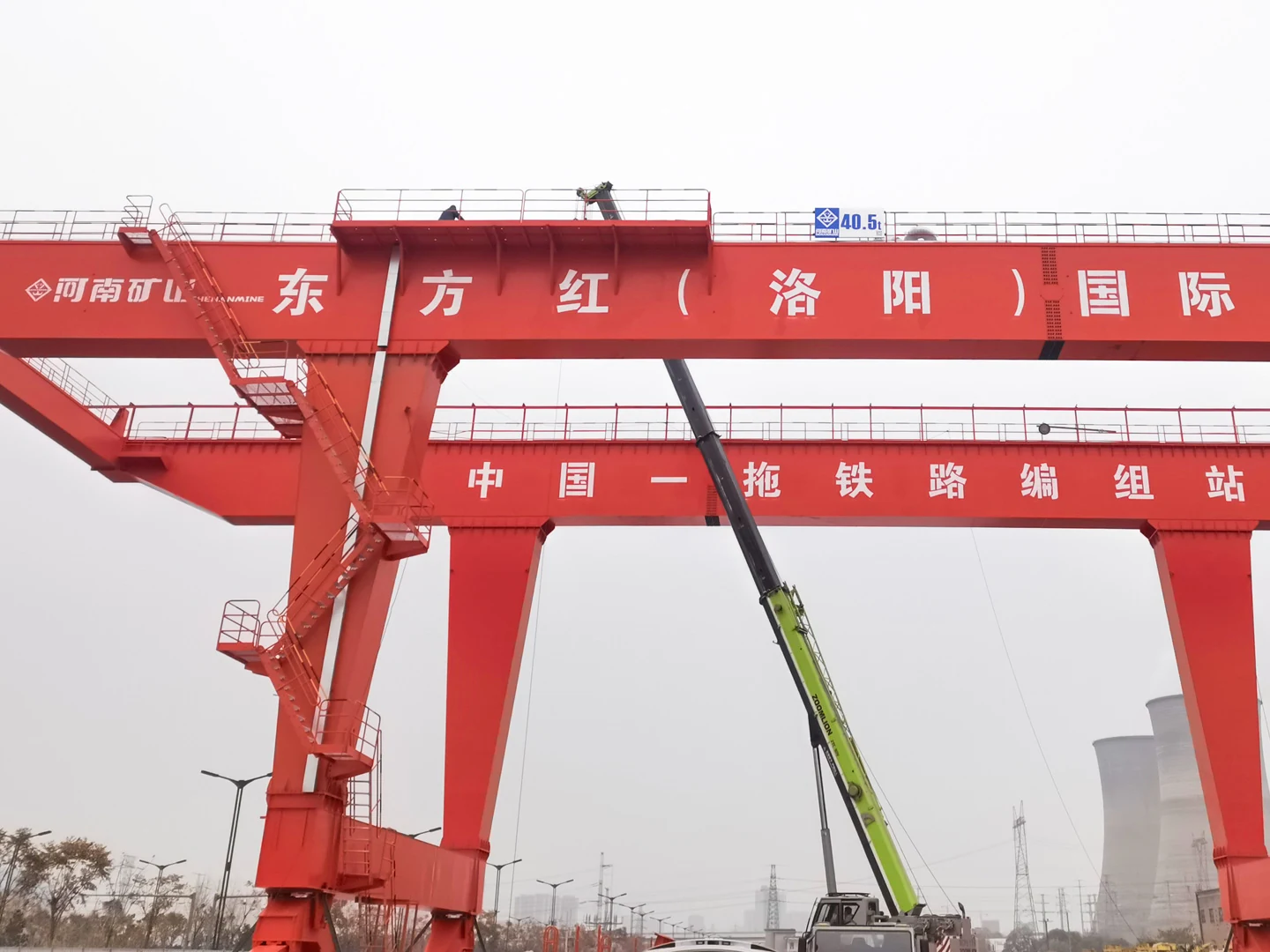
Application reference: Henan Mine Crane Group official application report. Equipment and operating advice for a new project should be specified against your load, process and site.
Start the equipment discussion
Relevant equipment families.
Compare the equipment family with your operating duty. Final attachments, controls and protection follow the application requirements.
Rail-mounted container gantry cranes
Assess against the terminal's container mix, runway and working coverage.
View equipment options ↗Lifting attachments
Review the intended spreader and goods interfaces with the changeover arrangement.
View equipment options ↗Plan a similar application
Build the specification
around your operation.
For a gantry serving an inland logistics terminal, provide:
- Container and other goods types, maximum gross masses and lifting interfaces.
- Yard/runway drawing with incoming, storage and outgoing handover positions.
- Required working coverage, lifting height and critical clearances.
- Spreader drawings, attachment weights and changeover/storage procedure.
- Operating cycles, placement requirements and intended control modes.
- Ambient conditions, site interfaces and delivery/acceptance milestones.
Before you specify
Questions for
your project.
What layout is needed for an inland-port gantry enquiry?
Show the runway, storage rows, incoming and outgoing handover positions and all required crane coverage. Add critical clearances and installation-access restrictions.
How should we specify different spreaders?
List each load and interface, provide attachment drawings and weights, and define how exchange and storage are performed. Compatibility should be reviewed with the crane arrangement.
How do we decide which control functions to request?
Describe the operating sequence, placement conditions and operator responsibilities first. Include any remote or terminal-system interfaces as explicit project requirements.
Continue exploring
More warehousing & logistics applications.
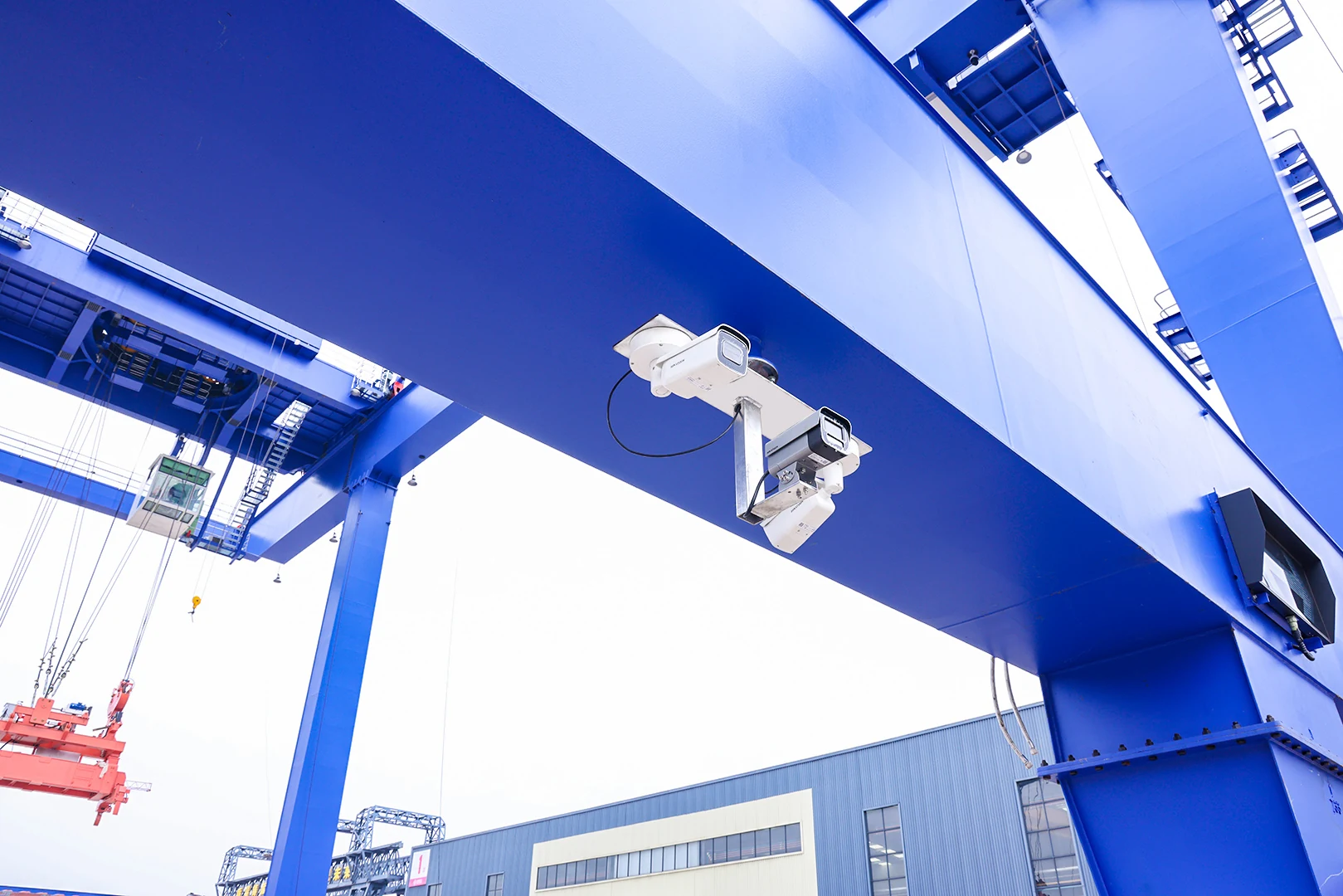
A8 Automated Container Gantry Crane for a Cold-Climate Railway Project
The container gantry completed load testing for an unnamed overseas railway project. Its A8 duty and -40°C design basis are paired with variable-frequency drives, energy feedback, ACCS control and GPS positioning.
Explore this application
Intelligent Steel Plate Warehouse Crane: Recognition, Coding and Automatic Stacking
Henan Mine Crane Group tested an intelligent warehouse crane built for a steel-structure company. The reported functions connect plate recognition and coding with automatic unloading, turning and stack management.
Explore this application
Container Gantry Crane for Wanli Smart Inland Port
Delivered into use at Wanli Smart Inland Port, the rail-mounted gantry supports container-yard movements. RCMS, automatic container seeking and spreader guidance connect supervision with the handover task.
Explore this application


