
Port container yard / Delivered application
Two Rail-Mounted Container Gantry Cranes for Taicang Port
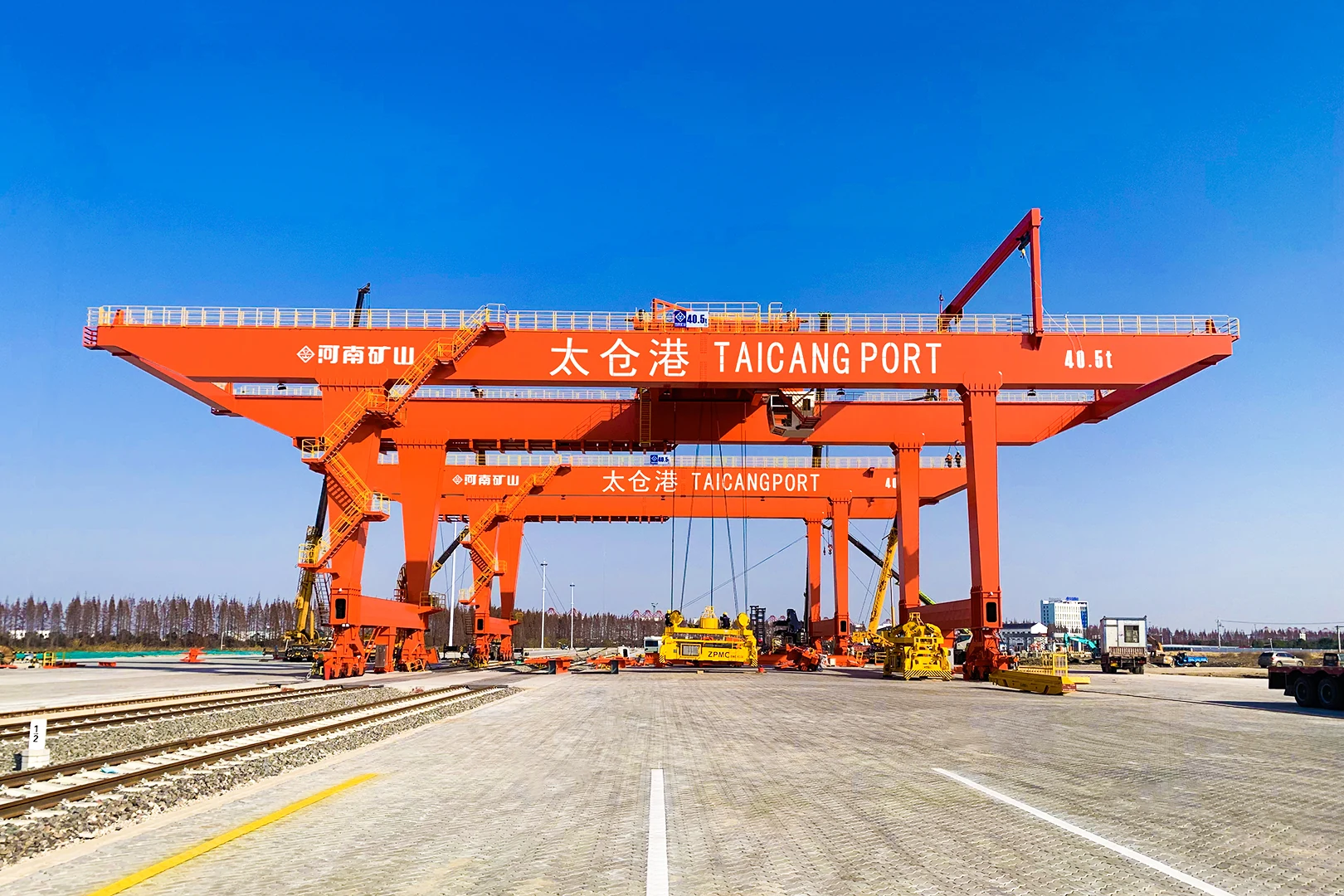
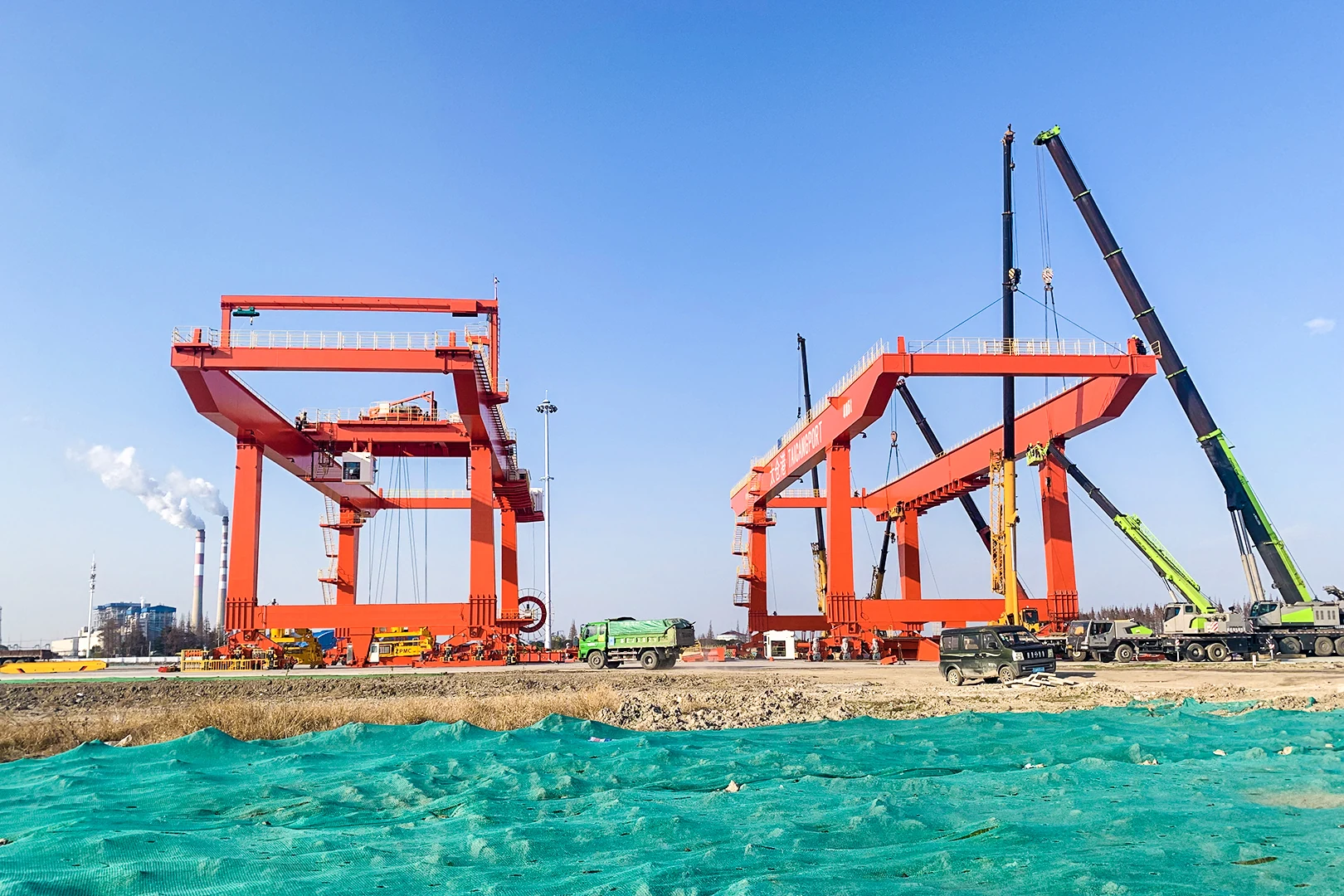
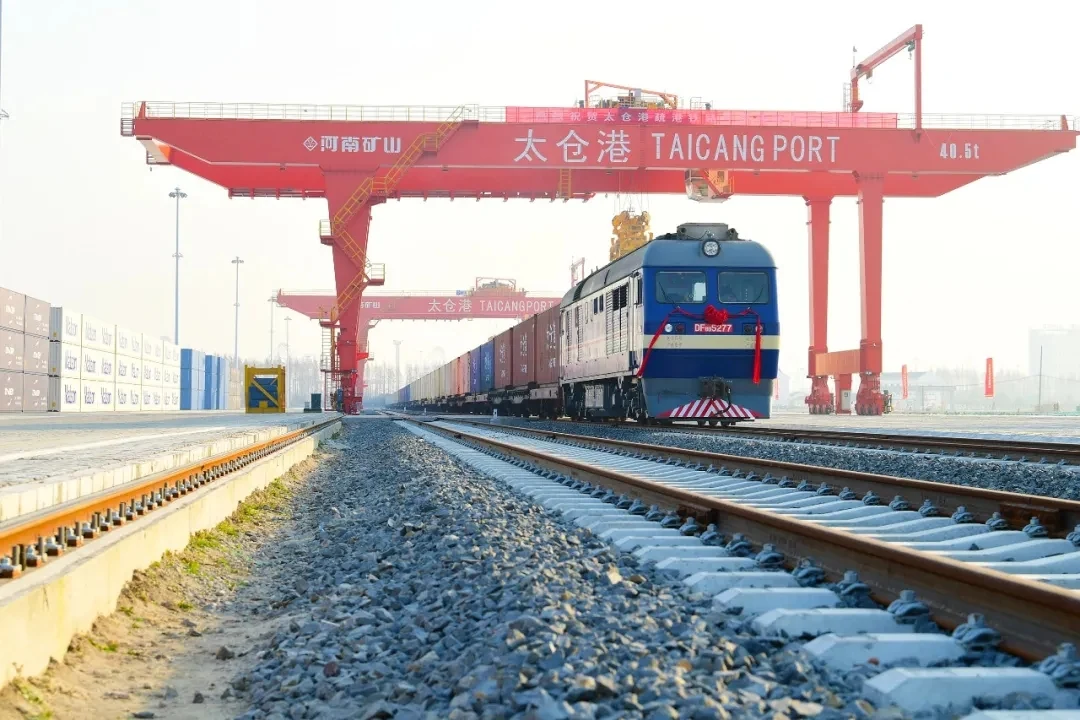
Taicang Port received two rail-mounted container gantry cranes customised by Henan Mine Crane Group. The package combines variable-frequency drives, Siemens PLC, RCMS and guided container handover with ring-trolley lifting arrangements and interchangeable spreader structures.
- Customer
- Taicang Port, Jiangsu
- Quantity
- Two rail-mounted container gantry cranes
- Motion and control
- Variable-frequency drives and Siemens PLC
- Remote functions
- RCMS monitoring and operation
- Handover support
- Anti-sway, truck anti-lift, container seeking and spreader guidance
- Load-interface arrangement
- Ring trolley and interchangeable upper/lower spreader structures
- Project stage
- Delivered into use
Serve the port's yard and goods-handling needs
The two cranes were customised for Taicang Port, a main operating area of Jiangsu's port-type national logistics hub. Delivery and entry into use were achieved against a tight project schedule, with the equipment supporting container-yard loading and unloading.
For a comparable port, the useful starting point is the mix of goods and handling interfaces. Show the container movements, storage positions and any different attachments or goods types that need to share the crane. This defines the scope before the lifting and control configuration is finalised.
Coordinate VFD motion with RCMS supervision
Variable-frequency speed control and Siemens PLC provide the movement and control basis. RCMS adds remote monitoring and operation, bringing crane status and operator commands into the same operating arrangement.
Define the remote working position and the information needed for normal movement and interruption review. The proposed interface should follow the port's operating sequence, including job assignment, handover and completion. That makes remote supervision a practical part of the terminal workflow.
Guide the spreader and protect the truck interface
Anti-sway and truck anti-lift systems work with automatic container seeking and intelligent control. The crane monitors the spreader's zero position and provides automatic spreader guidance to support container alignment.
For procurement, identify the engagement and release conditions, truck positions and available clearances. Agree which signals permit movement and which conditions require stopping. The handover functions should be demonstrated against representative containers and the terminal's intended operating procedure.
Plan for spreader changes and varied goods
A ring trolley is used as the lifting arrangement. Upper/lower-frame spreader structures allow spreaders to be interchanged, giving the port a way to address different goods-handling requirements.
List every load interface the new crane is expected to use. Provide the attachment drawings, weights and storage or exchange positions, then define how a change is carried out. Clear attachment scope helps the supplier assess compatibility and access without assuming that every goods type can use the same spreader.
Coordinate delivery with terminal readiness
The Taicang delivery sits alongside separate Henan Mine Crane Group references for China Railway, China Railway First Group, Dongfanghong International Inland Port, Jinzhou Port and Guizhou Wire Rope Group. Those are wider supply context; the Taicang scope here is the two customised gantries.
For your project, link equipment delivery to runway readiness, terminal-system interfaces, operator preparation and site acceptance. Taicang's position at the Belt and Road and Yangtze Economic Belt junction provides logistics context, while the crane specification should remain tied to its actual yard geometry and goods movements.
Application photographs
See the equipment and working context.
Photographs and accompanying illustrations from this application report. Open an image for a larger view.
Application reference: Henan Mine Crane Group official application report. Equipment and operating advice for a new project should be specified against your load, process and site.
Start the equipment discussion
Relevant equipment families.
Compare the equipment family with your operating duty. Final attachments, controls and protection follow the application requirements.
Rail-mounted container gantry cranes
Evaluate for the port's container loads, runway and required handover coverage.
View equipment options ↗Lifting attachments
Define each spreader or goods interface and exchange arrangement as part of the project scope.
View equipment options ↗Double-girder gantry cranes
Review structure and operating duty against the customised port layout.
View equipment options ↗Plan a similar application
Build the specification
around your operation.
To assess a port gantry with guided handover and interchangeable interfaces, provide:
- Container sizes, gross load range and any additional goods to be handled.
- Yard/runway layout, storage positions, handover points and required coverage.
- Spreader and attachment drawings, weights and exchange/storage arrangements.
- Truck engagement/release requirements and critical operating clearances.
- Required remote modes, terminal-system signals and operator responsibilities.
- Working cycles, environmental conditions and factory/site acceptance schedule.
Before you specify
Questions for
your project.
What is needed to plan interchangeable spreaders?
List the loads and attachments, provide their interface drawings and weights, and show where exchange and storage take place. Define the intended changeover procedure.
How should guided container handover be assessed?
Use representative container and vehicle positions, defined engagement/release checks and agreed stopping conditions in the acceptance demonstration.
How can delivery be coordinated with a working port?
Include runway readiness, installation access, terminal interfaces, operator preparation and acceptance milestones in the project schedule from the start.
Continue exploring
More warehousing & logistics applications.
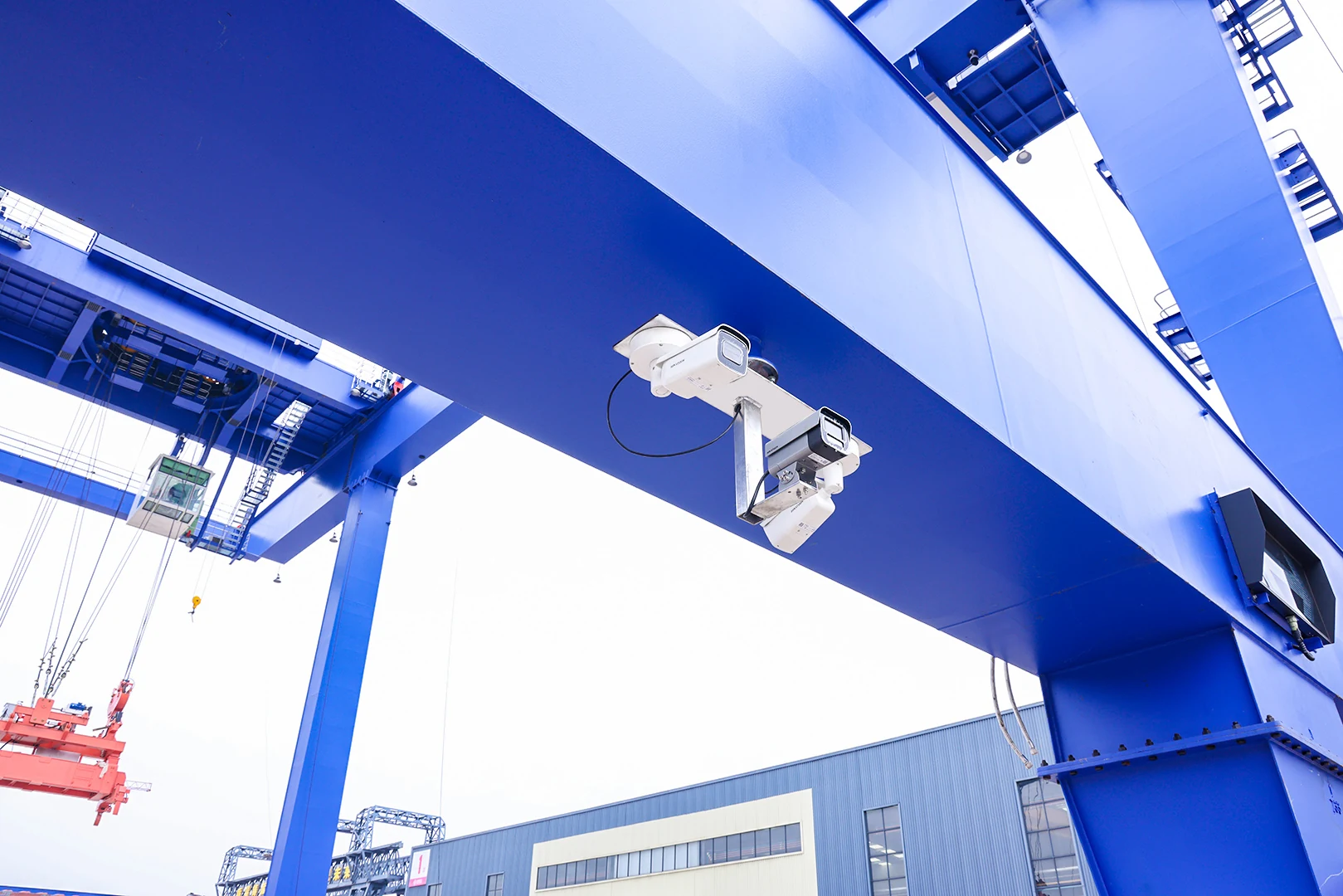
A8 Automated Container Gantry Crane for a Cold-Climate Railway Project
The container gantry completed load testing for an unnamed overseas railway project. Its A8 duty and -40°C design basis are paired with variable-frequency drives, energy feedback, ACCS control and GPS positioning.
Explore this application
Intelligent Steel Plate Warehouse Crane: Recognition, Coding and Automatic Stacking
Henan Mine Crane Group tested an intelligent warehouse crane built for a steel-structure company. The reported functions connect plate recognition and coding with automatic unloading, turning and stack management.
Explore this application
Container Gantry Crane for Wanli Smart Inland Port
Delivered into use at Wanli Smart Inland Port, the rail-mounted gantry supports container-yard movements. RCMS, automatic container seeking and spreader guidance connect supervision with the handover task.
Explore this application


