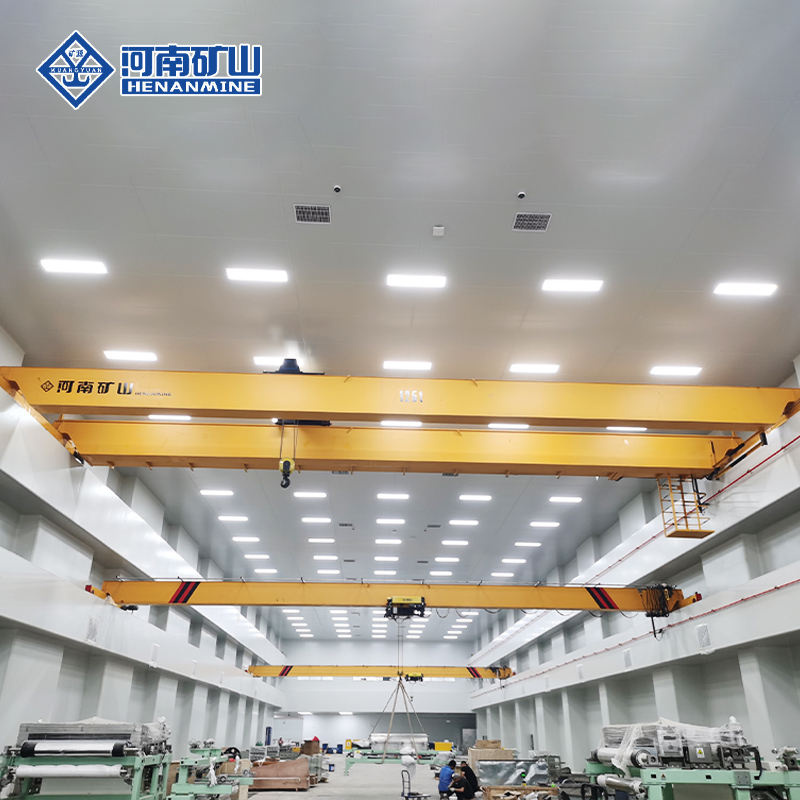
Material and load schedule
Steel type, dimensions, surface and temperature, required payload, magnet/beam/rigging weights and the intended pickup arrangement.
Plan the 20 ton QC electromagnetic crane around material payload, attachment tare, contact conditions and the selected power-loss response.

A circular magnet hangs below the red double-girder bridge. Reference photograph; the image does not establish the ordered crane rating or material payload.
Crane enquiry class; agree complete load
Start with your known requirements. Our team can clarify the remaining interfaces.
Separate the listed product information from the dimensions and responsibilities that need your project input.
| Crane enquiry class | 20 t reference; agree the selected rating and complete suspended load |
|---|---|
| Bridge arrangement | Double-girder bridge with lifting trolley and electromagnetic attachment |
| Material payload | Required material mass per lift, stated separately from lifting-attachment tare |
| Attachment weight | Magnet, beam, slings and other suspended fittings included in the load assessment |
| Pickup arrangement | Circular magnet or beam-mounted magnets selected for the material and contact geometry |
| Material conditions | Steel type, dimensions, thickness, shape, surface, temperature and bundle condition |
| Working envelope | Rail-centre span, useful lift, magnet approaches, travel route and landing positions |
| Duty and cycle | Lifts per hour, energized time, travel and idle periods; agree crane and magnet duty |
| Electrical interface | Site voltage and frequency, rectifier, moving power feed, cable routing and isolation |
| Power-loss response | Selected holding provision, indication, alarms, operating limits and agreed verification |
| Operator functions | Pickup, holding, travel and release sequence with controls and interlocks defined |
| Acceptance records | Selected drawing, rating and payload schedule, functional tests and operating instructions |
Listed information supports initial selection. Final dimensions, loads, speeds and components are defined in the project technical offer.
Steel type, dimensions, surface and temperature, required payload, magnet/beam/rigging weights and the intended pickup arrangement.
Pickup and landing positions, load route, magnet approaches, useful lift, headroom, rail-centre span and support drawings.
Site supply, rectifier and moving feed, cable route, isolation, selected wheel reactions, installation and maintenance access.
| Work package | Agree in the quotation |
|---|---|
| Bridge and lifting machinery | Selected bridge, trolley and lifting mechanisms with the agreed rating, geometry and duty. |
| Magnetic lifting package | Magnet or magnet beam, suspended fittings and tare weights, material limits and permitted payload schedule. |
| Electrical and operating functions | Rectifier, moving feed, controller, indication, alarms and the specified holding, release and power-loss functions. |
| Site work and handover | Runway and power interfaces, delivery, erection, commissioning, acceptance records, instructions, service parts and warranty terms. |
This is a scope-planning checklist. Inclusion and responsibility depend on the agreed contract.
Define the steel, pickup arrangement and operating cycle to compare the complete crane and magnet package.
Use the Site interfaces tab above to check the layout and operating conditions. Record your requirements in the project brief alongside this page.
Review the product configuration and purchasing requirements for this equipment.
A QC electromagnetic overhead crane moves suitable ferrous material with a circular magnet or a beam-mounted magnet arrangement. For a 20 ton enquiry, define the material payload separately from the magnet, beam and rigging weights. Match the pickup arrangement to the steel dimensions, surface, temperature and handling cycle, then agree the complete suspended load and electrical protection package in the selected offer.
MATCH THE CONTACT CONDITIONS
Magnetic lifting performance depends on the material and contact conditions as well as the electrical system. A nominal crane rating alone cannot establish the usable payload for every plate, bundle or scrap load.
Provide steel type, thickness, dimensions, shape and temperature. Describe scale, rust, coatings, curvature and other causes of an air gap. Include loose or uneven pieces and the actual pickup orientation.
Show the contact areas and any beam-mounted magnet spacing. For long stock or bundles, describe support points and the intended load arrangement. Ask for permitted material and geometry limits for the selected system.
Describe pickup, transfer and release, including energized time, lifts per hour and idle periods. Agree crane, mechanism and magnet duty for the full cycle and the conditions under which the payload is specified.
REFERENCE PHOTOGRAPHS
These photographs come from the corresponding product archive. Visible arrangements help explain the options; the selected drawing and rating schedule identify the equipment and allowable payload in your order.
01 / REFERENCE PHOTOGRAPHA circular magnet hangs below the red double-girder bridge. Reference photograph; the image does not establish the ordered crane rating or material payload.
 02 / REFERENCE PHOTOGRAPH
The yellow bridge carries a lifting beam with rectangular magnetic units above scrap. Review the magnet layout against the intended material and contact conditions.
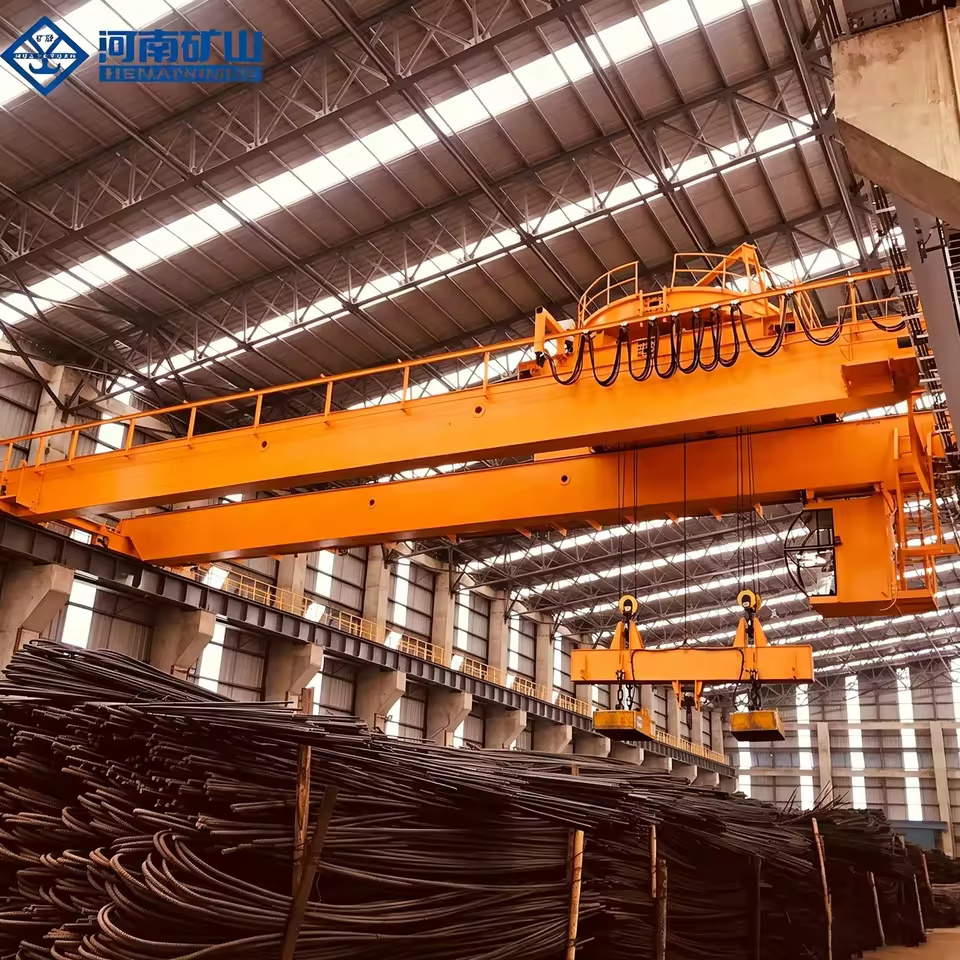 03 / REFERENCE PHOTOGRAPH
A beam-mounted magnetic arrangement is shown above steel stock. Use the selected drawing to confirm magnet spacing, lifting height and the complete suspended load.
POWER, HOLDING AND RELEASE
Include the magnet power supply or rectifier, moving cables, pickup and release controls, status indication and required alarms in the proposal. Define how the selected system responds to an interrupted supply, a stop and a restart, and how the operator is informed.
If an auxiliary holding supply is included, request its specified operating conditions, available holding period, monitoring, maintenance and acceptance checks. Agree these for the selected magnet and load; do not assume a general holding duration from a crane-family description. Operating instructions must define permitted use, exclusion areas and the response to a fault.
RUNWAY AND WORKING ENVELOPE
Provide rail-centre span, travel length, highest and lowest pickup positions, landing areas and available headroom. Include the beam, magnet, rigging and material depth in the vertical envelope. Obtain the selected crane wheel reactions and horizontal actions, and allocate runway, rail fixing, power-feed and service-access responsibilities in the offer.
Discuss your workshopHenan Mine Crane Group
Use the Supply scope tab to compare the bridge and trolley, magnet equipment, electrical package, runway work and site services on the same basis. Identify inclusions, exclusions and purchaser-provided work.
Request the arrangement drawing, crane rating, attachment weights, permitted material and payload schedule, and the agreed functional-test records. Include pickup and release, indication, interlocks and the specified power-loss response in the acceptance plan. State commissioning, operator instruction, maintenance, spare parts and warranty terms in the contract.
Historical supplier-listing information for context. Request a current quotation for your selected configuration and project scope.
Range combines the price tiers shown in the saved listing. Captured 2026-10-11. This is not a current project quotation; capacity, dimensions, options, quantity, delivery and included services affect final price.
Archived supplier-listing reference. The saved price is not a current quotation; confirm configuration, quantity, shipping and included scope. View saved source listing ↗
Bring engineering, purchasing and the installation team into the same scope before the purchase order.
Show steel dimensions and contact conditions, material payload, magnet/beam/rigging weights, pickup and landing positions and the handling cycle. Add rail-centre span, useful lift, headroom, support drawings, site supply and the required power-loss response.
Send a drawing for reviewLoad or working task, layout, operating cycle, destination and timing.
Selected configuration, interface drawing, component schedule and scope exceptions.
Inspection, testing and documentation, delivery responsibilities and warranty terms.
Do not assume that from the crane class alone. State material payload separately from the magnet, beam, slings and other suspended fittings. The selected rating and load assessment must cover the complete suspended load, while the magnet payload must suit the stated material and contact conditions.
The material shape, length, contact areas, pickup orientation and support arrangement determine the selection. Provide representative material details and handling drawings so the proposed magnet layout and permitted payload can be reviewed.
Specify the selected holding provision, status indication, alarms and operator response in the offer and operating instructions. If an auxiliary supply is included, agree its holding conditions and duration, monitoring, maintenance and functional verification. This page does not establish a guaranteed holding period.
Steel type, thickness, shape, surface and temperature affect the contact conditions. Air gaps from scale, rust, coatings or uneven pieces can change the result. State the actual material and bundle conditions when requesting the permitted payload schedule.
The supplier listing captured 2026-10-11 shows US$28,500 per set for 1–2 sets and US$25,900 for at least 3. These historical tiers do not establish a current or delivered quotation. Request an itemized offer for the selected crane, magnetic and electrical equipment, dimensions, quantity and site services.
 01
 02
 03
 04
 05
 06
 07
 08
EXPLORE OUR NEWSROOM
Projects, technology and updates
from Henan Mine Crane Group.
 01
Crane projects, dispatches and on-site applications.
 02
Equipment developments, engineering and manufacturing.
 03
Factory updates, partnerships and the people behind our cranes.
 04
Trade shows, industry meetings and company events.