
Load and operating schedule
Provide load cases, attachment weights, motion distances, lift frequency, pauses, peak periods and working shifts.
Plan a 20 t single girder crane around the load spectrum, movement times and working shifts. Review the selected hoist and bridge duty against that schedule.
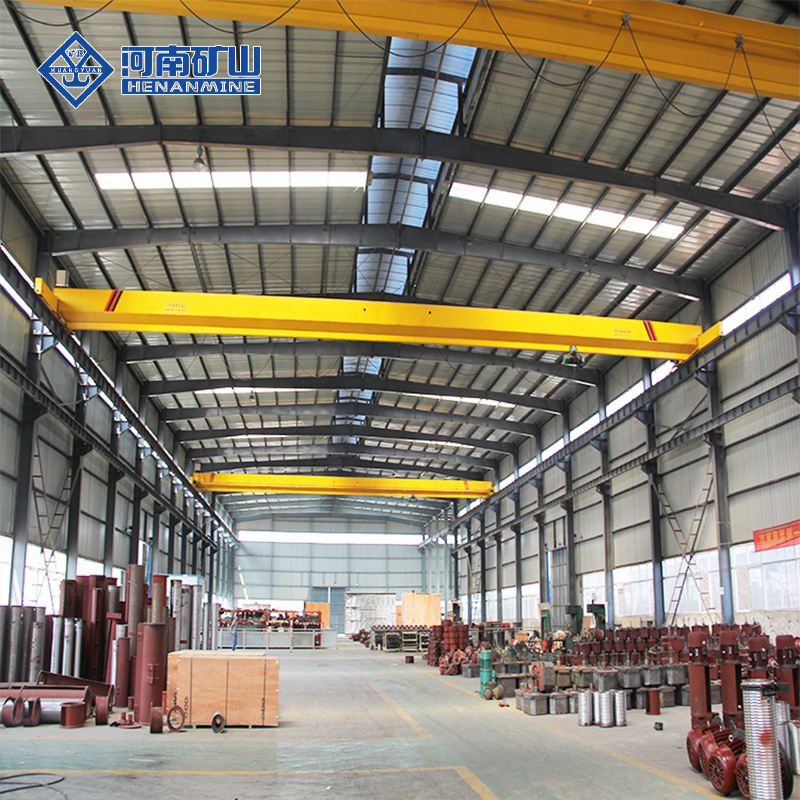
Single-girder bridges above a workshop production area. This corresponding archive photograph shows the equipment family; it does not establish a 20 t rating, duty class or permitted operating hours.
Enquiry reference; selected duty to agree
Start with your known requirements. Our team can clarify the remaining interfaces.
Separate the listed product information from the dimensions and responsibilities that need your project input.
| Enquiry load | 20 t listing reference; state the complete suspended load including attachments |
|---|---|
| Equipment arrangement | Single girder bridge with a selected electric wire-rope hoist |
| Load spectrum | Typical and maximum loads, attachment weights and frequency of each load case |
| Cycles and shifts | Lifts per hour, peak periods, hours per shift, shifts and annual operating days |
| Motion schedule | Lift, lower, trolley and bridge distances with motion and idle times |
| Mechanism selection | Selected crane and hoist classifications, starts, speeds and allowable operation |
| Span and runway length | Surveyed rail-centre span and bridge travel; selected geometry to be agreed |
| Useful hook coverage | Upper and lower working hook positions, approaches, rigging and load envelope |
| Support interface | Selected wheel reactions, wheel spacing, rail requirements and support review |
| Site electrical supply | Actual voltage, frequency, phase, moving feed and isolation arrangement |
| Controls and environment | Operator position, positioning needs, temperature, dust and corrosion |
| Offer and acceptance | Agreed operating schedule, selected components, documents and test scope |
Listed information supports initial selection. Final dimensions, loads, speeds and components are defined in the project technical offer.
Provide load cases, attachment weights, motion distances, lift frequency, pauses, peak periods and working shifts.
Show rail centres, travel length, hook positions, load envelope, approaches, obstacles and available support drawings.
State actual supply, ambient conditions, operator location, positioning needs, access and maintenance arrangements.
| Work package | Agree in the quotation |
|---|---|
| Crane and hoist selection | Selected rating, bridge, hoist, travel mechanisms and documented duty basis for the agreed schedule. |
| Electrical and control package | Site-compatible supply and feed, controls, selected speed schedule and agreed protective functions. |
| Runway and installation | Defined rail, support, electrical, unloading and erection interfaces with named responsibilities. |
| Acceptance and handover | Agreed inspection and testing, records, manuals, operating limits, instruction and service terms. |
This is a scope-planning checklist. Inclusion and responsibility depend on the agreed contract.
Use the intended operating cycle to compare the proposed mechanisms, coverage and operating limits.
Use the Site interfaces tab above to check the layout and operating conditions. Record your requirements in the project brief alongside this page.
Review the product configuration and purchasing requirements for this equipment.
A 20 t single girder overhead crane enquiry needs an operating-cycle schedule as well as a maximum load. Record how often each load is lifted, the lift and travel distances, motion times and idle periods. Use that schedule to review the bridge and hoist classifications, selected speeds and electrical equipment for the intended workshop operation.
LOAD SPECTRUM · TIME · STARTS
Maximum capacity alone cannot describe mechanism use. An occasional maximum lift and repeated heavy lifts can require different selections even when the same load appears in the enquiry.
State the usual load, the heaviest load, attachment weights and how often each combination occurs. Identify any awkward centre of gravity or lifting arrangement requiring separate review.
Record lifts per hour, travel distances, positioning steps, starts and idle periods. Separate peak demand from the shift average so the supplier can check the selected motors, brakes and controls.
Add hours per shift, shifts per day and expected operating days. Include ambient conditions and maintenance access. Ask the supplier to state the classification basis and limits for the selected crane and hoist.
CORRESPONDING ARCHIVE PHOTOGRAPHS
These photographs support layout questions. Confirm the rating, selected mechanisms and operating limits in the project documents.
01 / EQUIPMENT-FAMILY REFERENCESingle-girder bridges above a workshop production area. This corresponding archive photograph shows the equipment family; it does not establish a 20 t rating, duty class or permitted operating hours.
 02 / EQUIPMENT-FAMILY REFERENCE
Green wire-rope hoist and trolley beneath a yellow single girder. Request the selected hoist designation, duty data, speed schedule and maintenance access for the proposed load cycle.
 03 / EQUIPMENT-FAMILY REFERENCE
Overhead bridges above long steel sections. Use the actual pickup points, load envelope and travel route when reviewing coverage; this photograph does not prove the selected crane rating or duty.
REVIEW THE SELECTED MECHANISMS
Ask for the proposed lift, trolley and bridge speed schedule, hoist designation and permitted operation under the stated load spectrum. Explain any fine positioning or repeated inching near the pickup and landing points.
The technical offer should identify the crane and hoist classification basis separately, together with relevant starting, thermal and braking limits. A faster travel speed does not by itself demonstrate a suitable duty class, and a general claim of long-hour operation does not establish continuous full-load use.
COVERAGE AND SITE INTERFACES
Mark rail-centre span, runway length, pickup and landing points, upper and lower hook positions, side approaches and obstacles. Include the load and rigging envelope. Provide available support drawings and actual site voltage, frequency and phase; request the selected wheel reactions and allocate rail, power-feed and installation work in the offer.
Discuss your workshopHenan Mine Crane Group
Agree the selected configuration, operating limits and verification scope before ordering. Use the same written duty brief when comparing offers and preparing the handover.
Match the approved load cases and operating schedule to the selected hoist, bridge, drives, controls and arrangement drawing. Identify exclusions and any limits on peak operation.
Define inspection and functional checks, applicable load testing, required records and responsibilities. An agreed functional run alone does not establish the fatigue life or a continuous-duty rating.
Request operating instructions, inspection intervals, lubrication and wear-part information for the selected mechanisms. Confirm training, service scope and warranty terms in the contract.
Historical supplier-listing information for context. Request a current quotation for your selected configuration and project scope.
Range combines the price tiers shown in the saved listing. Captured 2026-10-13. This is not a current project quotation; capacity, dimensions, options, quantity, delivery and included services affect final price.
Archived supplier-listing reference. The saved price is not a current quotation; confirm configuration, quantity, shipping and included scope. View saved source listing ↗
Bring engineering, purchasing and the installation team into the same scope before the purchase order.
Send a representative operating-cycle schedule with load cases, attachment weights, distances, motion and idle times, starts and working shifts. Add the layout, site supply and requested scope.
Send a drawing for reviewLoad or working task, layout, operating cycle, destination and timing.
Selected configuration, interface drawing, component schedule and scope exceptions.
Inspection, testing and documentation, delivery responsibilities and warranty terms.
Provide typical and maximum loads, suspended attachment weights, frequency of each load case, lift and travel distances, motion times, pauses, starts, peak periods and working shifts. Include the layout and environment so the selected bridge and hoist can be reviewed together.
That cannot be established from the listing title. The selected crane and hoist must suit the agreed load spectrum and operating schedule. Obtain their classifications, operating limits and supporting equipment data in the technical offer.
The corresponding archive contains different family classifications. They do not establish a selected 20 t configuration. Give the intended load spectrum and operating time, and ask the supplier to identify the applicable classification system and selected crane and hoist duties.
Use the surveyed runway rail-centre span, required hook positions and motion requirements for your site. The archive contains differing family ranges and speed combinations; these are insufficient to confirm a particular 20 t arrangement.
The saved supplier listing captured 2026-10-13 shows US$13,600 per set for 1–2 sets and US$10,420 for at least 3 sets. These historical tiers do not establish a current or delivered price. Request an itemized offer for the selected duty, dimensions, equipment, quantity and site services.
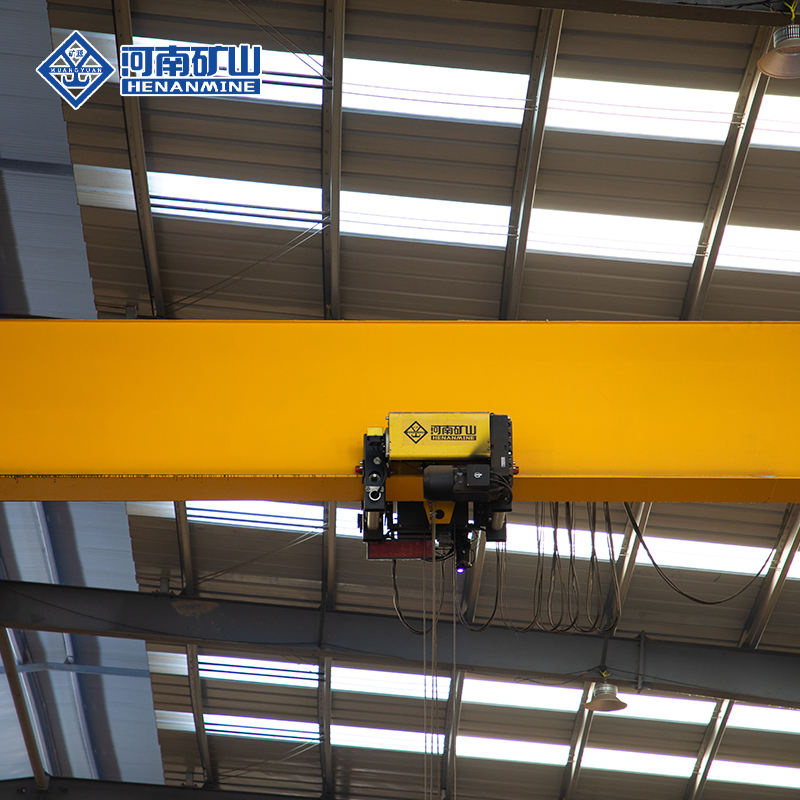
A5 duty option comparison: confirm the selected crane and hoist classifications for your operating schedule.

Box-girder order-scope comparison: review selected mechanisms, dimensions and supply responsibilities.

Hoist and control comparison. The photograph is marked 5 t and is an equipment-family reference, not evidence of a 20 t build.
 01
 02
 03
 04
 05
 06
 07
 08
EXPLORE OUR NEWSROOM
Projects, technology and updates
from Henan Mine Crane Group.
 01
Crane projects, dispatches and on-site applications.
 02
Equipment developments, engineering and manufacturing.
 03
Factory updates, partnerships and the people behind our cranes.
 04
Trade shows, industry meetings and company events.