
Steel refining / Successful hot trial
200t Foundry Cranes for Jinhui Group's Hot Commissioning
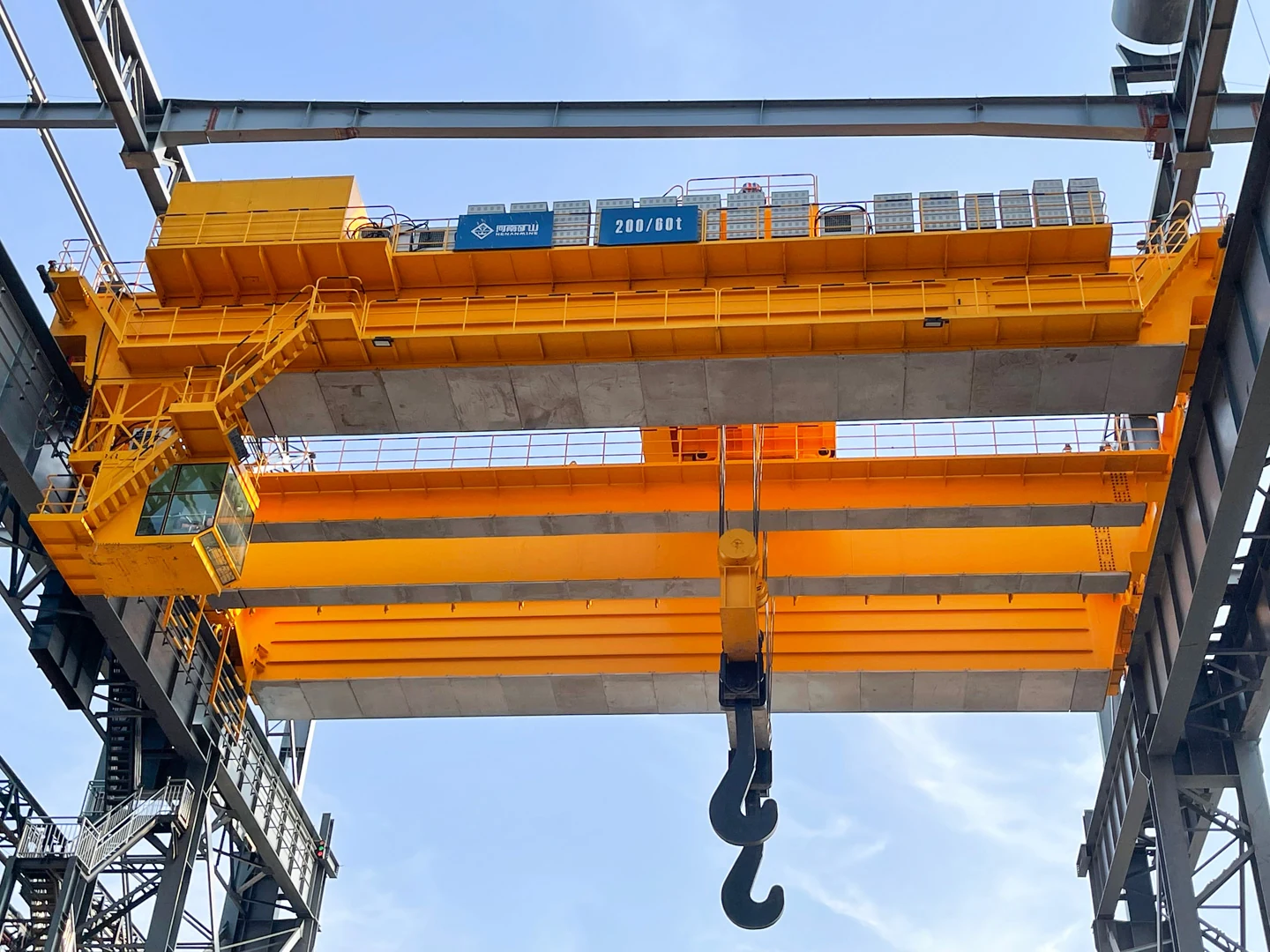
Two 200t four-girder foundry bridge cranes supported the successful hot commissioning of Jinhui Group's green and intelligent upgrade project. Henan Mine Crane Group designed and manufactured all eight large four-girder foundry cranes in the project; the 200t units handle full molten-steel ladles for refining.
- Customer
- Jinhui Group
- Project
- Green and intelligent upgrade
- Total foundry-crane scope
- Eight large four-girder bridge cranes
- Hot-trial equipment
- Two 200t four-girder foundry bridge cranes
- Handling task
- Full molten-steel ladles for refining
- Control functions
- Speed regulation, monitoring/sensing and fault detection
- Project stage
- Successful hot trial
Support the transition into hot operation
The two 200t cranes took part in the successful hot trial of Jinhui Group's upgrade project. This milestone connects crane movement with a live steel-refining process, where the handling route and receiving stations must work together.
The project contains eight large four-girder foundry bridge cranes, all independently designed and manufactured by Henan Mine Crane Group. Two are identified with the 200t rating and the hot-trial duty. Keep those units distinct from the rest of the package when building an equipment schedule.
Move full ladles through the refining route
The 200t cranes are dedicated to carrying full molten-steel ladles for refining. For a buyer, this makes the vessel and process sequence the central selection inputs: the crane needs to reach the pick-up, travel and handover positions with the correct lifting interface.
Provide the maximum gross ladle load and the range of conditions encountered during the route. Show where the vessel is lifted, where it is received and any movement required at the receiving equipment. These details help translate a refining task into a crane arrangement.
Coordinate speed, sensing and fault detection
Controlled speed and monitoring/sensor technology provide fault detection and control functions on the crane. The configuration connects movement behavior with process coordination, rather than relying on capacity alone.
Define the desired approach and placement behavior at critical stations and the information needed by operators. Include alarm priorities and the intended response to a detected problem. This gives the proposed controls a clear operating purpose and an agreed basis for demonstration.
Prepare the commissioning requirement early
For a new project, agree the sequence of checks leading to hot operation with the relevant plant teams. The crane specification should identify the loads, interfaces and operating modes that must be ready before a live process demonstration.
Separate a factory or installation check from the plant's hot trial, and define the records required at each milestone. This project is a hot-trial reference; your own acceptance plan should state the responsibilities and conditions appropriate to the new refining route.
Application photographs
See the equipment and working context.
Photographs and accompanying illustrations from this application report. Open an image for a larger view.
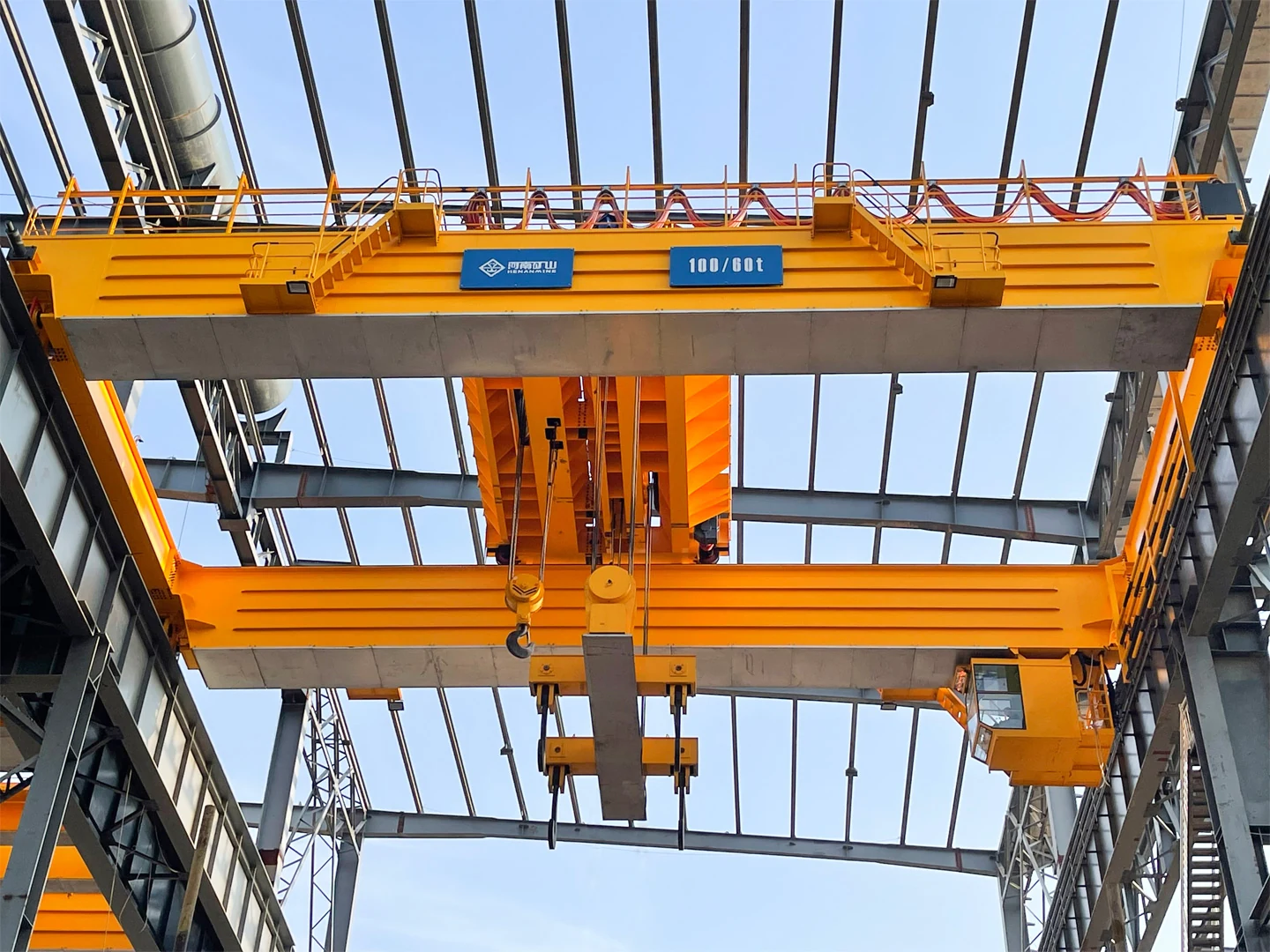
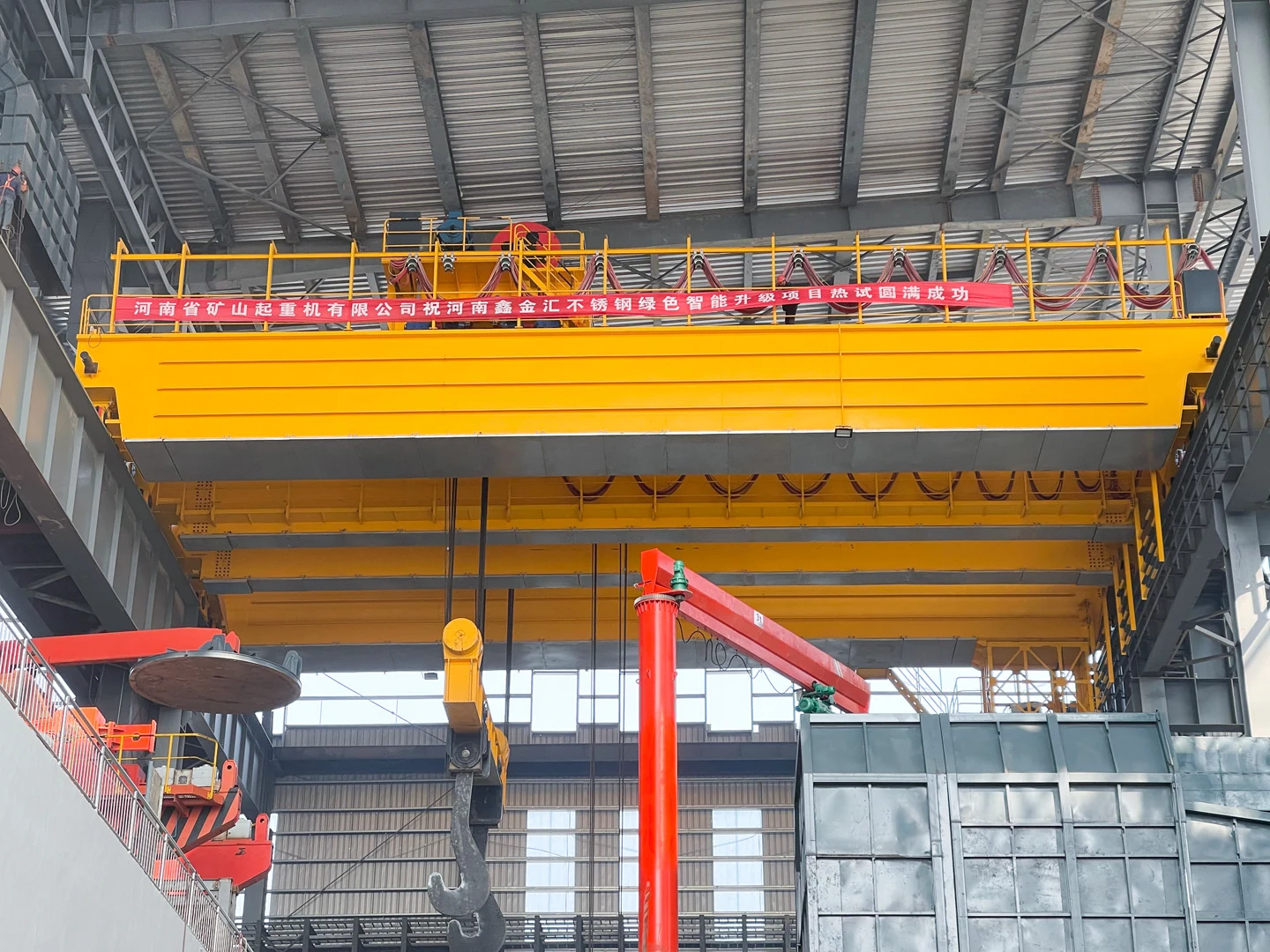
Application reference: Henan Mine Crane Group official application report. Equipment and operating advice for a new project should be specified against your load, process and site.
Start the equipment discussion
Relevant equipment families.
Compare the equipment family with your operating duty. Final attachments, controls and protection follow the application requirements.
Four-girder foundry bridge cranes
Relevant arrangement to assess for the ladle load, runway and refining duty.
View equipment options ↗Foundry and ladle-handling cranes
Evaluate the required molten-metal configuration and protection provisions for the customer's process.
View equipment options ↗Plan a similar application
Build the specification
around your operation.
For ladle handling connected to a refining upgrade, send:
- Maximum full-ladle gross mass and vessel/lifting-point drawings.
- Refining process route with pick-up and receiving-station locations.
- Required hook access, building sections, rail levels and bay span.
- Operating cycles and controlled approach/placement requirements.
- Heat exposure, monitoring needs and intended fault response.
- Equipment quantities by duty and the planned acceptance/hot-trial milestones.
Before you specify
Questions for
your project.
How should we specify an eight-crane plant package?
List each crane separately with its load, process role and configuration. Identify units sharing a duty without assuming the same rating applies to the whole package.
What is needed to assess full-ladle transfer?
Send the gross load, vessel and lifting-point drawings, route and receiving interfaces. Include heat exposure and the required behavior near process equipment.
How should hot commissioning appear in our purchase plan?
Define the plant readiness, demonstrations, operating responsibilities and records needed for that milestone. Distinguish it from earlier factory and installation checks.
Continue exploring
More steel & metallurgy applications.

100+ Crane Package for a Southeast Asian Steelworks
More than 100 mixed cranes serve production, material transfer and a port scrap yard at an unnamed Southeast Asian steelworks. The package combines different crane and attachment arrangements for different loads.
Explore this application
Automated Feeding Cranes for an Ulanqab Ferrochrome Project
Several automated metallurgical cranes were developed for a ferrochrome project in Ulanqab, Inner Mongolia. Remote centralized control coordinates hooking, unhooking and material feeding.
Explore this application
Two Automated Coke-Pot Cranes for a Coking Process
Two automated coke-pot cranes were developed for an unnamed domestic coking customer. The configuration combines variable-frequency motion, remote video and mechanical anti-sway.
Explore this application


