
Blast-furnace project / Site-adapted supply
Four 32t Intelligent Grab Cranes for Guangxi Chiji Steel
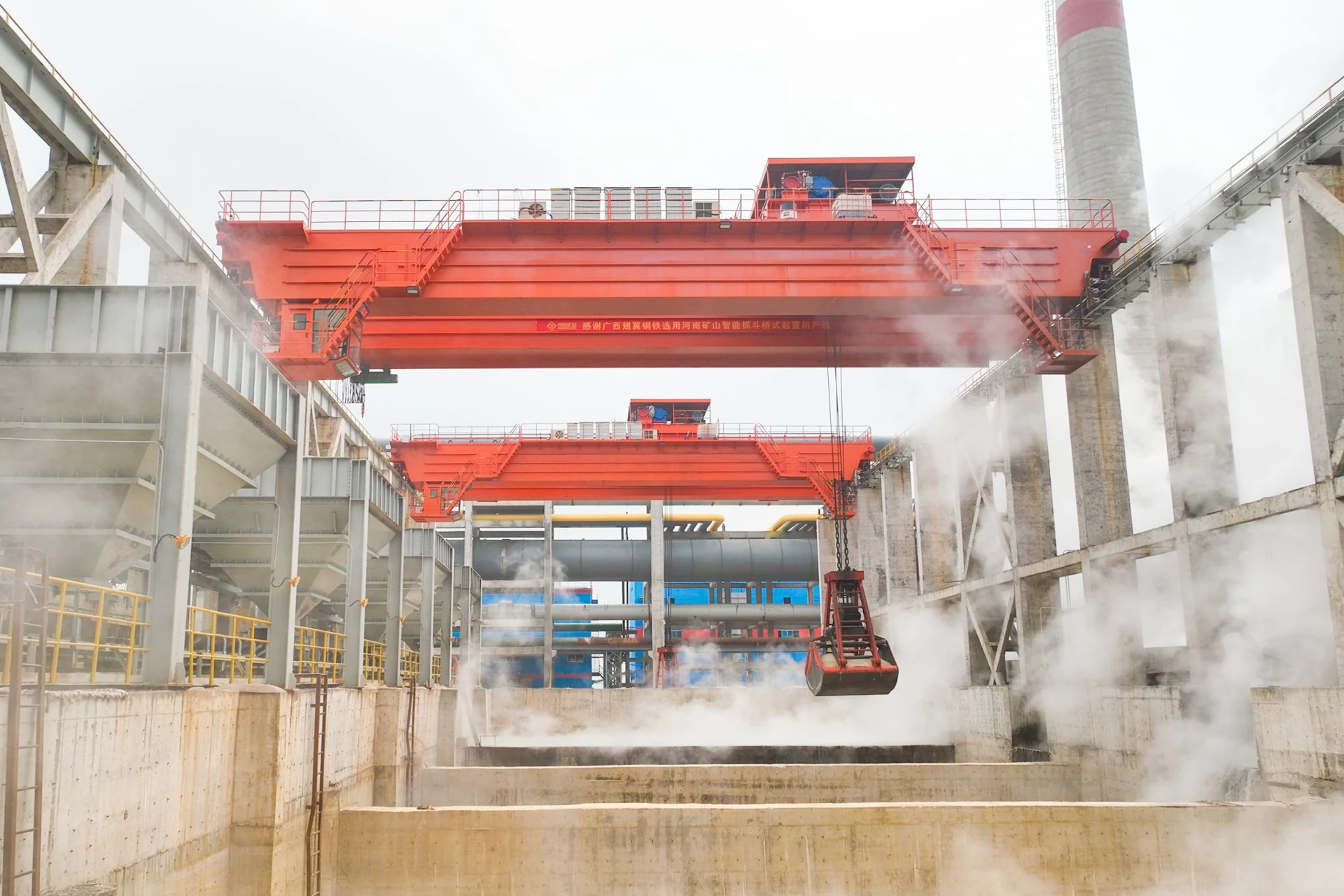
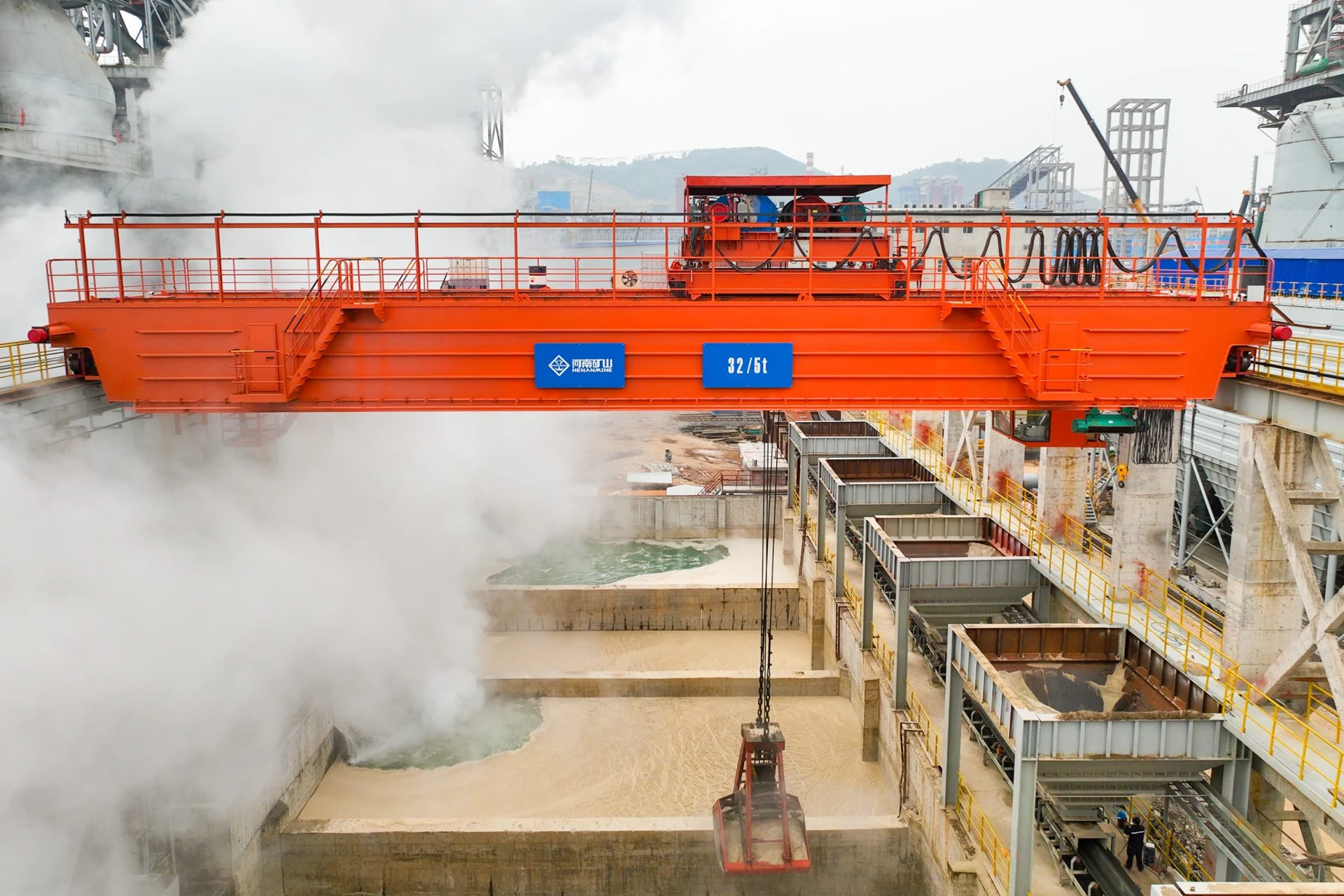
Henan Mine Crane Group manufactured 59 mixed crane units or sets for Guangxi Chiji Iron and Steel, including four 32t intelligent grab cranes for its 2,060m³ blast-furnace project. The grab equipment addresses automatic material movement in hot, humid and foggy site conditions.

- Customer
- Guangxi Chiji Iron and Steel
- Total supply
- 59 mixed crane units or sets
- Intelligent grab subset
- Four cranes, each described as 32t
- Project context
- 2,060m³ blast furnace
- Environment
- High temperature, humidity and heavy fog
- Control scope
- PLC, positioning, anti-sway, sensing and remote dispatch
- Reported stage
- Custom supply; four grab cranes associated with the blast-furnace project
Four intelligent grab cranes within a wider supply
The four 32t intelligent grab cranes are one defined part of the 59-unit mixed package. Developed for Guangxi Chiji's capacity-replacement project, they support material movement associated with the customer's 2,060m³ blast-furnace construction.
The wider cooperation supports a ten-million-tonne metallurgical new-materials steel base. That production context is separate from the crane ratings. For a buyer planning a similar package, divide the overall schedule into individual duties so the grab units, other production cranes and their interfaces remain clear.
Adapt the structure to heat, humidity and fog
The equipment uses a heavy structure with a wide box form, selected to address fatigue demand and the site's combination of high temperature, high humidity and heavy fog. Environmental adaptation is therefore part of the mechanical concept.
Show where those conditions occur along your route and how long the crane is exposed. A hot pick-up area and a damp receiving zone may require different considerations for mechanisms, electrical equipment and access. Provide the operating conditions with the duty cycle so the proposal addresses the real combination.
Link sensing to grab, deposit and transfer
PLC control, positioning and anti-sway are integrated with intelligent sensing. Together they enable automatic grabbing, depositing and transfer in dense fog with extremely low visibility.
A comparable application needs clear material presentation and receiving conditions. Define the material's bulk properties, pick-up area and discharge geometry. Agree how recognition and placement will be demonstrated under the expected site conditions, including loaded movement and the condition of the receiving position.
Bring the handling area into remote dispatch
A remote dispatch management system supports site management without local operation. This allows the material-handling task to be supervised away from the immediate production area.
Define who issues jobs, which signal confirms station readiness and what information an operator needs when a movement stops. Material unavailability, an obstructed receiver and restart after interruption should be discussed with the proposed sequence. A clear operating model makes remote management useful for both production and maintenance teams.
Turn the operating duty into a measurable enquiry
Start with the material and suspended-load basis, then define the required movement frequency and acceptable handover condition. This connects crane capacity, grab selection, sensing and motion control to the same task.
Use representative loads and environmental conditions in the proposed acceptance plan. Numerical positioning limits, cycle requirements and operating boundaries should be agreed for your installation. That gives a supplier a concrete basis for assessing an integrated grab-handling proposal in a demanding steelworks environment.
Application photographs
See the equipment and working context.
Photographs and accompanying illustrations from this application report. Open an image for a larger view.
Application reference: Henan Mine Crane Group official application report. Equipment and operating advice for a new project should be specified against your load, process and site.
Start the equipment discussion
Relevant equipment families.
Compare the equipment family with your operating duty. Final attachments, controls and protection follow the application requirements.
Grab overhead cranes
Evaluate a grab-crane configuration for the actual material, load basis, cycle and receiving geometry.
View equipment options ↗Multi-petal grab attachments
Evaluate the grab action against material properties, load presentation and receiving geometry before selecting the attachment.
View equipment options ↗Double-girder overhead cranes
Relevant general structure family for comparing the site's custom mechanical and control requirements.
View equipment options ↗Plan a similar application
Build the specification
around your operation.
To assess intelligent grab handling in your production area, provide:
- Material type, bulk density, particle size, moisture, temperature and suspended-load basis.
- Pick-up and discharge-area drawings, pile limits and hopper or receiving interfaces.
- Required transfer quantities, duty cycle and operating hours.
- Temperature, humidity, fog and dust conditions across the full crane route.
- Required positioning performance, sensing conditions and proposed acceptance loads.
- Remote dispatch signals, operator responsibilities, monitoring and interruption recovery needs.
Before you specify
Questions for
your project.
How should I define the grab-crane capacity?
Provide the material quantity per lift and the full suspended-load basis, including the grab and other lifting equipment. Keep this separate from the total number of cranes in a plant package.
What helps assess automatic handling in fog?
Describe the expected fog and visibility conditions, material presentation, pick-up area and receiver geometry. Agree representative operating and recognition tests with the supplier.
What information is needed for remote dispatch?
Send the process sequence, station-readiness signals, job priorities and operator responsibilities, including how interrupted tasks should be reviewed and resumed.
Continue exploring
More steel & metallurgy applications.

100+ Crane Package for a Southeast Asian Steelworks
More than 100 mixed cranes serve production, material transfer and a port scrap yard at an unnamed Southeast Asian steelworks. The package combines different crane and attachment arrangements for different loads.
Explore this application
Automated Feeding Cranes for an Ulanqab Ferrochrome Project
Several automated metallurgical cranes were developed for a ferrochrome project in Ulanqab, Inner Mongolia. Remote centralized control coordinates hooking, unhooking and material feeding.
Explore this application
Two Automated Coke-Pot Cranes for a Coking Process
Two automated coke-pot cranes were developed for an unnamed domestic coking customer. The configuration combines variable-frequency motion, remote video and mechanical anti-sway.
Explore this application


