
Pumped storage / Heavy lifting
600t Low-Headroom Bridge Crane for Pumped-Storage Construction
Henan Mine Crane Group manufactured a package of different crane types for an unnamed pumped-storage power station included in China’s 14th Five-Year Plan energy programme. The featured 600t bridge crane combines a low-headroom structure with controlled dual-hook lifting and digital monitoring.
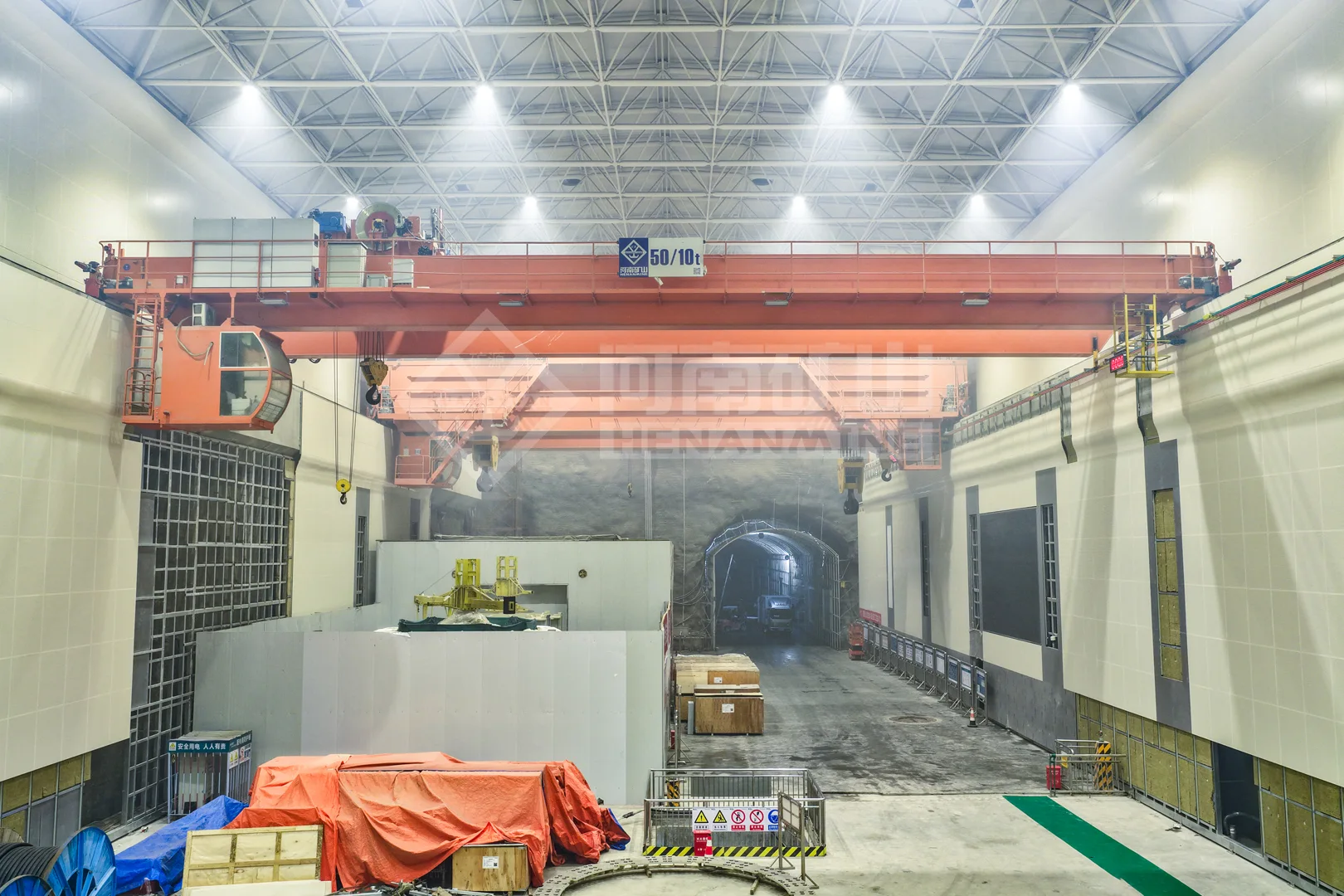
- Featured crane
- 600t overhead bridge crane
- Project
- Unnamed pumped-storage power station
- Supply scope
- Multiple crane types; total quantity not stated
- Structural focus
- New low-headroom arrangement
- Motion functions
- VFD control, synchronized dual hooks and anti-sway
- Quality support
- Factory preassembly and subsequent quality follow-up described
Heavy station lifting within a defined building envelope
The 600t crane supports heavy lifting for pumped-storage construction. Its structure and hook envelope must work with the station building and the route used by the equipment. For a new station, start with the purchaser’s component schedule, drawings and installation sequence so the crane can be assessed against the actual lift.
Low headroom is a specific feature of the reported bridge-crane design. For a new project, compare the crane’s upper envelope, hook approach and available hook position with building clearances along the whole route. The rated tonnage alone cannot show whether a load can pass through an opening or reach its installation position.
Variable-frequency motion with coordinated dual hooks
The 600t crane uses variable-frequency control and high-precision synchronization of its two hooks. Coordinated lifting matters when more than one lifting point supports the load. Define the intended load split, the permitted movement difference and the handling sequence around the component’s approved lifting arrangement.
Intelligent anti-sway and digital monitoring are also reported. Buyers can use this combination as a starting point for discussions about controlled travel, observation of operating conditions and operator information. The required acceptance checks should reflect the load geometry, lifting-point spacing and intended travel, not a generic promise of precision.
Factory preassembly as part of project quality planning
Factory preassembly before delivery and subsequent quality follow-up form part of this supply approach. Preassembly creates an opportunity to review how major assemblies fit together before they reach a constrained station site. Agree the dimensions, interfaces and operating functions to be checked before transport.
For procurement, agree which dimensions and functions will be checked in the factory and which can only be demonstrated after installation. Define the records to accompany the crane, the transport split, installation interfaces and access needed for inspection. These details help connect manufacturing checks with the final installed equipment rather than leaving acceptance as a single unspecified event.
Specify the station route and lift together
Provide a load schedule that distinguishes the heaviest individual lift from other station handling duties. Include the attachment and rigging mass, the centre of gravity and any restrictions on how the load may be supported. A mixed crane package may serve different areas; it should not be interpreted as several identical 600t cranes.
Coordinate crane manufacture with the station installation programme. Identify the transport split, available site lifting equipment and access needed to assemble the bridge and mechanisms. Keep responsibilities for runway, power, rigging and commissioning visible in the supply scope so the final acceptance can follow the complete load route.
Application photographs
See the equipment and working context.
Photographs and accompanying illustrations from this application report. Open an image for a larger view.

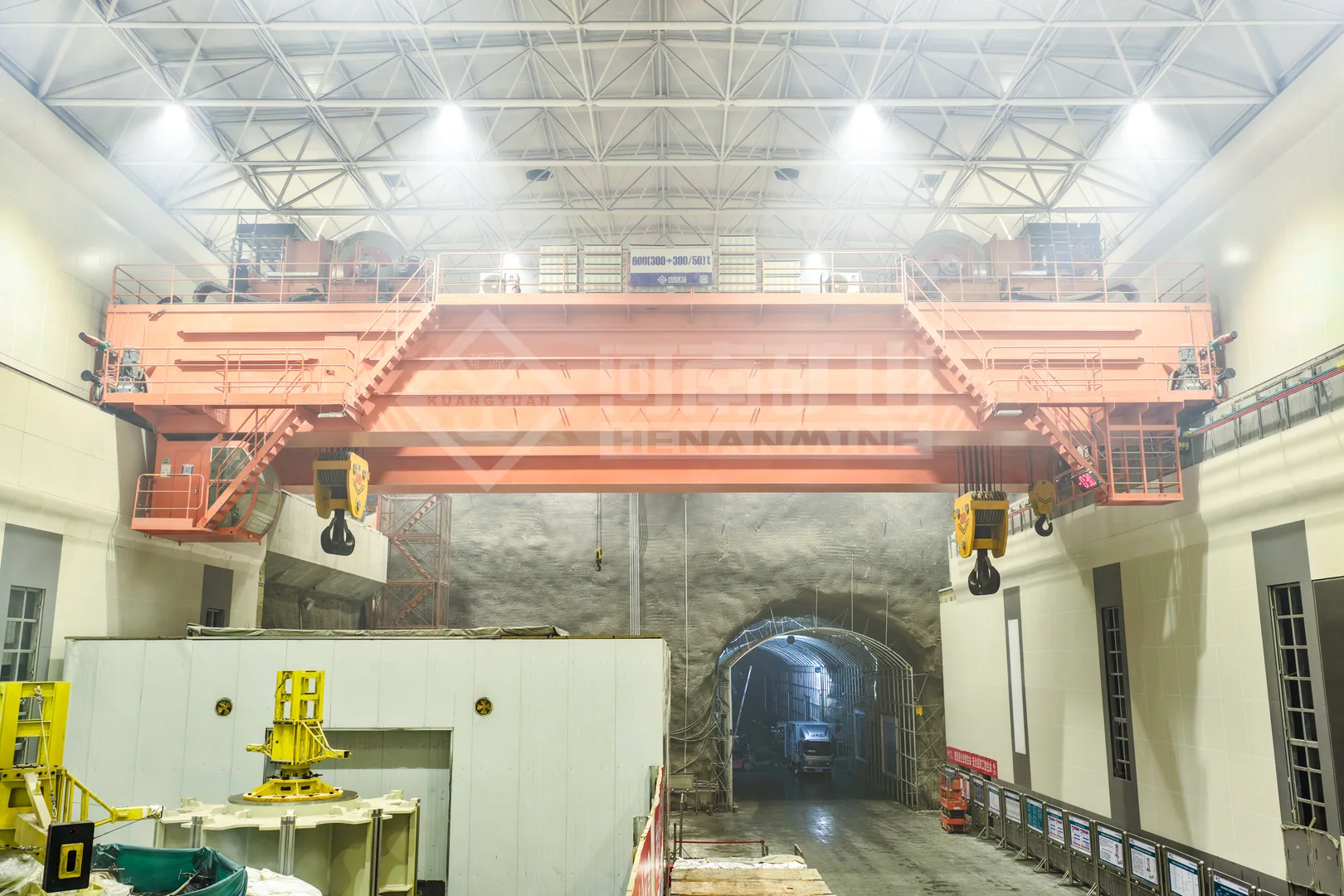


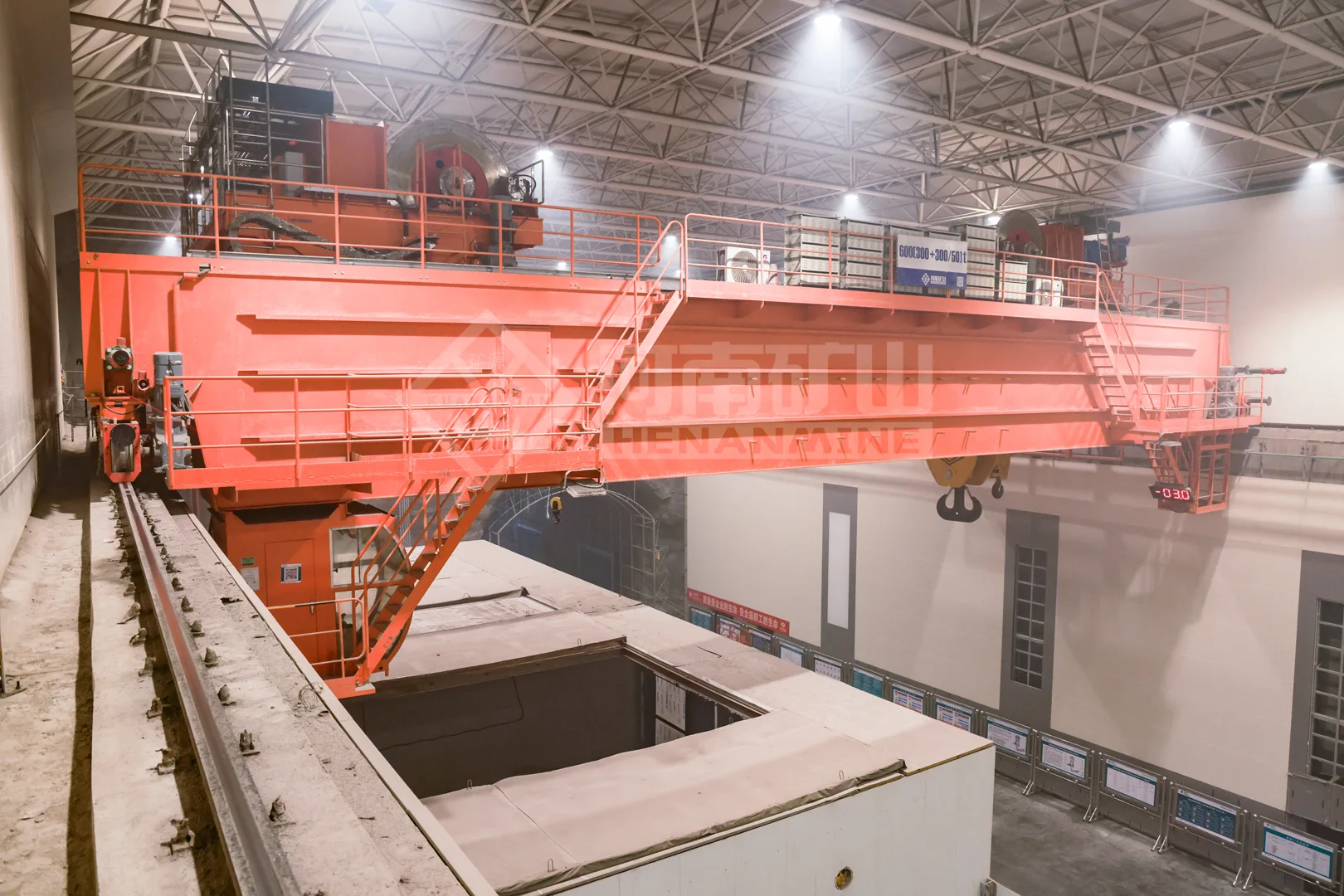
Application reference: Henan Mine Crane Group official application report. Equipment and operating advice for a new project should be specified against your load, process and site.
Start the equipment discussion
Relevant equipment families.
Compare the equipment family with your operating duty. Final attachments, controls and protection follow the application requirements.
Double-girder overhead cranes
Assess the bridge structure, runway interface and low-headroom envelope for the station route.
View equipment options ↗Winch-trolley overhead cranes
Discuss heavy-duty winch-trolley arrangements and synchronized lifting as a project-specific configuration.
View equipment options ↗Plan a similar application
Build the specification
around your operation.
Share the station envelope and heavy-lift schedule to evaluate a bridge-crane arrangement around the required load path.
- Maximum gross lift including rigging and attachments, plus load drawings
- Centre of gravity, lifting-point locations and allowable load sharing
- Station cross-sections, runway level, upper clearances and hook approaches
- Pickup, travel and installation positions for each major lift
- Operating duty, synchronized-hook criteria and monitoring requirements
- Transport split, factory preassembly, site installation and acceptance scope
Before you specify
Questions for
your project.
How do we check whether a low-headroom crane fits?
Provide station cross-sections, runway level, available upper clearance and required hook positions. Check the complete load and rigging envelope along pickup, travel and final placement.
What data is needed for synchronized dual-hook lifting?
Supply the lifting-point locations, centre of gravity, gross load and allowable load-sharing difference. Define the permitted hook movement and the intended operating sequence.
What should be checked during factory preassembly?
Agree assembly fit, critical dimensions, interfaces and the functions that can be demonstrated before shipment. Identify the additional tests required after installation at the station.
Continue exploring
More water conservancy & power applications.

Automated Crane Handling for Power-Cable Warehouses
Two custom automated cranes move box-substation power-cable materials between warehouse and workshop operations. Load recognition, controlled pickup and dispatch records form one handling sequence.
Explore this application
Crane Package for Offshore-Wind Final Assembly
Dozens of crane units support heavy-workpiece handling at an unnamed offshore-wind turbine final-assembly base. Coordinated hooks and high-lift hoisting are the specific configuration focus.
Explore this application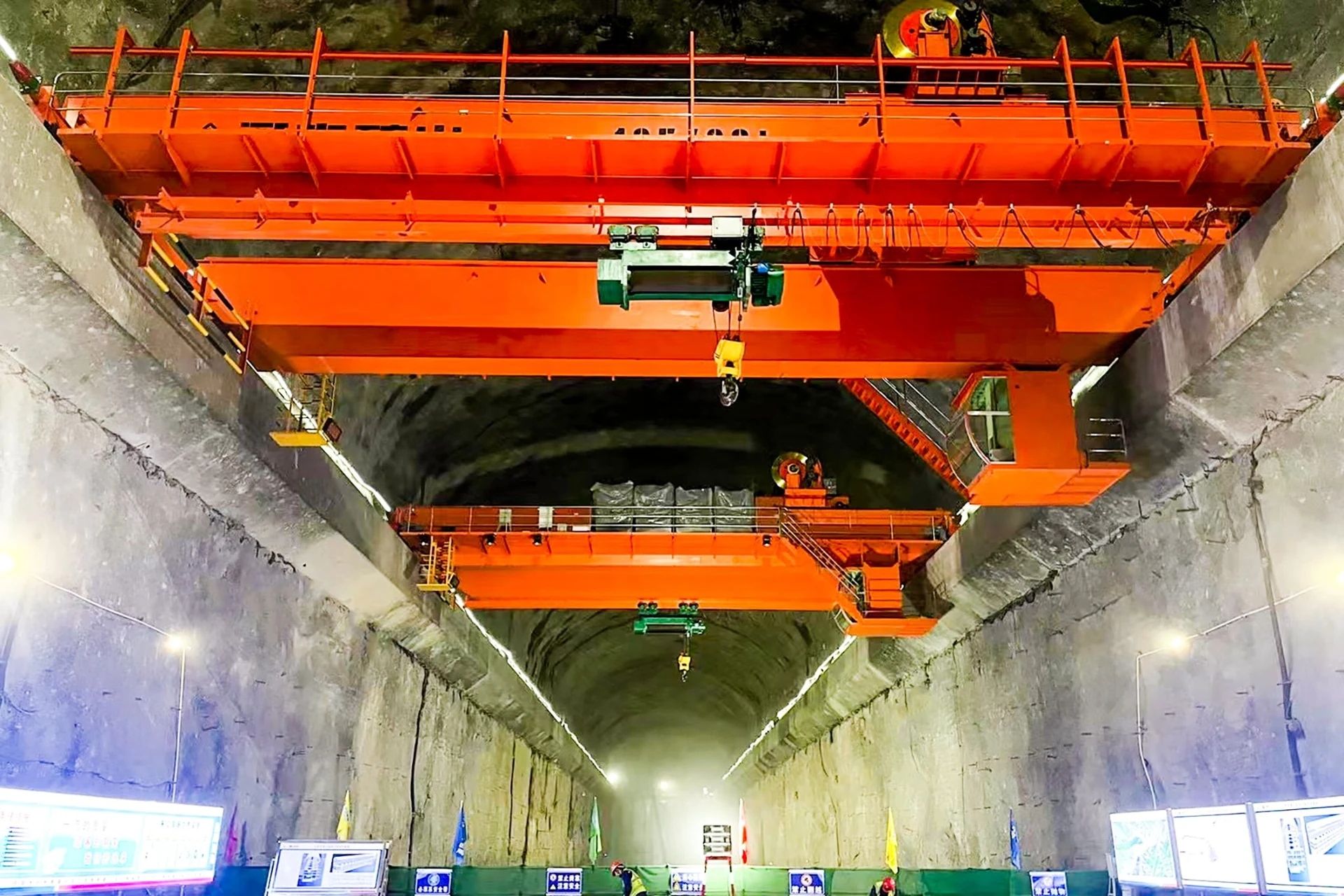
125t Bridge Cranes for Underground Pump-Station Lifting
Several bridge cranes, including 125t equipment, were manufactured for an unnamed national water-conservancy project. Coordinated lifting and controlled low-speed movement support underground pump-station unit installation.
Explore this application


