
Power equipment / Warehouse automation
Automated Crane Handling for Power-Cable Warehouses
Henan Mine Crane Group manufactured two automated cranes for an unnamed national power-sector project, serving the handling of power cables used in box-type substations. The reported configuration connects physical material movement with warehouse and workshop information, rather than treating lifting as an isolated operation.

- Supply scope
- Two custom automated cranes
- Application
- Power-cable materials for box-type substations
- Motion control
- VFD and PLC, hoist encoder and Gray-bus travel positioning
- Recognition
- 3D scanning and visual detection
- System interface
- Central server, WCS scheduling and WMS warehouse management
- Reported stage
- Custom manufacture and configuration described; commissioning date not stated
A cable-material route connecting storage and production
The application connects power warehouse and workshop operations. Cable materials are identified, collected, carried along the intended route and placed at the next station while their movement remains traceable. For box-substation cable production, the handling specification should start with the actual material form, package dimensions and production/inventory plan.
For procurement, identify which movements belong to the crane and which remain with receiving vehicles, racks or production machines. The interface should describe where each transfer starts and ends, how a station signals readiness and who releases the material for the next step.
Position information at the hoist and both travel axes
The electrical system combines variable-frequency drives with PLC control. An encoder is fitted to the hoisting mechanism, while the bridge and trolley use Gray-bus positioning. These position references support coordinated movement and repeatable station transfers. Define the required final load position and acceptance conditions for each station.
Three-dimensional scanning and vision are also reported. Their functions include material recognition, locating the load, automatic gripping and obstacle avoidance during travel. Anti-sway is included in the documented configuration. A new specification should define the actual load appearance, allowed pickup variation and obstructions, so acceptance can be demonstrated under representative conditions.
Automatic pickup linked to warehouse dispatch
The intelligent lifting attachment incorporates detection switches. Automatic operation covers the handling sequence without routine manual intervention, combining attachment feedback with movement control. For a new installation, define the normal cycle alongside access control, maintenance isolation and the authorised exception-recovery procedure.
A dedicated server in the central control room supports a warehouse control system, or WCS, and a warehouse management system, or WMS. Material movements are recorded, with information tracing and query functions. Buyers should specify the material identifier, order status and completion confirmation exchanged with their existing systems, including how records are reconciled if communication is interrupted.
Define the automated cycle before choosing the crane
Start the enquiry with a route and a sequence diagram. State the pickup and set-down geometry, the load including its lifting interface, the operating shifts and the expected material variations. The two-crane supply is a specific project configuration, so another warehouse may require a different equipment count and control arrangement.
Arrange acceptance around complete tasks: recognise the right material, confirm attachment engagement, move along the permitted route, arrive at the assigned station and return a meaningful completion record. Include a controlled recovery process for failed recognition or pickup. Agree these operating conditions with the warehouse and production teams before finalising the equipment specification.
Application photographs
See the equipment and working context.
Photographs and accompanying illustrations from this application report. Open an image for a larger view.
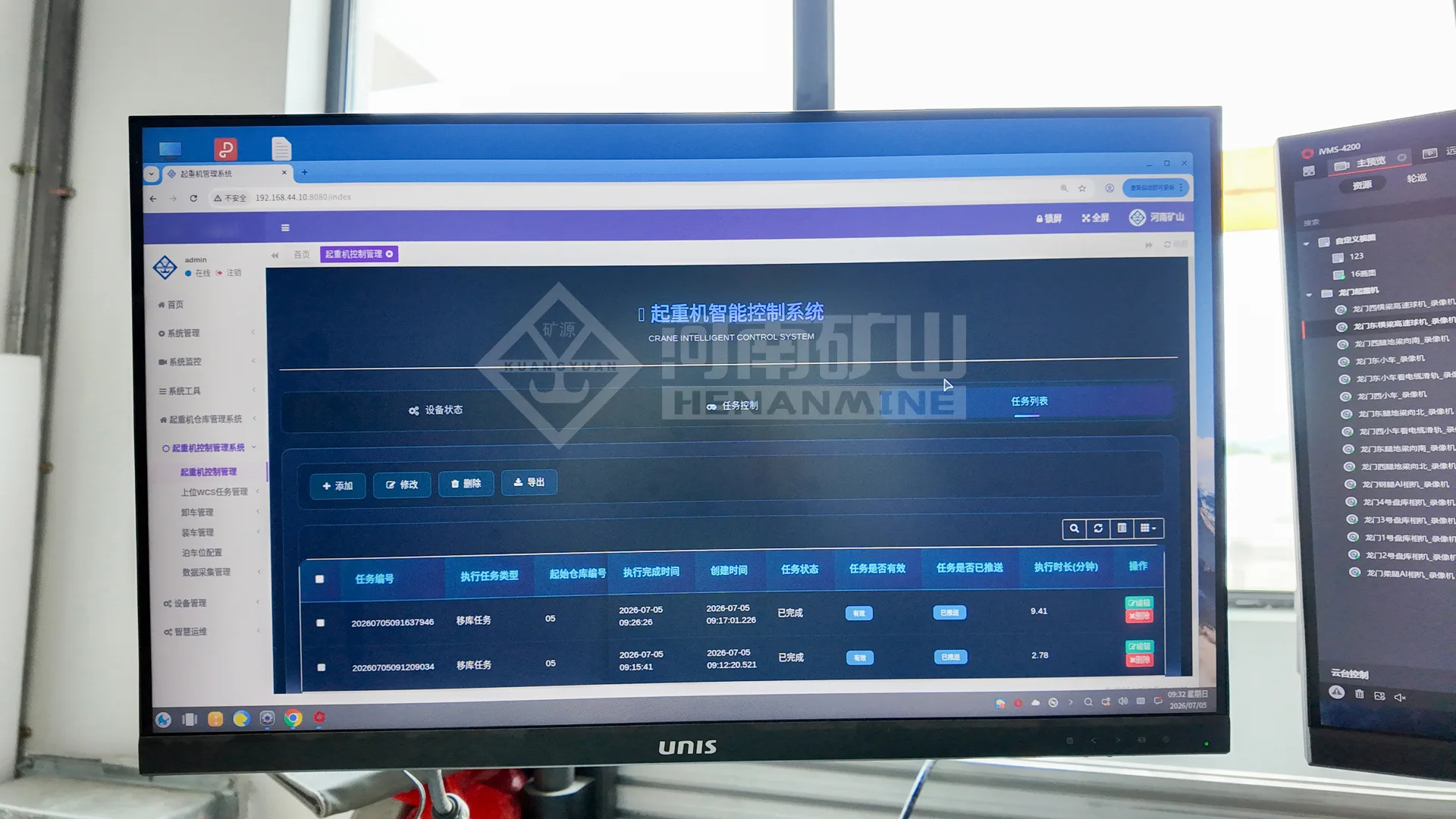

Application reference: Henan Mine Crane Group official application report. Equipment and operating advice for a new project should be specified against your load, process and site.
Start the equipment discussion
Relevant equipment families.
Compare the equipment family with your operating duty. Final attachments, controls and protection follow the application requirements.
Double-girder overhead cranes
Evaluate a bridge arrangement around the cable-material route, duty and automation interfaces.
View equipment options ↗Electric wire-rope hoists
Compare hoisting arrangements only after load, attachment feedback and automatic positioning requirements are defined.
View equipment options ↗Plan a similar application
Build the specification
around your operation.
Send your cable-material route and information-system requirements so the mechanical handling and warehouse controls can be assessed together.
- Cable material forms, dimensions, gross weights and lifting interfaces
- Warehouse and workshop layouts with every pickup and set-down station
- Material identifiers, recognition conditions and permitted pickup variation
- Cycles per shift, simultaneous requests and required dispatch priorities
- Existing WMS/WCS interfaces, message definitions and data-retention needs
- Access controls, exception recovery and complete-cycle acceptance criteria
Before you specify
Questions for
your project.
What load information is needed for cable-material handling?
Provide the heaviest complete package, its dimensions and lifting interface, plus the attachment mass. Include material variations so the pickup method and crane duty can be assessed.
How does the crane connect to warehouse dispatch?
The configuration combines recognition, automatic attachment functions and position control with WCS/WMS movement records. Define the dispatch, readiness and completion messages required by your existing software.
How should difficult pickup conditions be addressed?
Provide representative packages and explain variations in position, appearance or support. Agree detection, failed-pickup handling and an authorised recovery sequence for the proposed system.
Continue exploring
More water conservancy & power applications.
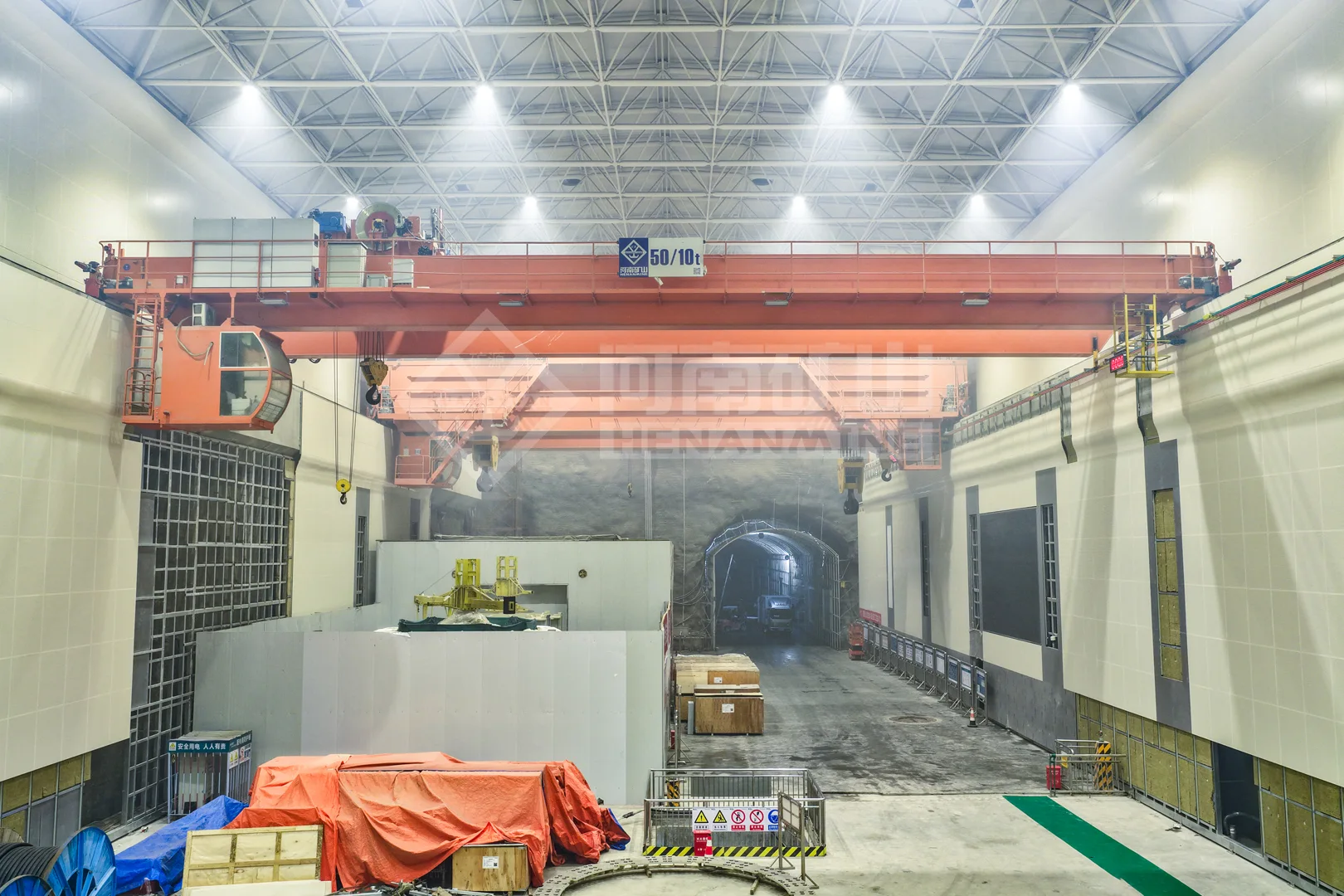
600t Low-Headroom Bridge Crane for Pumped-Storage Construction
The 600t bridge crane forms part of a wider equipment package for an unnamed pumped-storage station. Its configuration combines low headroom and synchronized hooks, with factory preassembly supporting the project quality plan.
Explore this application
Crane Package for Offshore-Wind Final Assembly
Dozens of crane units support heavy-workpiece handling at an unnamed offshore-wind turbine final-assembly base. Coordinated hooks and high-lift hoisting are the specific configuration focus.
Explore this application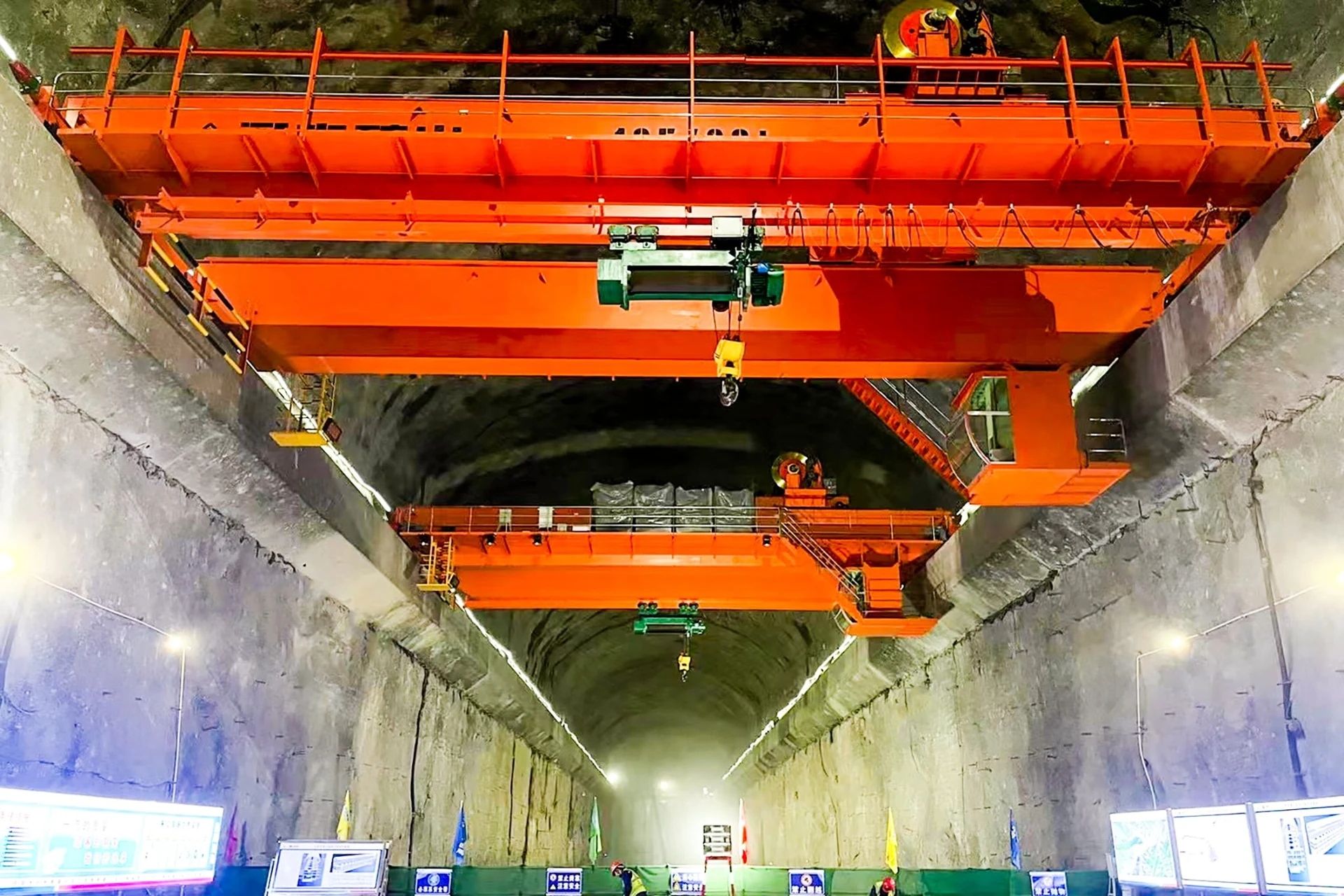
125t Bridge Cranes for Underground Pump-Station Lifting
Several bridge cranes, including 125t equipment, were manufactured for an unnamed national water-conservancy project. Coordinated lifting and controlled low-speed movement support underground pump-station unit installation.
Explore this application


