
Wind equipment / Final assembly
Crane Package for Offshore-Wind Final Assembly
Henan Mine Crane Group supplied dozens of crane units working at an unnamed offshore-wind turbine final-assembly base. The equipment handles heavy workpieces with high-lift hoisting, automatic fast/slow speed selection and coordinated lifting points.

- Location
- Unnamed offshore-wind final-assembly base
- Equipment quantity
- Dozens of crane units/sets; exact count not stated
- Hoist design
- Lightweight winch arrangement with high lift
- Load control
- Multiple synchronized hooks and electrical anti-sway
- Observation
- Digital and video monitoring with lifecycle management
Heavy workpieces moving through final assembly
Final assembly brings together heavy components whose pickup positions and support conditions may change as production advances. The crane package serves those heavy-workpiece movements at an offshore-wind turbine assembly base. Start a comparable purchase with the actual component and assembly sequence, then establish the duty of each station.
Draw the route from receiving or preparation through the assembly stations. Mark the load orientations, fixture positions and handover heights. This makes it possible to decide which cranes serve independent stations and where more than one lifting point must move together.
High lift with automatic speed selection
The lightweight winch design provides high lift with automatic fast/slow speed adjustment. This supports movement through the required vertical range while controlling the approach to a work position. Define the travel and final-approach stages so proposed speeds can be reviewed against the assembly operation.
For a new specification, state the lowest pickup point, the highest required hook position and the clearance above the load throughout travel. Describe when rapid movement is permitted and when a controlled approach is needed. Agree the speed behaviour and stopping criteria against those actual positions.
Coordinated hooks and monitored motion
Multiple hooks operate with high-precision synchronization, supported by electrical anti-sway. These features help a heavy workpiece retain its intended orientation between lifting points. Specify permissible load imbalance and movement difference from the component’s support requirements and the assembly procedure.
Digital and video monitoring provide observation and protection functions, with lifecycle management also stated. For procurement, establish what information operators need at each assembly stage, where camera views are required and which events should be recorded. Monitoring should complement the agreed lifting procedure and access arrangements.
For a separate offshore-wind assembly example, read the 600t twin-trolley crane installation report. Its capacity and operating results belong to that project.
Define the package by station duty
A package containing dozens of cranes can include different duties and ratings. Prepare a station-by-station schedule instead of assuming one crane configuration will cover the whole plant. Include rigging weight, lifting-point spacing, working shifts and any interface with assembly fixtures.
Henan Mine Crane Group’s wider wind-sector cooperation also includes Jingneng Wind Power, Windey and CRRC businesses. For your facility, use a station-by-station duty schedule to connect equipment quantities, operating functions and service requirements. Match each crane to its workpiece and route rather than applying one heavy-lift configuration throughout the base.
Application reference: Henan Mine Crane Group official application report. Equipment and operating advice for a new project should be specified against your load, process and site.
Start the equipment discussion
Relevant equipment families.
Compare the equipment family with your operating duty. Final attachments, controls and protection follow the application requirements.
Double-girder overhead cranes
Evaluate independent assembly bays and coordinated lifting points before selecting bridge arrangements.
View equipment options ↗Winch-trolley overhead cranes
Discuss winch-trolley hoisting for the required high lift, load duty and speed sequence.
View equipment options ↗Plan a similar application
Build the specification
around your operation.
Send the final-assembly station plan and the lifting arrangement for each heavy workpiece.
- Component dimensions, gross masses and changing assembly configurations
- Lifting points, centre of gravity and permitted load-sharing imbalance
- Station layouts, runway levels and full vertical lifting range
- Required fast travel, approach speeds and stopping positions
- Operating shifts, coordinated-hook acceptance and anti-sway expectations
- Camera views, monitoring records, installation access and handover scope
Before you specify
Questions for
your project.
How should we divide lifting duties across an assembly base?
List each station’s component, load, route and operating cycle. Identify independent moves and the tasks requiring coordinated lifting so equipment quantities follow the actual production sequence.
Why does the specification need lifting-point spacing?
Multiple synchronized hooks must be evaluated around the actual load geometry and support conditions. Spacing, centre of gravity and permissible tilt define the coordinated-lifting requirement.
What vertical information is needed for high-lift handling?
Give the lowest pickup and highest required hook positions, the suspended load envelope and the available building clearance. Include rigging and any changes in component orientation.
Continue exploring
More water conservancy & power applications.

Automated Crane Handling for Power-Cable Warehouses
Two custom automated cranes move box-substation power-cable materials between warehouse and workshop operations. Load recognition, controlled pickup and dispatch records form one handling sequence.
Explore this application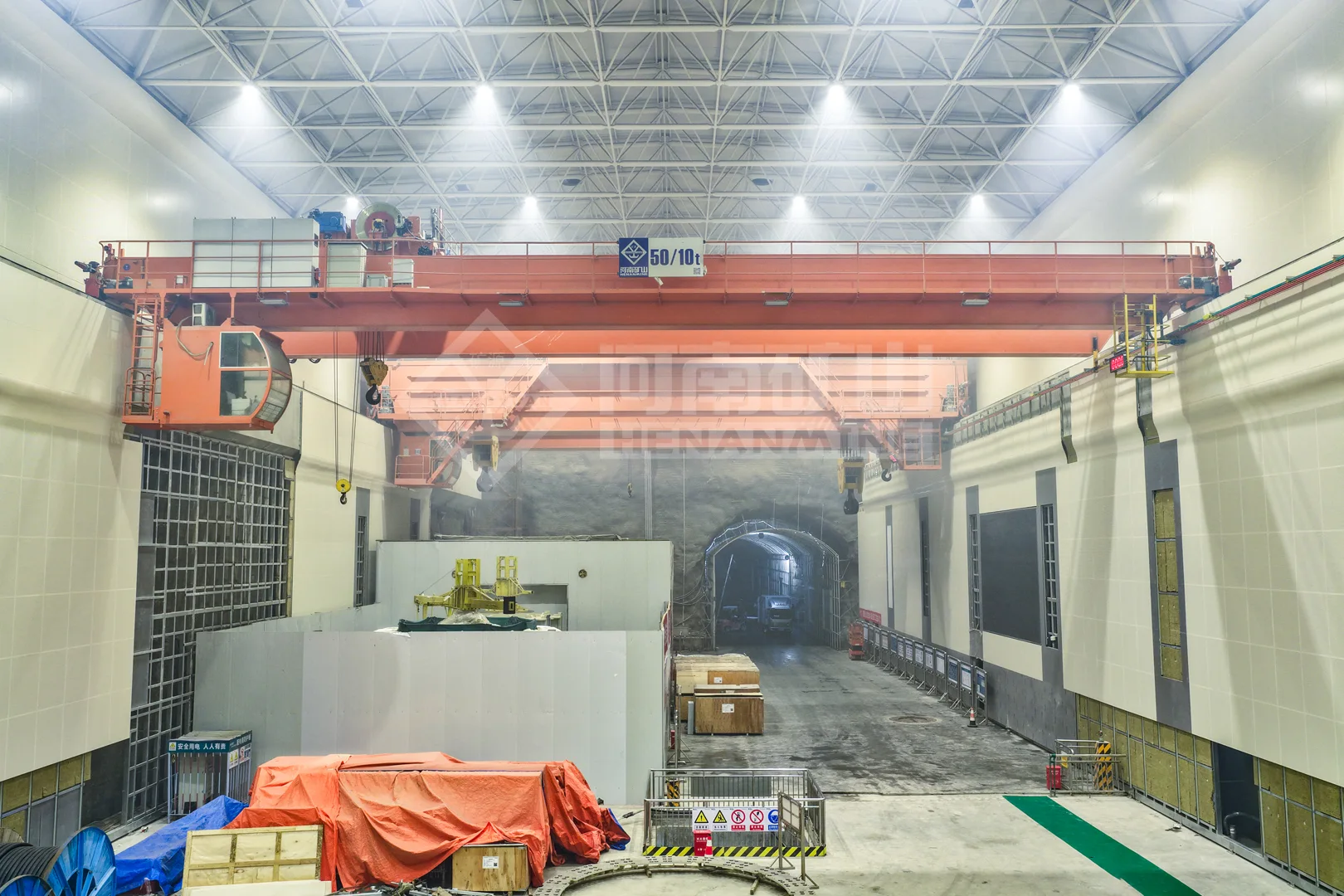
600t Low-Headroom Bridge Crane for Pumped-Storage Construction
The 600t bridge crane forms part of a wider equipment package for an unnamed pumped-storage station. Its configuration combines low headroom and synchronized hooks, with factory preassembly supporting the project quality plan.
Explore this application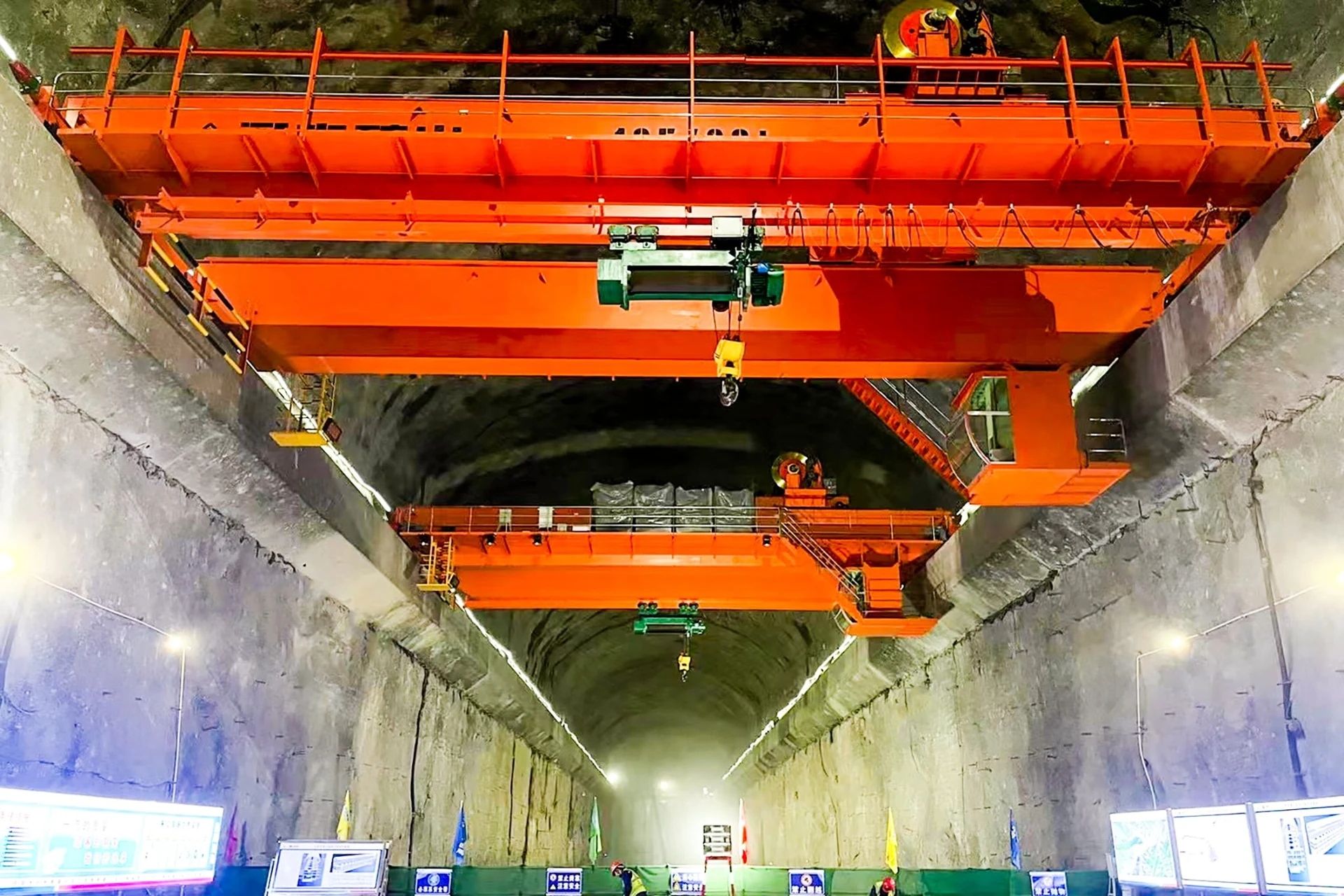
125t Bridge Cranes for Underground Pump-Station Lifting
Several bridge cranes, including 125t equipment, were manufactured for an unnamed national water-conservancy project. Coordinated lifting and controlled low-speed movement support underground pump-station unit installation.
Explore this application


