
Steel-process automation / In-use application
Unmanned Grab Cranes for Baowu Shaogang's Rotary-Hearth Project
Baowu Shaogang's 250,000-tonne rotary-hearth-furnace project uses two unmanned grab cranes customised by Henan Mine Crane Group. The application combines 3D scanning, recognition, positioning, obstacle avoidance and grabbing, with operation from an office more than 1,000m away.
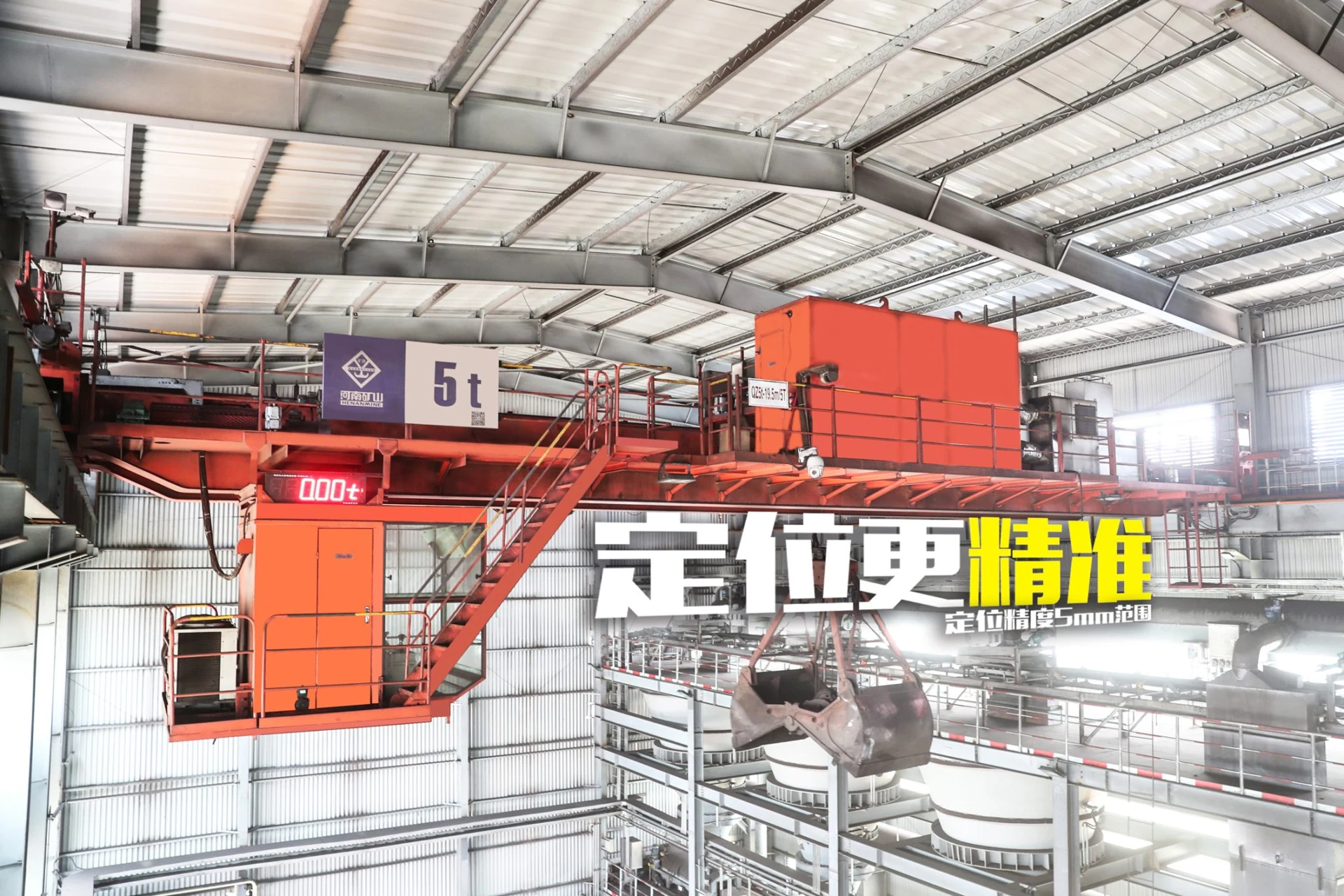
- Customer
- Baowu Shaogang
- Equipment
- Two unmanned grab cranes
- Project context
- 250,000-tonne rotary-hearth-furnace project
- Automatic functions
- 3D scanning, positioning, recognition, avoidance and grabbing
- Project positioning result
- Within 5mm for positioning and repeated running, as reported for this installation
- Remote operation
- Office located more than 1,000m away
- Project stage
- Equipment in use
Connect crane handling to the furnace process
The two grab cranes were developed around Shaogang's rotary-hearth-furnace process and its intelligent-manufacturing programme. Their role is to support automated material movement within that process, contributing to the plant's wider coordinated production system.
The 250,000-tonne figure describes the furnace project. For a comparable application, the crane enquiry should instead define material per lift, grab mass, transfer positions and required cycles. A process drawing helps identify how crane work starts, where it finishes and which plant conditions allow each movement.
Scan, recognise and move the material
3D scanning, automatic recognition, automatic positioning, obstacle avoidance and automatic grabbing form the documented functional sequence. The equipment's positioning and repeated-running accuracy are reported within 5mm for this installation.
Use that figure as a project reference with its original scope. Your own accuracy requirement should define the point being measured, load condition, route and acceptance method. The recognition task also needs representative material presentation and receiving geometry so that sensing and motion are evaluated together.
A separate waste-to-energy grab crane operating report describes fixed-point grabbing, weight-based cycles and operating-mode choices. Its material duty and control sequence should be assessed within that project context.
Operate away from the dusty local area
Operators can work from an office more than 1,000m away, reducing their exposure to the dusty handling environment. The equipment had entered use when the operating account described smoother work and reduced operator workload.
For a new plant, define where supervision will be located, what the operator needs to see and how communication connects the remote position to the crane. Include responsibility for interrupted movements and local recovery. The relevant distance is the one your network and operating plan must support under agreed site conditions.
Plan inspection and operating acceptance together
Henan Mine Crane Group and Beijing Materials Handling Research Institute jointly developed inspection and testing standards in connection with the equipment. This highlights the need to make an automated sequence testable, including recognition, movement and placement.
A procurement plan should identify the demonstrations, representative loads and records needed for acceptance. Include abnormal or unavailable receiving conditions where these affect the agreed operating sequence. The proposed checks should reflect your plant's actual material and route rather than only a general claim of unmanned capability.
Separate this project from the wider cooperation
Henan Mine Crane Group's relationship with the group also includes annual crane spare-parts cooperation with Shaogang, a first unmanned crane for the No.6 blast-furnace water-slag bay and recognition as a Baosteel Zhanjiang quality supplier in 2018. These are separate background references, not additional units in this two-crane furnace project.
The accompanying company profile describes more than 600 welding or machining robots, including over 100 automated welding and processing lines, and national green-factory and Henan intelligent-factory/workshop recognition. Those manufacturing credentials provide company context. The buying decision for a new automated grab system should focus on its material duty, interfaces and acceptance plan.
Application photographs
See the equipment and working context.
Photographs and accompanying illustrations from this application report. Open an image for a larger view.


Application reference: Henan Mine Crane Group official application report. Equipment and operating advice for a new project should be specified against your load, process and site.
Start the equipment discussion
Relevant equipment families.
Compare the equipment family with your operating duty. Final attachments, controls and protection follow the application requirements.
Grab overhead cranes
Evaluate for the actual bulk material, grab mass, working route and required operating duty.
View equipment options ↗Multi-petal grabs
Consider only where the material and handling action suit this attachment; a specific grab form must be selected from load data.
View equipment options ↗Double-girder overhead cranes
Relevant base family when reviewing a custom automatic material-handling configuration.
View equipment options ↗Plan a similar application
Build the specification
around your operation.
For an unmanned grab-handling assessment, send:
- Material form, density, temperature, moisture and the full suspended-load basis.
- Pick-up and receiving-area drawings with pile and obstruction limits.
- Required material quantities, cycles and production-system signals.
- Positioning requirement with measurement point, loaded condition and acceptance method.
- Dust/visibility conditions and representative material states for recognition testing.
- Remote operating location, communication interfaces and normal/recovery responsibilities.
Before you specify
Questions for
your project.
How should positioning accuracy be specified for a new system?
State your required placement condition and how it will be measured with representative loads. The reported Shaogang result is installation-specific, so the new acceptance basis must be agreed.
What makes remote operation workable for our site?
Define supervision location, communication conditions, required views and operator responsibilities. Include the procedure for stopped movements and any local recovery work.
What data is most important for automatic grabbing?
Provide the material properties, presentation range, pick-up area, receiving geometry and required cycles. Representative conditions are needed to assess recognition and grabbing together.
Continue exploring
More steel & metallurgy applications.

100+ Crane Package for a Southeast Asian Steelworks
More than 100 mixed cranes serve production, material transfer and a port scrap yard at an unnamed Southeast Asian steelworks. The package combines different crane and attachment arrangements for different loads.
Explore this application
Automated Feeding Cranes for an Ulanqab Ferrochrome Project
Several automated metallurgical cranes were developed for a ferrochrome project in Ulanqab, Inner Mongolia. Remote centralized control coordinates hooking, unhooking and material feeding.
Explore this application
Two Automated Coke-Pot Cranes for a Coking Process
Two automated coke-pot cranes were developed for an unnamed domestic coking customer. The configuration combines variable-frequency motion, remote video and mechanical anti-sway.
Explore this application


